



Mid-term measure debate will Dominate runup to MEPC82
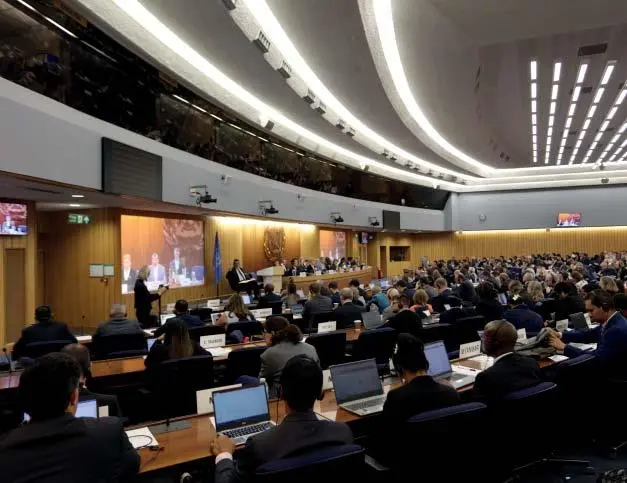
Decisions about the final shape of mid-term measures to improve the economics of operating on fuels with lower greenhouse gas emission (GHG) profiles were delayed until ISWG-GHG 17, which is expected to be held the week before MEPC 82 in late September 2024.
The working group meeting will take into account feedback from a two-day workshop into the findings of an IMO commissioned Comprehensive Impact Assessment, to assess the impact of potential mid-term measures on states, as well as individual trades.
While ISWG-GHG agreed to develop a goal-based marine fuel standard regulating the phased reduction of marine fuel’s GHG intensity as part of the basket of mid-term measures, there was less consensus upon whether an economic element should be introduced independently or integrated into the goal-based marine fuel standard.
Proposals for more sophisticated flexible compliance strategies also divided committee members, with some delegations raising concerns that countries without the experience of operating in complex trading markets may be disadvantaged.
The Working Group also noted the wide support for using the existing IMO instruments for reporting and verification requirements while also noting the necessity to develop additional tools, such as a central registry.
This focus on improving the consistency and reliability of DCS data quality was seen elsewhere: the MEPC requested the IMO Secretariat review the IMO DCS to assess its suitability for the implementation and enforcement of regulatory GHG measures.
MEPC 81 also adopted amendments to add granularity to fuel consumption data which must be reported by ships of 5,000 GT or above, as well as information related to attained CII. These amendments, amongst other things, give guidance on the methodology for recording fuel consumption per consumer as well as how to record when a ship is under way/ not underway for the purpose of data recording to the DCS.
Significant progress was made in the development of a life cycle GHG assessment (LCA) framework, and the MEPC adopted the 2024 Guidelines on Life Cycle GHG Intensity of Marine Fuels (2024 LCA Guidelines) (MEPC.391(81)).
As previously noted by The Motorship, this will lead to ever deeper scrutiny of emission factors related to upstream fuel production and onboard fuel consumption. (The 30 year or 100 year methane emission timeframe problem). The Committee’s decision to embed onboard carbon capture and storage technologies in the development of LCA boundaries suggests that onboard CCS will become an important technology for improving the environmental footprint of conventional fuels over the intervening period.
The ISWG-GHG expressed a wish to re-examine the reduction trajectory imposed by accepting the ambitions in MEPC.377(80) once the fuel standard enters into force, rather than accept a straight line reduction between a 20% reduction by 2030, a 70% reduction by 2040 and net zero by 2050. The focus of discussions on technical discussions about the correct base line to use indicates the contribution of highly skilled shipping economists. They will be fully engaged in the months ahead, as the terms of reference of a Fifth IMO GHG Study will be put before MEPC 82 in October 2024.
Timelines
It is worth noting that ISWG-GHG plans to reach a recommendation on the preferred mid-term economic and technical measure at its ISWG-GHG 17 meeting in September 2024, which will be considered and potentially recommended for adoption at MEPC 82 in October 2023. The approval of the measure will subsequently occur at MEPC 84 in April 2025.
This timeframe is unexceptional, but the highly politicised nature of the topics under discussion within individual IMO member states raises the risk that political transitions after national election results, or alterations to the orientation of European Commission political appointees may well alter negotiating positions.
Leaving aside potential alterations to the political environment in the USA and the European Union, several technologies are likely to reach technical maturity within the next 12 months, including onboard carbon capture and storage for 2-stroke engines, ammonia-based combustion and potentially hydrogen-based combustion.
Despite their technical maturity, the adoption of these technologies and their necessary (negative and positive) supply chain infrastructures more broadly will rely upon the introduction of relevant economic tools.
Related Articles
 ALTERNATIVE FUELS & LUBRICANTS
 ALTERNATIVE FUELS & LUBRICANTS
 ALTERNATIVE FUELS & LUBRICANTS