



Belgium throws its weight behind carbon capture
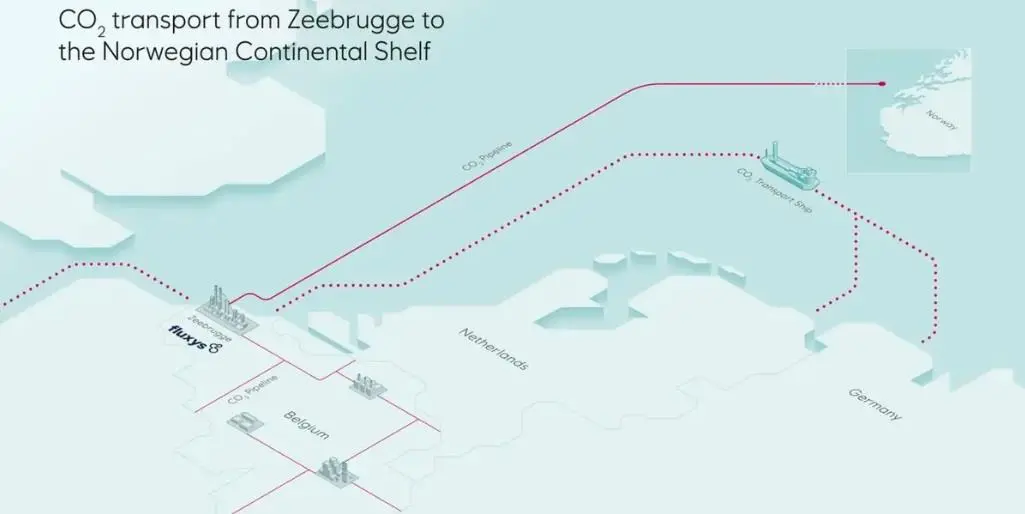
One of the latest is Port of Antwerp-Bruges, which is developing a CO2 compression plant in Zeebrugge in collaboration with Fluxys.
This facility will handle captured CO2 from Belgian and German industries, transporting it via the C-grid pipeline network to Zeebrugge for compression. The CO2 will then be transported through an Equinor operated undersea pipeline for permanent storage in Norway’s former oil and gas reservoirs.
Collective force
This project could the North-West European market a robust and flexible solution for large-scale decarbonisation.
It’s in the feasibility stage, with an investment decision expected by 2025.
Many believe that Carbon Capture, transport and Storage (CCS) is essential for achieving significant CO2 emission reductions in future.
Multiple industry organisations have now underscored the importance of Carbon Capture, Utilization and Storage (CCUS) technologies by signing the Oslo Declaration.
The declaration outlines five key policy actions to ensure the realisation of CCUS projects, such as the Ghent Carbon Hub, and low-carbon hydrogen initiatives like H2BE.
Structural coordination and cooperation among countries around the North Sea are necessary to untap the full potential of CCUS. Likewise, collaboration between EU and non-EU countries around the North Sea will be crucial to developing cross-border interoperable CCUS infrastructure and connecting CO2 sources with sinks economically.
Together with the Port of Antwerp-Bruges, North Sea Port has also signed the Oslo Declaration, together with large industrial stakeholders like ArcelorMittal Belgium, ENGIE, Equinor, Air Liquide, TotalEnergies and others.
Related Articles
 CARBON CAPTURE
 CARBON CAPTURE
 ALTERNATIVE FUELS & LUBRICANTS