



Visualising the front line of shipping’s technology transformation
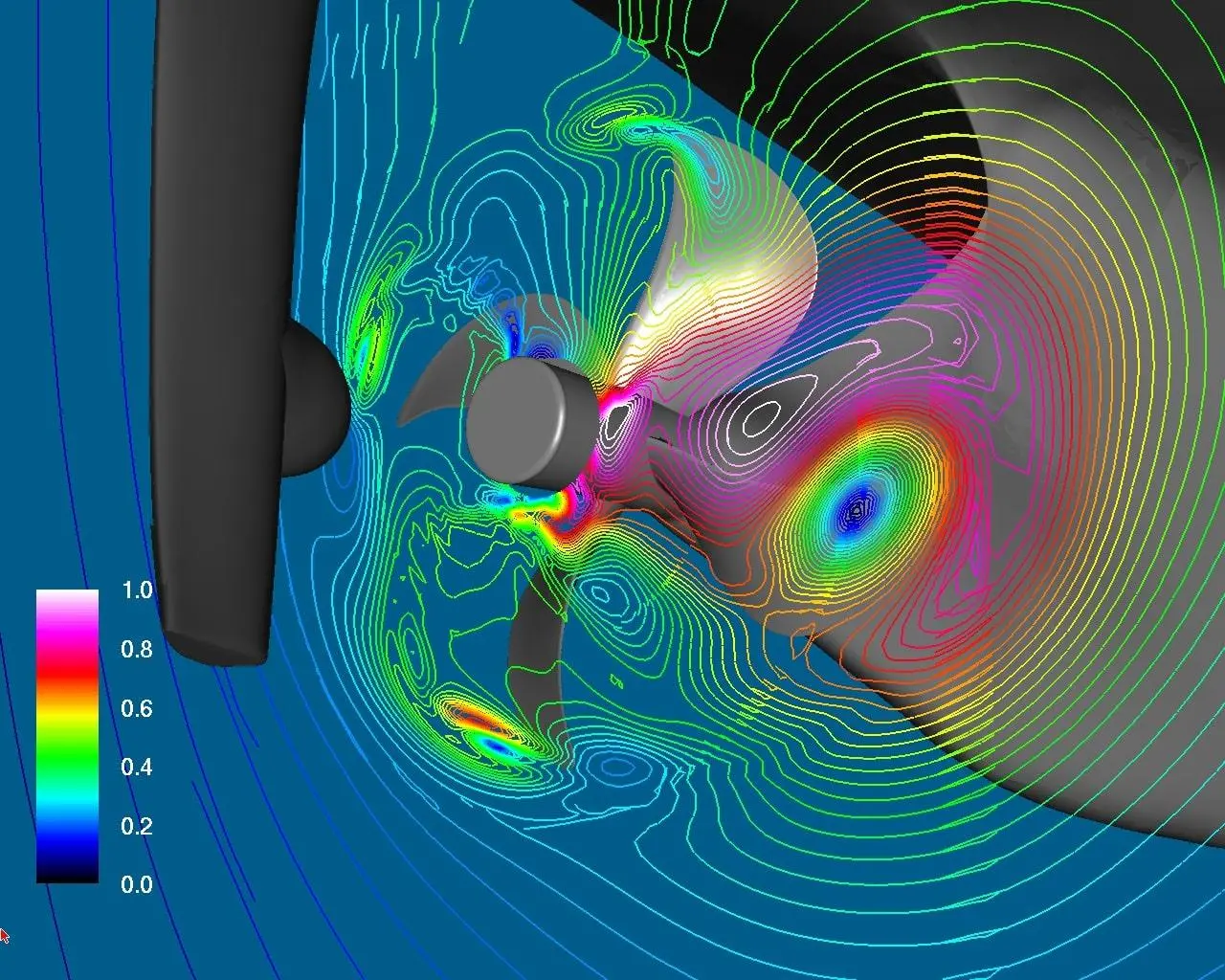
A host of new modelling and simulation technologies; Augmented Reality (AR), Virtual Reality (VR) and the use of 3D ship models are reshaping approaches to vessel design, safe operations and training.
AR is finding application enhancing real world environments, overlaying digital information such as schematics or navigational information onto physical objects. To achieve this, cameras, accelerometers, gyroscopes, and depth sensors continuously monitor the environment to answer help users understand position, environment and distance.
The resulting data collection and processing happen nearly simultaneously as a digital overlay is projected to the user. Augmented reality headsets are providing constant real time information to crewmembers freeing them from computer screens and mobile devices.
VR on the other hand, immerses users completely into a virtual world. Computer games in VR are common today. This is ideal to provide a scalable, low-cost solution simulating environments for training purposes. ABS calls this environment ‘MetaShips’ and its ability to be reconfigured digitally makes it a great training tool.
Today, advances in spatial information capture with tools like 3D scanning or 360 degree cameras enhance the more traditional CAD or gaming object libraries to build even more realistic VR experiences. This allows for more realistic training scenarios than navigating 3D models, though perhaps with less ability to customize them.
VR and AR are well-developed technologies, though they have room to grow. They both can be used with wearables like head-mounted displays or standard hand-held devices like tablets, laptops, or smartphones.
AR, VR and Mixed Reality (MR) can enhance decision-making by allowing users to interact with and relate to an asset they are viewing. These technologies have the potential to help reduce cognitive load by providing users with visuals that support understanding and provide context.
These visualisation technologies can be used both on and away from the asset or vessel in a collaborative fashion – giving operations teams an ability to communicate and collaborate in ways that were previously impossible.
Real World Models
Modelling and simulation involve creating and using a mathematical representation of a system to analyse its behaviour under different conditions. The mathematical models are created with multiple physical and software attributes, which allows users to quickly evaluate different solutions and determine their performance, identify software vulnerability, and cost-effectiveness.
Model development depends on the complexity of the system, the data available – and its accuracy – and the intended use case. Physics-based models characterise a real-world system’s behaviour using physics or first principles. These models are consistent and not limited to the range of data collected. Data-driven models use data collected to predict the system’s state.
As shipboard systems become more interconnected and software driven, modelling and simulation tools will allow designers to understand the interoperability issues from multiple systems.
Multi-physics models certainly need a variety of visualisation solutions for the engineer to really understand the behaviour of the design or operation. The model and simulation technology are really about the mathematics and understanding of the constraints of the design or situation.
Communicating this design intent, whether a product design like a ship or a process design like emergency response, needs great visualisation technology to be effective. So now we are getting beyond static images from CAD or laser scans and understanding dynamic situations with high degrees of complexity. VR is very well suited to help human understanding of all that math.
Project Applications
As with all new technology, safety needs to remain at the forefront to mitigate unintended risks. To this end, ABS is funding research at Texas A&M University to better understand the safety implications of utilizing wearable devices in a field environment. These features include analyzing various AR hardware devices, fitness for purpose, UI design, hazard perception capabilities, and maintaining situational awareness.
In 2023, ABS joined Crowley’s new service network using augmented reality onboard their vessels. This joint mission enabled crew members to present technicians with real-time visuals. This collaboration will lead to quicker maintenance and upgrades. The focus of ABS is to explore what is possible for future survey operations as well as safety.
Different simulation techniques can be applied based on the objectives. For example, a continuous simulation provides insights into variables such as temperature, power, or fluid flow, which change continuously over time. A discrete-event simulation can be used to model processes that change at given points in time.
Both techniques give the user a bird’s eye view, identifying bottlenecks that build up over time. An agent-based simulation can help predict outcomes by predicting the interaction of two entities and revealing patterns and insights in complex systems to users.
In this role, ABS has supported studies using simulation tools to optimise various areas of maritime operations. In one study, ABS used advanced modelling and simulation
ABS has also launched a pioneering Green Shipping Corridors Simulation service to support international design and development of clean energy initiatives. The service offers a simulation of the complex network of stakeholders involved in corridor development.
Informing Vessel Design
Visualisation also impacts the vessel design process, enabling a 3D model-based approach to engineering and ship construction. 3D model-based systems engineering (MBSE) is an end-to-end 3D design process which applies 3D models instead of traditional 2D drawings to improve collaboration across the asset lifecycle, saving time and resources.
3D models provide an improved view of a design, helping to identify potential problems at an early stage. While this practice broadly benefits new designs, 3D models can also be developed to help with retrofitting new systems for older vessels.
Improved integration of 3D design tools like computer-aided design (CAD) and computer-aided engineering (CAE) tools will contribute to MBSE and set-based design. They typically also allow engineers to bring richer design tools like modelling and simulation into the process. This synthesis design model can improve feedback cycles between design, engineering and construction teams.
Visualisation in the design process helps mitigate the risk of late-stage changes. Such changes can have escalating costs in time and resources the longer they go unnoticed. Of course, these same models can be used later in the lifecycle of the vessel for training, operations, and other opportunities after the design work is complete.
Testing for Safety
As systems become increasingly complex and software driven, ABS is working to ensure that more robust virtual testing cane used to drive safety of new systems.
Virtual testing is the practice of using simulations to verify and validate the performance and functionality of a system. This practice can speed up development and implementation time by reducing the need for physical testing.
Physical testing of unproven systems can be an impractical and slow process, consuming finite resources. Virtual testing, alternatively, allows a wide range of testing options that can be performed simultaneously without impacting real-world assets or prototypes.
Thousands of specific requirements in new software are not practical to perform manual testing. Ensuring software is tested in different conditions, scenarios and parameters reduces risk and cost in the hardware testing phases.
The development of highly detailed and accurate virtual models of complex maritime systems is key to technology’s journey. Access to more high-quality data will help inform more accurate models. This data will come from the growing number of sensors on board modern and future assets.
The resulting data collection and processing happen nearly simultaneously as a digital overlay is projected to the user. Augmented reality headsets are providing constant real time information to crewmembers freeing them from computer screens and mobile devices.
VR on the other hand, immerses users completely into a virtual world. Computer games in VR are common today. This is ideal to provide a scalable, low-cost solution simulating environments for training purposes. ABS calls this environment ‘MetaShips’ and its ability to be reconfigured digitally makes it a great training tool.
Today, advances in spatial information capture with tools like 3D scanning or 360 degree cameras enhance the more traditional CAD or gaming object libraries to build even more realistic VR experiences. This allows for more realistic training scenarios than navigating 3D models, though perhaps with less ability to customize them.
VR and AR are well-developed technologies, though they have room to grow. They both can be used with wearables like head-mounted displays or standard hand-held devices like tablets, laptops, or smartphones.
AR, VR and Mixed Reality (MR) can enhance decision-making by allowing users to interact with and relate to an asset they are viewing. These technologies have the potential to help reduce cognitive load by providing users with visuals that support understanding and provide context.
These visualisation technologies can be used both on and away from the asset or vessel in a collaborative fashion – giving operations teams an ability to communicate and collaborate in ways that were previously impossible.
Real World Models
Modelling and simulation involve creating and using a mathematical representation of a system to analyse its behaviour under different conditions. The mathematical models are created with multiple physical and software attributes, which allows users to quickly evaluate different solutions and determine their performance, identify software vulnerability, and cost-effectiveness.
Model development depends on the complexity of the system, the data available – and its accuracy – and the intended use case. Physics-based models characterise a real-world system’s behaviour using physics or first principles. These models are consistent and not limited to the range of data collected. Data-driven models use data collected to predict the system’s state.
As shipboard systems become more interconnected and software driven, modelling and simulation tools will allow designers to understand the interoperability issues from multiple systems.
Multi-physics models certainly need a variety of visualisation solutions for the engineer to really understand the behaviour of the design or operation. The model and simulation technology are really about the mathematics and understanding of the constraints of the design or situation.
Communicating this design intent, whether a product design like a ship or a process design like emergency response, needs great visualisation technology to be effective. So now we are getting beyond static images from CAD or laser scans and understanding dynamic situations with high degrees of complexity. VR is very well suited to help human understanding of all that math.
Project Applications
As with all new technology, safety needs to remain at the forefront to mitigate unintended risks. To this end, ABS is funding research at Texas A&M University to better understand the safety implications of utilizing wearable devices in a field environment. These features include analyzing various AR hardware devices, fitness for purpose, UI design, hazard perception capabilities, and maintaining situational awareness.
In 2023, ABS joined Crowley’s new service network using augmented reality onboard their vessels. This joint mission enabled crew members to present technicians with real-time visuals. This collaboration will lead to quicker maintenance and upgrades. The focus of ABS is to explore what is possible for future survey operations as well as safety.
Different simulation techniques can be applied based on the objectives. For example, a continuous simulation provides insights into variables such as temperature, power, or fluid flow, which change continuously over time. A discrete-event simulation can be used to model processes that change at given points in time.
Both techniques give the user a bird’s eye view, identifying bottlenecks that build up over time. An agent-based simulation can help predict outcomes by predicting the interaction of two entities and revealing patterns and insights in complex systems to users.
In this role, ABS has supported studies using simulation tools to optimise various areas of maritime operations. In one study, ABS used advanced modelling and simulation
ABS has also launched a pioneering Green Shipping Corridors Simulation service to support international design and development of clean energy initiatives. The service offers a simulation of the complex network of stakeholders involved in corridor development.
Informing Vessel Design
Visualisation also impacts the vessel design process, enabling a 3D model-based approach to engineering and ship construction. 3D model-based systems engineering (MBSE) is an end-to-end 3D design process which applies 3D models instead of traditional 2D drawings to improve collaboration across the asset lifecycle, saving time and resources.
3D models provide an improved view of a design, helping to identify potential problems at an early stage. While this practice broadly benefits new designs, 3D models can also be developed to help with retrofitting new systems for older vessels.
Improved integration of 3D design tools like computer-aided design (CAD) and computer-aided engineering (CAE) tools will contribute to MBSE and set-based design. They typically also allow engineers to bring richer design tools like modelling and simulation into the process. This synthesis design model can improve feedback cycles between design, engineering and construction teams.
Visualization in the design process helps mitigate the risk of late-stage changes. Such changes can have escalating costs in time and resources the longer they go unnoticed. Of course, these same models can be used later in the lifecycle of the vessel for training, operations, and other opportunities after the design work is complete.
Testing for Safety
As systems become increasingly complex and software driven, ABS is working to ensure that more robust virtual testing cane used to drive safety of new systems.
Virtual testing is the practice of using simulations to verify and validate the performance and functionality of a system. This practice can speed up development and implementation time by reducing the need for physical testing.
Physical testing of unproven systems can be an impractical and slow process, consuming finite resources. Virtual testing, alternatively, allows a wide range of testing options that can be performed simultaneously without impacting real-world assets or prototypes.
Thousands of specific requirements in new software are not practical to perform manual testing. Ensuring software is tested in different conditions, scenarios and parameters reduces risk and cost in the hardware testing phases.
The development of highly detailed and accurate virtual models of complex maritime systems is key to technology’s journey. Access to more high-quality data will help inform more accurate models. This data will come from the growing number of sensors on board modern and future assets.
Related Articles
 DESIGN, REGULATION, CLASSIFICATION AND SURVEYING