



Regional focus: The US National Shipbuilding Research Program: an effective public/private collaboration
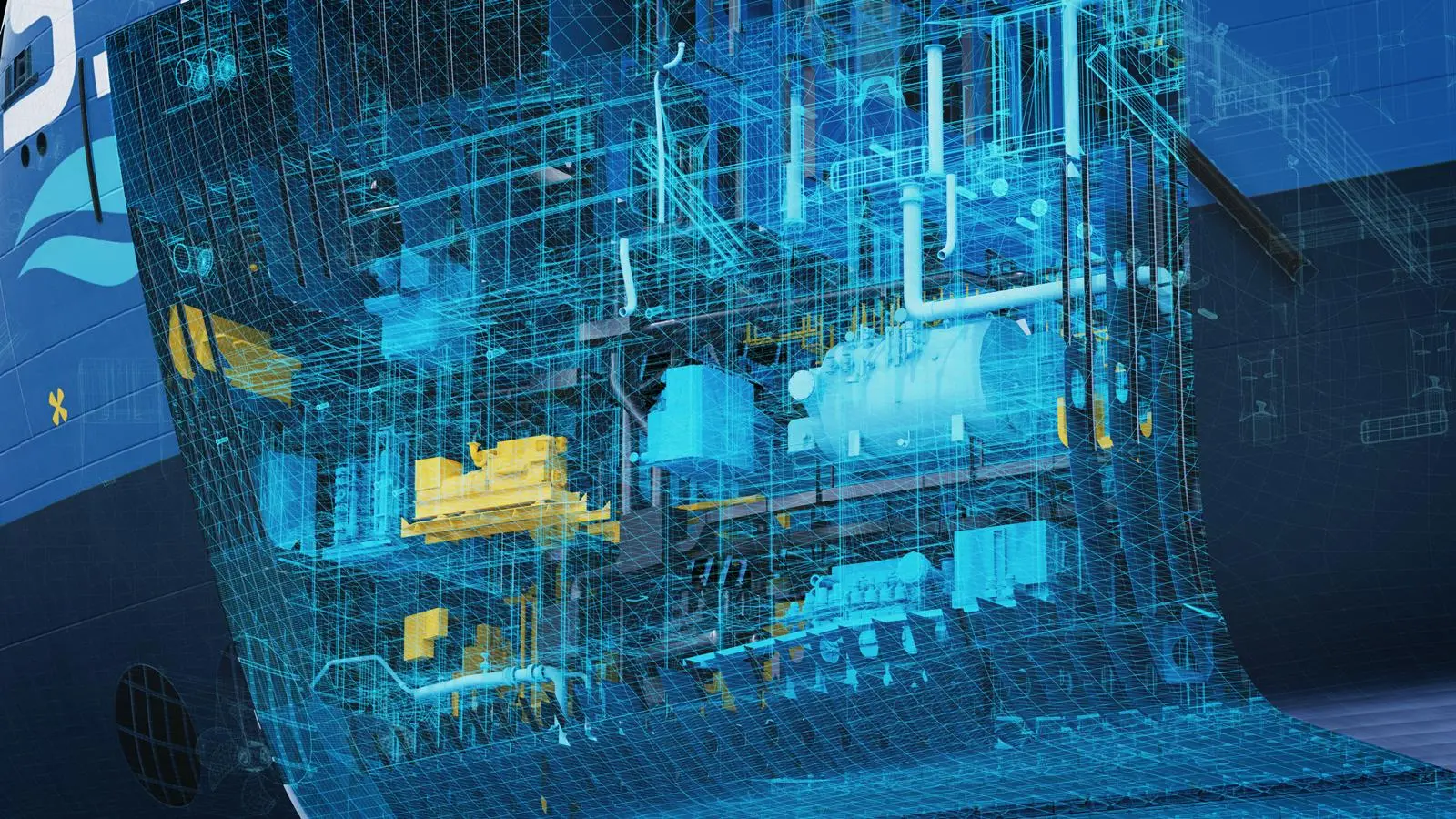
The US National Shipbuilding Research Program (NSRP) was established in 1971 to identify areas for improvement within US shipbuilding. Working with shipbuilders and the supply chain the NSRP identifies and partially funds projects that will provide value to a broad sector of US shipbuilders. The result is that participants get to share knowledge in a way that is often talked about but not always in evidence in the commercial shipbuilding sector.
The NSRP provides research and development grants to help shipyards develop and deliver concepts that add value to shipbuilding projects and support an investment case for the US Navy and government. Fulfilling these contracts represents a huge investment of time for shipyards; they need an “innovation” mindset that can anticipate complex requirements that are likely to change over time. The NSRP provides a framework for that innovation and tools that enable all interested US shipyards to adopt benefits identified by the program.
The NSRP also provides a means to improve technology development and adoption to the wider benefit of the defense shipbuilding sector. Yards still bid competitively for projects but since all NSRP members have access to final reports, they stand to benefit from the shared knowledge. Ultimately the US ship design and building industry is better suited to serve the US Government through pooling of knowledge and capability.
SSI has invested heavily in many different NSRP projects since 2004, partnering with shipyards and vendors to crystallize innovation. The benefits are two-way since the program enables shipbuilders and participating partners to direct their investment towards the US shipbuilder’s most pressing challenges.
Examples of NSRP projects include:
- Bollinger Shipyard together with Wolf Robotics and SSI worked under the NSRP to introduce computer-aided robotic welding and improve productivity. This two-year project resulted in the development of a first-of-its-kind streamlined process to export 3D model weld information to a robotic welder, which enables the shipyards to focus their workforce on higher-value activity and leave the simpler panel welding process to a machine.
- Austal Shipyard with support from SSI and the NSRP automated the forming of steel plates using a Nieland press. SSI provided the press with a chart for pressure settings and a grid for pressures needed to shape the steel. Connecting the ship model to the hull forming press allows shipyards to form hull steel plates to the correct design and on the required schedule without relying on physical templates.
- SSI and DotProduct Dot3D’s scanning platform supported an NSRP project to create a workflow to provide information to a comparison tool, reducing the risk of differences between part descriptions and delivered components. Using complete scans of components and equipment allows for the export of modeled components to be checked for accuracy, enabling minimal interruption of the construction process due to inaccurate components. The same process can be used to check that equipment matches the specification on the data sheet provided and is suitable for installation. This enables design teams to import 3D equipment scans, overlay them onto the model, and confirm if the component is suitable for connections and mountings. The increasing use of 3D plans for ship design and construction can be used to manage project risks of all sizes.
- SSI has worked on the NSRP LiftShip project since 2016, initially providing data from the 3D model to inform weight studies. Using 3D data enables the shipyard to virtually position portions of the ship within the construction area and predict the forces resulting from lifting. The critical aspect of this process is understanding what impact the lift may have on the structure.
The first phase examined the impact of lifting and turning steel sections, exporting the model to a failure effect analysis (FEA) tool to perform a dynamic turn. The second phase added a further layer of innovation, adding metadata that better describes the structure and can reduce the time needed for analysis, enabling modifications to be made more quickly.
In the third phase – LiftShip examined how to capture and relay information gathered during the simulation, including recommendations that can inform the construction process. By importing information back to assembly drawings, the operator can note potential deficiencies which can be used to add strengthening to the section and minimize the risk of damage.
Floorganise, HII – Ingalls Shipbuilding, Austal USA, General Dynamics BIW, Fincantieri Marinette Marine, and other shipyards, with the support of SSI are working within an NSRP project to automate the detail planning process and coordinate the project plan through a direct integration with the product model. The outcome of these projects will increase shipyard planning efficiency, using the information from the 3D product model to support earlier procurement, planning, and resource planning before the design is finalised.
The integrated solution integrates directly with engineering data from the 3D detailed design model and with other shipyard planning and scheduling systems. For example, through an early released BOM from a shipbuilding-specific PLM system to connect engineering data directly to planning teams and the shop floor.
Looking ahead
The NSRP through private sector participation and investment, will continue to explore areas to improve US shipbuilding. With more shipyards moving towards a Product Lifecycle Management (PLM) approach to vessel construction, comes an opportunity to harness the benefits of better functional data to incorporate innovation into ship design and construction.
Using a 3D ship model within a PLM framework will not just improve cost estimation, it can unlock huge efficiency gains and improve the ability to manage change, enabling delivery in shorter timelines and lower total costs. When change happens, a data-driven approach can transform expensive showstoppers to a streamlined workflow process drawing on real world data.
History of NSRP
The founding NSRP began as an R&D program in 1971 under the guidance of MARAD (U.S. Maritime Administration). The Program’s initial goal was to respond to the direction given to the Secretary of Commerce in the Merchant Marine Act of 1970 [Section 212(c)] to collaborate with shipbuilders in developing plans for the economic construction of vessels. To provide industry management and technical input, MARAD selected the SNAME (Society of Naval Architects & Marine Engineers) T&R (Technical & Research) Ship Production Committee to carry out these responsibilities. Since its inception the NSRP’s goal has remained the same: to reduce production costs and to accelerate delivery schedules through improved shipbuilding methods.
Key dates
| • | 1971-79 — NSRP funded and administered by MARAD |
| • | 1980-85 — NSRP administered by MARAD, funded by Navy Manufacturing Technology Program (ManTech), which was under Naval Materials Commmand Office |
| • | 1986-91 — NSRP administered by Naval Surface Warfare Center-Carderock (NSWCC), funded by by ManTech, moved to Assistant Secretary of the Navy (ASN) |
| • | 1992-94 — NSRP funded by ManTech, now administered at Office of Naval Research (ONR) |
| • | 1995-97 — ManTech and DARPA (Defense Advanced Research Projects Agency) MARITECH (Maritime Technology) jointly funded NSRP, again with NSWCC managing the program in cooperation with MARAD and ONR |
| • | 1998-present — in early 1998, NSRP moved to NAVSEA, where funding, administration and management functions were performed. In mid-1998, the NSRP-ASE collaboration of (then) nine shipyards was formed and NAVSEA charged the collaboration to manage the program. |