



Wind propulsion crucial for maritime decarbonisation
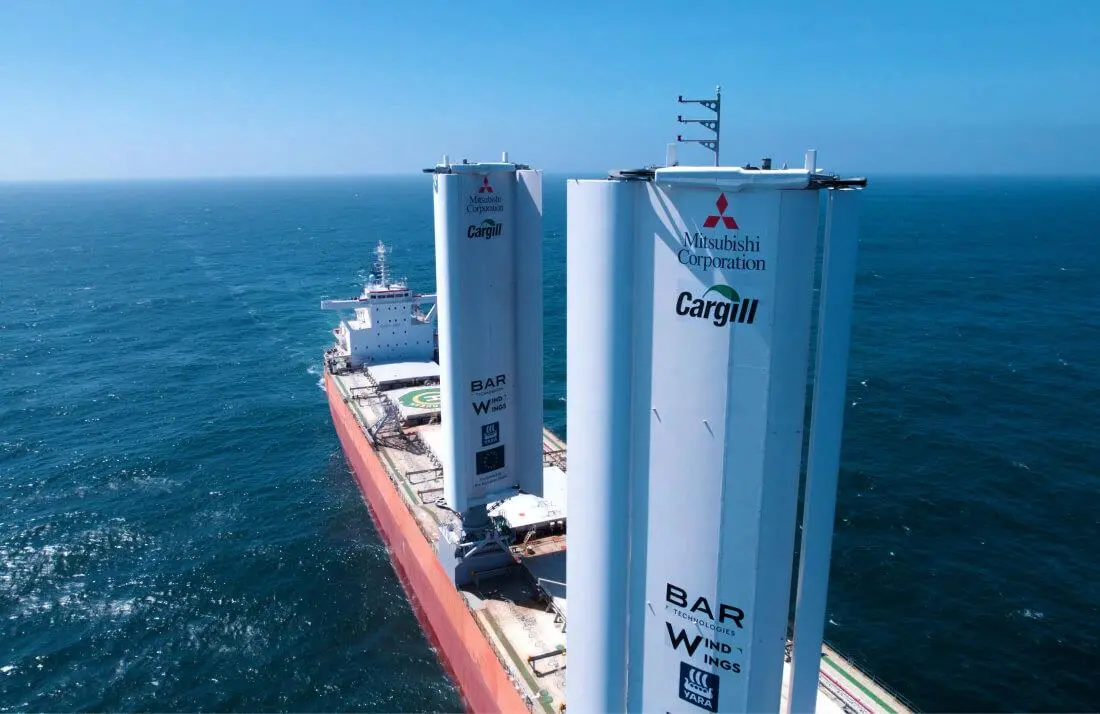
According to the Global Maritime Forum’s report, Climate Action in Shipping: Progress toward Shipping’s 2030 Breakthrough, only 12 months remain to make meaningful changes to meet the IMO’s target of having zero-emission fuels comprise 5% of global shipping fuel by 2030.
The upcoming MEPC 82 discussions at the International Maritime Organization (IMO), from 30 September to 4 October, represent a pivotal moment for the shipping industry, says BAR. Against this backdrop, the company is pushing for the inclusion of wind propulsion in the greenhouse gas fuel intensity (GFI) formula.
“We strongly advocate for the inclusion of wind propulsion in GFI formula,” said John Cooper, chief executive of BAR Technologies.
“Incorporating wind energy not only supports the maritime industry in its transition to sustainable practices but also reinforces the need for innovative, emission-free technologies.”
The company stresses that combining wind propulsion with scalable zero-emission fuels is essential to meet the industry’s 2030 and 2050 decarbonisation goals.
Incorporating wind propulsion into the GFI formula would create a more balanced approach, supporting the industry’s transition to renewable energy, it says.
The company’s WindWings technology, already available, offers significant carbon savings and comes with a performance guarantee. BAR Technologies believes integrating solutions like WindWings with zero-emission fuels is key to transforming the maritime sector in a timely, cost-effective manner.
Related Articles
 ENERGY SAVING DEVICES
 ENERGY SAVING DEVICES
 AMMONIA