



Pre-emptive approach to battery risks
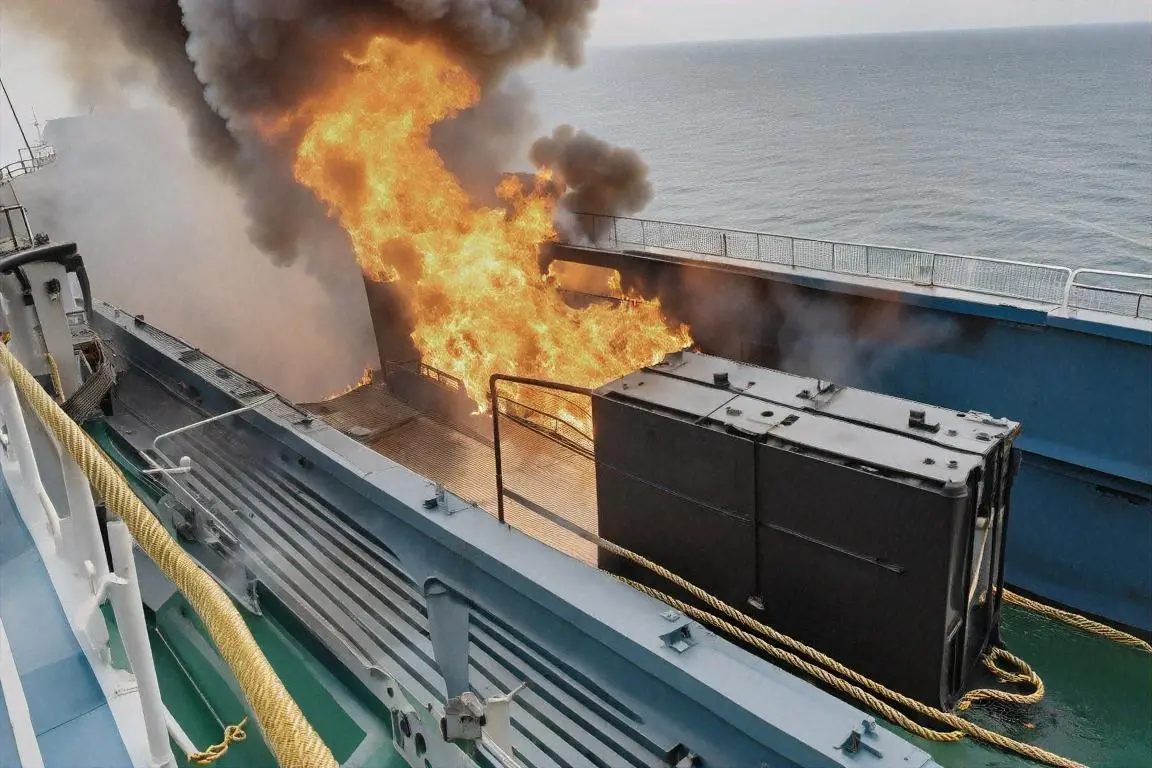
In particular, the lithium-ion batteries that power EVs can enter a state of thermal runaway when damaged or defective, generating intense heat and flames that are difficult to control, and all the while giving off toxic gases. Traditional firefighting methods may be ineffective against these fires.
A raft of dramatic incidents over recent years involving conflagrations in shipments of EVs aboard PCTCs has raised concerns and underscored the need for shipowners and managers to adapt vessel designs, fire safety systems, handling procedures and crew training so as to enhance safety. Updated international safety standards for EV transport are expected to be introduced by 2027.
In the meantime, according to Manchester-based maritime training company VIRSEC, forward-thinking operators are adopting proactive measures to mitigate risks. Such initiatives range from pre-loading assessments of EV battery condition to extra investments in advanced detection and firefighting equipment.
VIRSEC, which has developed an on-line course entitled Lithium-ion Battery Safety on Ships for Seafarers, stated that “The rise of EVs is an exciting development that promises a cleaner, greener future for transportation. As ship operators adapt to this new reality, they can play a vital role in facilitating the global shift towards electric mobility by establishing and sharing best practices for their safe carriage by sea. Proactively addressing the challenges of transporting EVs, the maritime industry can help pave the way for a more sustainable future.”
As acknowledged by VIRSEC, the frequency of EV fires is not necessarily higher than internal combustion engine(ICE) vehicle fires over an equivalent distance travelled, but the former present specific issues for vehicle carriers and ferries.
A thermal event in a li-ion battery can start in several ways, such as by spontaneous internal or external short-circuiting, overcharging, external heating or fire, or mechanical damage, leading to thermal runaway. Batteries in EVs are often located on the underside of the vehicles in protective casings, making them hard to access for firefighting. Moreover, even if a fire looks to have been extinguished, batteries can re-ignite, sometimes hours or days later. Toxic and flammable gases can be released, endangering crew.
Shipments in PCTCs are tightly-packed within a low ceiling height, multi-deck configuration, facilitating the rapid spread of fire between adjacent vehicles and rendering firefighting, difficult enough in the case of conventional vehicles, especially problematic with EVs. Fixed CO2 systems may not be fully effective, and cannot be activated in port during cargo working.
Risk assessment and improvements in early fire detection systems and procedures on vehicle decks are key areas of focus for regulators, insurers and shipowners as the industry looks towards updated guidelines and requirements embracing vehicle carriers and ferries transporting EVs.
Other areas commanding attention are the development of new fire suppression systems and agents optimised for EV fires, cargo loading and stowage plans to better segregate and provide access to EVs, enhanced crew training in EV fire response with an emphasis on controlling thermal runaway, and establishing policies on accepting used EVs that may have prior undisclosed damage.
As to the latter, one major player in the PCTC market announced last year that, in addition to introducing intensified fire protection measures, it had decided not to accept secondhand EVs due to the higher risk that they may represent.
For crew and operational management, the content of the dedicated training course offered by VIRSEC is intended to provide essential knowledge and outcomes crucial for addressing routine and emergency situations involving li-ion batteries.
Related Articles
 BATTERIES, SUPERCAPACITORS, FUEL CELLS AND OTHER ENERGY STORAGE TECHNOLOGY
 BATTERY HYBRIDS & FULL-ELECTRIC VESSELS
 BATTERY HYBRIDS & FULL-ELECTRIC VESSELS