



Kawasaki’s hydrogen plans shelved
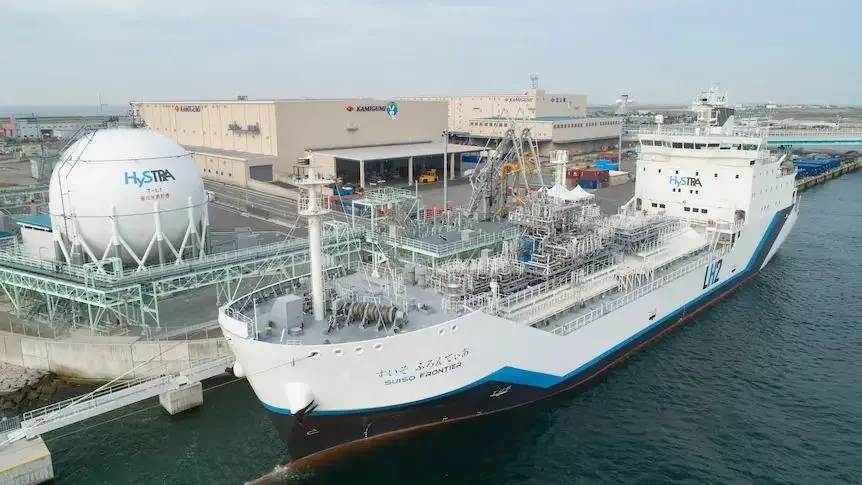
The project, backed by both the Victorian and Australian federal governments with $50 million each, sought to establish an international hydrogen supply chain. Using brown coal from the Latrobe Valley, the plan involved producing hydrogen, sequestering carbon emissions through unproven CO2 capture and storage (CCS) technology in the Bass Strait, and piping the hydrogen 150 kilometres to the Port of Hastings for shipment to Japan. The Japanese government had also pledged $2.35 billion to support the initiative.
However, Japanese media reported last week that Kawasaki Heavy Industries has decided to refocus efforts domestically, citing challenges in meeting a 2030 timeline for hydrogen procurement. The Japanese business publication Nikkei noted that the completion of the project within the original timeframe was critical to its competitiveness.
Kawasaki has announced that the next phase of the hydrogen supply chain demonstration will take place in Japan to mitigate time and cost pressures. The company also indicated a downsizing of hydrogen carriers to align with its revised strategy, which it describes as moving towards “a real solution.”
In a statement, Yasushi Yoshino, executive officer of Kawasaki’s Hydrogen Project Group, affirmed the company’s ongoing commitment to the Latrobe Valley despite the shift in focus. “The change to phase one of the project does not impact Kawasaki’s commitment to a commercial-scale project in the Latrobe Valley,” he said.
The development raises questions about the future viability of large-scale hydrogen production using coal and CCS, especially in light of mounting global pressure to adopt cleaner and more proven technologies. While the project remains a potential avenue for hydrogen production in Victoria, this setback underscores the challenges of navigating economic, technological, and environmental constraints in the transition to low-carbon energy.
The Latrobe Valley initiative was seen as a test case for the role of CCS in decarbonising hydrogen production. With this recent development, its future now hinges on renewed partnerships and technological breakthroughs to meet international and local climate goals.
Related Articles
 ALTERNATIVE FUELS & LUBRICANTS
 ALTERNATIVE FUELS & LUBRICANTS
 ALTERNATIVE FUELS & LUBRICANTS