



Retrofitting could bring a sea-change of progress to maritime industry
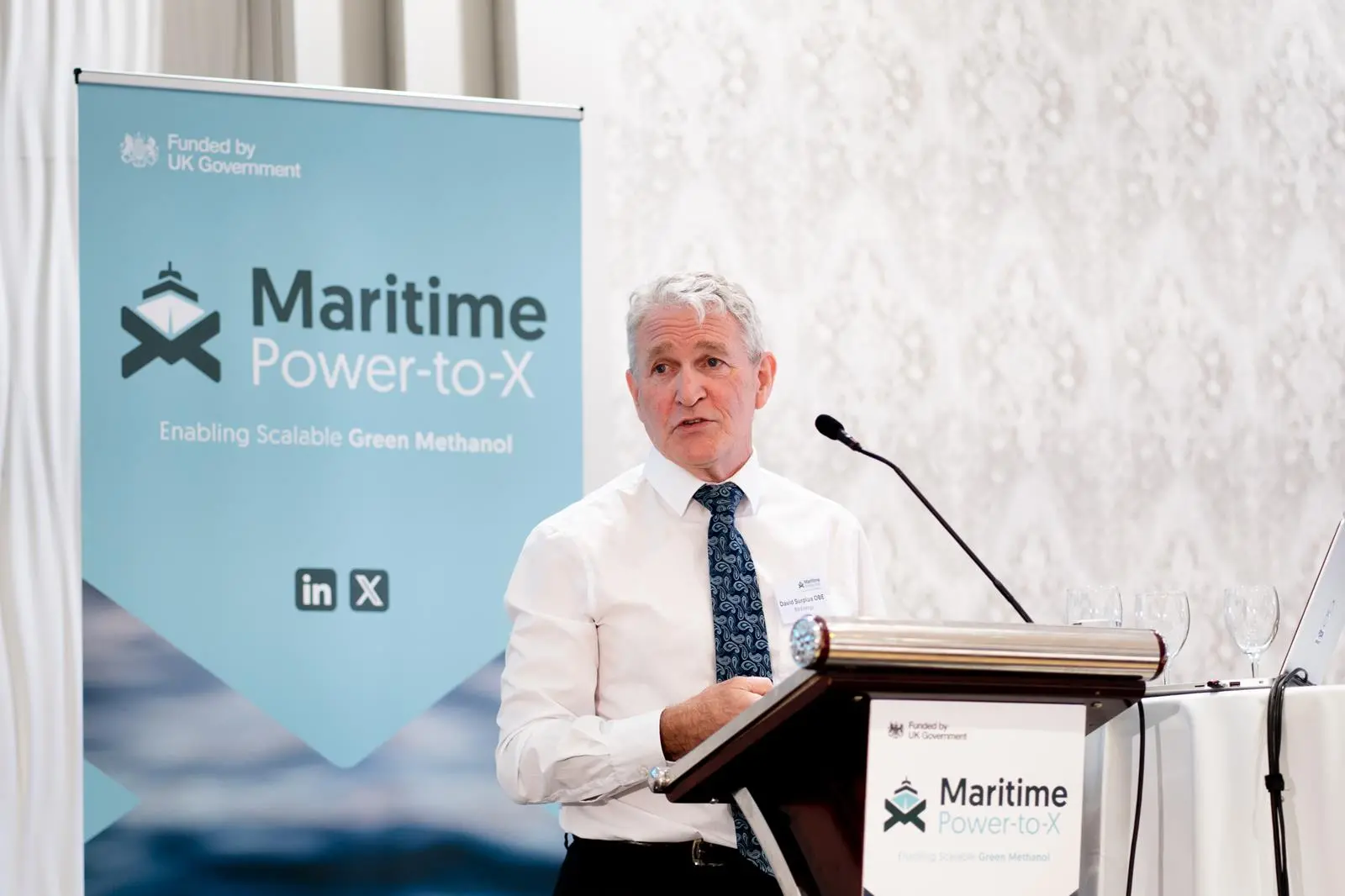
The shipping industry has set the goal of net zero emissions by 2050 and if this ambitious target is to be met, renewable fuels need to be developed and onboarded as a matter of urgency. In the near term, the International Maritime Organization’s (IMO) ambition is for 5% of shipping’s fuel mix to be low carbon by 2030, which seems like a daunting ask for a sector facing challenging headwinds and supply and demand issues.
From our time meeting others in the sector at global conferences in 2024, it’s clear that price, critical infrastructure and commercial readiness are key factors in determining the pace of development for decarbonisation, as is competition with other sectors like road and aviation who are also on their own energy transition journeys. At B9 Energy, and with the wider Maritime Power-to-X team, we are addressing these challenges through determined innovation and creative collaboration, exploring how fully scalable green methanol can be used as a zero-emission fuel for the global maritime industry.
Our idea is relativity straightforward – we aim to power freight ferries with green methanol, incorporating a carbon capture loop. The fuel would be synthesised using green hydrogen generated from excess wind power and carbon captured from an onboard reformer. The carbon is then returned to the methanol synthesis plant in the same tank containers that delivered the methanol. By re-using the CO2 in the synthesis of the methanol, we are closing the carbon loop, meaning freight ferries can be powered by fuel with ‘true zero’ emissions.
The Maritime Power-to-X project is progressing well, with our pre-deployment trails due to take place by the end of March this year at Larne Harbour. The beauty of the power-to-x process is that it can be applied to other industries, and our pre-deployment trail will also demonstrate how the technology can support road haulage as well.
As we look ahead, we are also considering how the technology can be incorporated into older freight ferries as a way to tackle some of the key challenges to meet net zero. According to Lloyd’s Register data, many ships originally designed to be powered by fossil fuels are likely to remain in service by 2050, representing around 20% of the global fleet. Decarbonising these vessels is therefore a crucial element of the maritime energy transition.
One solution is to retrofit vessels that currently use fossil fuels. Not only will this support net zero ambitions but will give older vessels a new lease of life through compliance with the ever-tightening CII (Carbon Intensity Index) and EEXI (Energy Efficiency Index for Existing Ships). There are of a course a myriad of factors that impact the ability to retrofit vessels including the cost as well as fleet and technology readiness. Lloyd’s Register has also helpfully created a fleet decarbonisation pathway that ensures safety and compliance while deploying retrofit technologies on existing vessels. Building on the world’s first methanol engine retrofit project, that was successfully competed on the Stena Germanica in 2015, the Maritime Power-to-X project is confident that deployment of the novel carbon recirculation technology lends itself well to the retrofit market and could help deliver a sea change on our journey to net zero.
Related Articles
 METHANOL
 METHANOL
 2-STROKE & 4-STROKE