



Woodward showcases next-gen engine tech to support decarbonisation
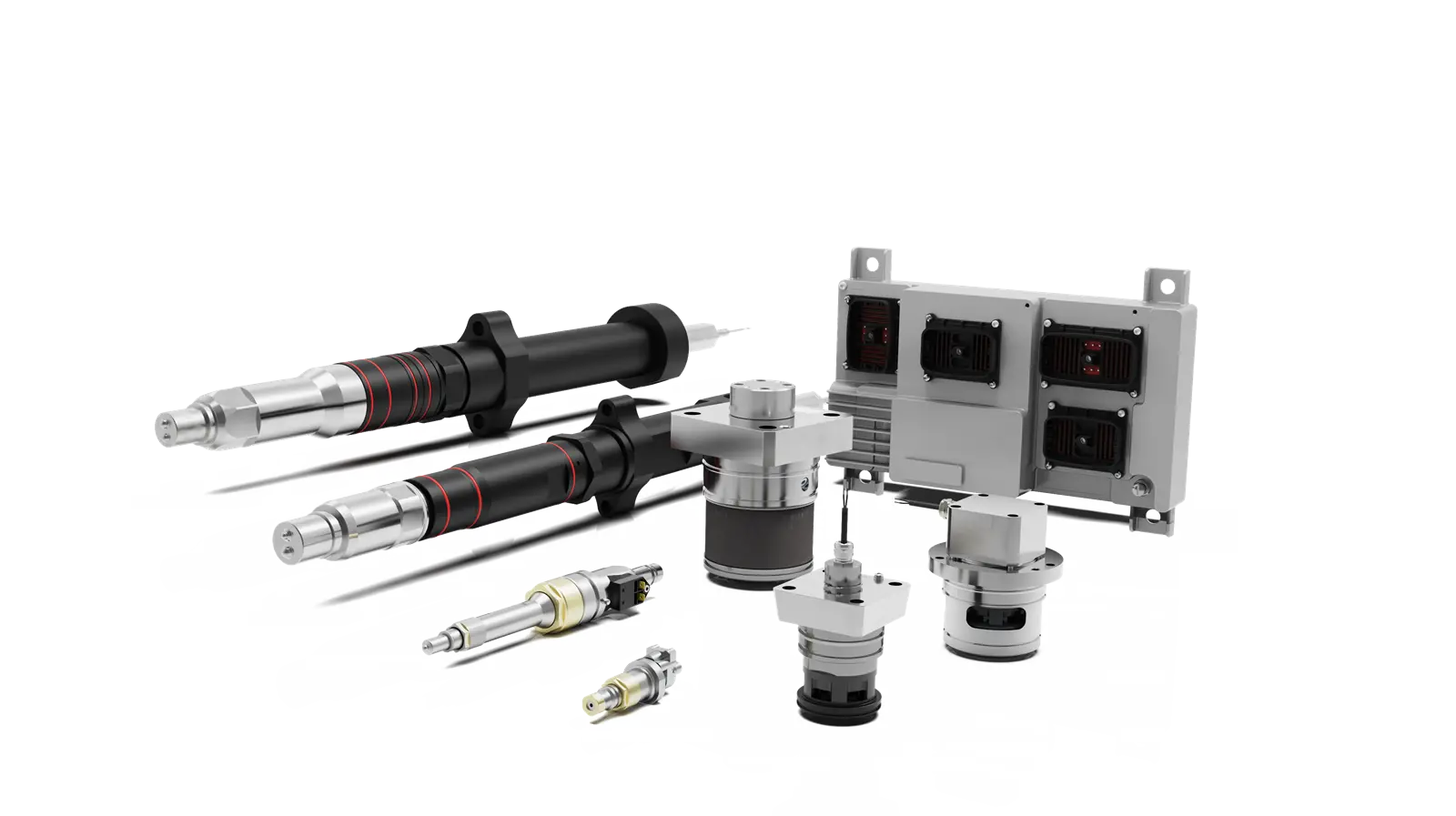
The company has integrated its product offerings into a unified family platform that includes Medium-Pressure Injection (MPI), High-Pressure Dual Fuel (HPDF), SOGAV gas admission valves, X-series actuation systems and the Large Engine Control Module (LECM) for advanced electronic control.
The newly introduced Port Fuel Injection (PFI) range incorporates direct actuated technology, offering flexibility for port fuel or medium pressure direct injection. Engineered for alternative fuels such as methanol and hydrogen, the PFI line supports various combustion strategies and allows customisation to engine-specific requirements, including nozzle positioning, fuel inlet configuration and packaging—all while maintaining a high level of commonality across the platform.
The High-Pressure Dual Fuel system features an innovative twin nozzle injector that combines two injectors within a single unit. One side is tailored for methanol or ammonia using electronically controlled Common Rail technology, while the other delivers diesel for pilot ignition or full back-up operation. The diesel side is available in both traditional pump-line-nozzle (PLN) and modern Common Rail configurations. This twin-needle design simplifies cylinder head integration and enhances combustion efficiency by positioning both nozzles centrally within the cylinder.
Woodward’s SOGAV platform continues to expand with solutions for hydrogen and ammonia admission, supporting the growing demand for alternative fuels in marine propulsion. For combustion management, the LECM enables advanced control strategies such as Reactivity Controlled Compression Ignition (RCCI). The system leverages in-cylinder pressure feedback to precisely regulate air-fuel ratios, essential for achieving the dynamic response required by RCCI combustion. This is further supported by the company’s next-generation X-series actuators and throttle systems.
With this portfolio of large engine solutions, Woodward reaffirms its commitment to enabling decarbonisation by delivering adaptable and high-performance control systems tailored for the fuels and technologies of the future.
Related Articles
 ALTERNATIVE FUELS & LUBRICANTS
 ALTERNATIVE FUELS & LUBRICANTS
 ALTERNATIVE FUELS & LUBRICANTS