



ABS supports vessel electrification and hybrid power operations in maritime

The maritime industry is witnessing increased interest in fully electric and hybrid powered vessels as means to reduce or eliminate carbon emissions. To date, most fully electric vessel projects have been smaller tonnage, particularly those designed to operate within ports and harbours.
To facilitate this process, ABS is supporting projects that seek to increase electrification in the maritime industry, through the creation of common standards and the development of optimised approaches that measure the impact of electrification on assets and users.
ABS is also going further, supporting evaluations of the use of hybrid electrical systems onboard much larger ships and enabling clients and shipyards to understand the implications on vessel design and operational performance.
Future Ship & Systems Design
Singapore’s Maritime and Port Authority (MPA) has signalled its intention that all harbour craft shall achieve net zero emissions, with an ambitious timeline to develop the assets required.
Following a call for expressions of interest, MPA selected concepts to develop standardised and optimised solutions. Singapore Maritime Institute has funded the Future Ship and System Design (FSSD) program at Singapore Institute of Technology (SIT) to support further development of the chosen solutions. ABS is working closely with SIT in this program.
Fully aligned with industry ambitions, this project is designed to establish the platforms and standards that can enable the deployment of successive generations of net-zero harbour craft.
Key to the MPA’s approach was to select an optimum systems approach, considering both the vessels and the design and optimization of the supporting infrastructure.
ABS will offer the class perspective to the development process, providing its unique capabilities in modelling and simulation (ModSim) to support system optimisation for both the vessel and its supporting ecosystem.
Thinking bigger
ABS can use its ModSim technology to model a single harbour craft, a fleet or a complete ecosystem. And the same technology is being increasingly employed by owners seeking solutions to bigger challenges.
While perfectly suited for small vessels, fully electric propulsion is not yet an effective solution for large ones. However, the potential of hybrid electric propulsion is among the most popular options being explored by shipowners to increase operational efficiency and lower carbon emissions.
This arrangement is becoming more popular for high value ships such as LNG carriers, cruiseships, container vessels, PCTC and OSVs. As a result, port electrification is also increasing, as the need grows for charging infrastructure and cold ironing to provide shore power for larger vessels.
ModSim can be deployed to help understand the trade-offs between different power system architectures and the choice of energy efficiency technologies. The additional cost to newbuildings or conversions mean owners wish to fully understand the impact of new configurations on design and operations and what benefits can be expected.
ABS can also help owners understand the safety and reliability implications of hybrid power systems on vessel designs. Electrical installations are becoming increasingly complex as new types of power sources and loads are added to systems, in contrast to traditional installations where the load and machinery configuration are well understood. New power system architecture, such as Medium-voltage Direct Current (MVDC) also requires new understandings on protection and safety management from the designers and the operators.
Furthermore, as software-driven energy management systems become more complex, compatibility and reliability are issues of increasing interest. ABS embeds its modelling and simulation methods into its “Hardware-in-the-Loop” testbed to verify the behaviours of the software and hardware with actual operation profiles in real time. This will enhance the fidelity of the virtual validation and verification process and help ABS to develop the requirements to address the relevant industry challenges.
Model Based Design Evaluation
Using battery power or operating a fully or hybrid electric vessel changes the design opportunities for the owner and the user experience for the crew.
To support this change, ABS develops ModSim approaches which can be used to help stakeholders develop the optimum configuration for their vessel designs. ABS is working to establish protocols for quantifying the impact of a component (such as hybrid power and energy saving technology) on the operational performance of the entire vessel system. This Model-Based Design Evaluation (MBDE) protocol aims to provide an objective assessment of the efficacies of various new technologies.
Rather than waiting until sea trials to assess vessel performance, MBDE can be applied to evaluate the performance of a ship or system at the design stage – and take into account the ship’s intended operating profile.
This can provide vital insights for owners who are currently required to build ships to Energy Efficiency Design Index (EEDI) design criteria that may not reflect the energy efficiency of their operations. The lack of consideration of the operational profiles of the vessel mean that a vessel with a good EEDI rating may not necessarily have lower emissions and two vessels with similar EEDI ratings may have divergent emissions.
The ability to consider operational performance at the design stage makes it possible to construct a model that includes the operational profile and standardise predictions of vessel performance.
The fact that ships may not operate on the routes or trades first envisaged can also be factored into the model. Using a library of historical data it is possible to create a matrix of operational profiles that the owner can analyse to understand how efficient – and how flexible – the chosen design is likely to be and whether it requires adjustment.
The application of hybrid power is one of the most promising areas for which to apply the MBDE framework. Whereas traditional approaches to design modifications can be assessed based on previous experience, exploring new concepts that integrate hybrid power into vessel designs requires clients to fully understand the implications of their choices as early in the process as possible.
The wide range of factors to consider during the modelling of a hybrid vessel with real-world operational profile leaves the possibility of divergent modelling methodologies and assumptions among the different stakeholders. This divergence would make an objective comparison of the effectiveness of the various technologies difficult, thus potentially hindering the adoption of these technologies. The Model-based Design Evaluation framework that ABS is developing should provide a much needed transparent protocol, under which a fair evaluation of various options become possible.
ABS is supporting joint development projects undertaken with shipyards by using the MBDE framework, applying the matrix of options to generate feedback that shipyards and clients can use to refine their designs.
As the industry continues to work towards cleaner and safer operations – including the use of hybrid electric power – these innovative technologies will increasingly be applied to address long term challenges.
Related Articles
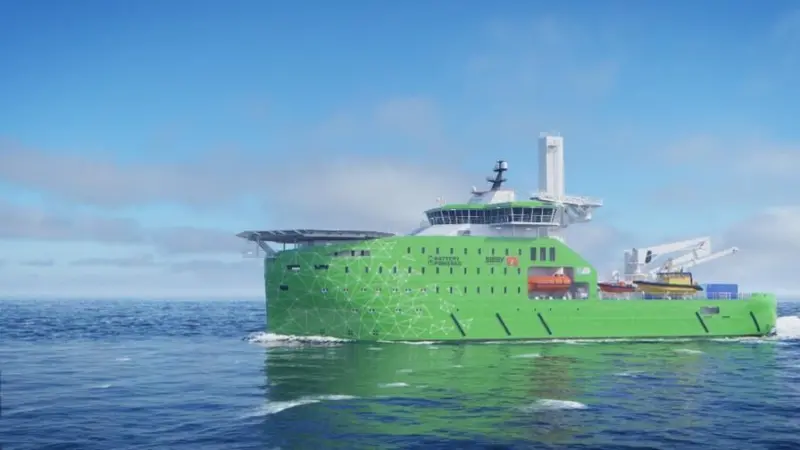 BATTERIES, SUPERCAPACITORS, FUEL CELLS AND OTHER ENERGY STORAGE TECHNOLOGY
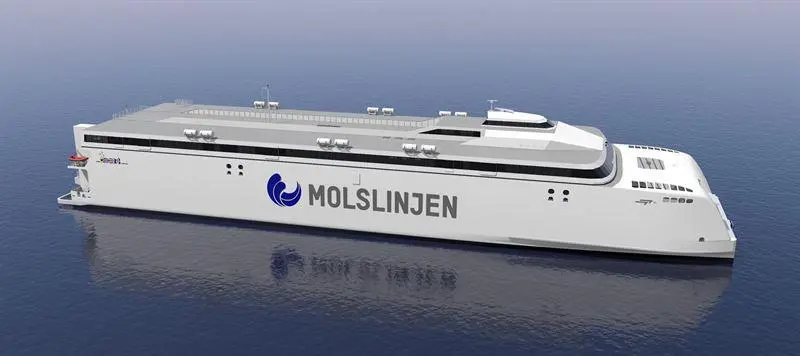 BATTERY HYBRIDS & FULL-ELECTRIC VESSELS
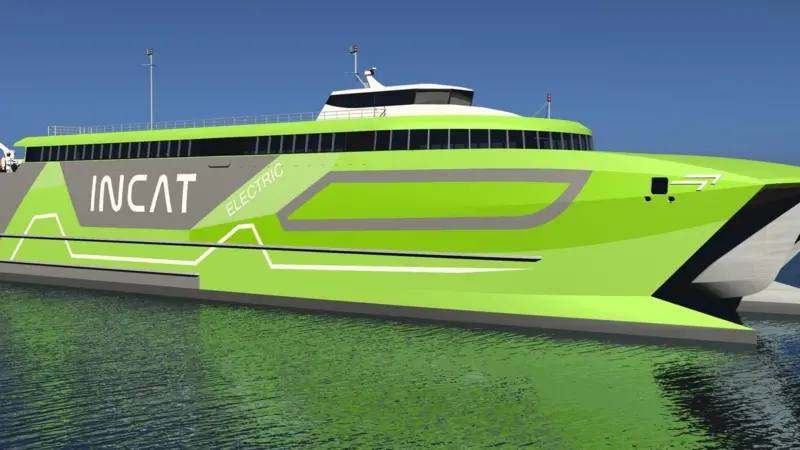 BATTERY HYBRIDS & FULL-ELECTRIC VESSELS