



The need for speed
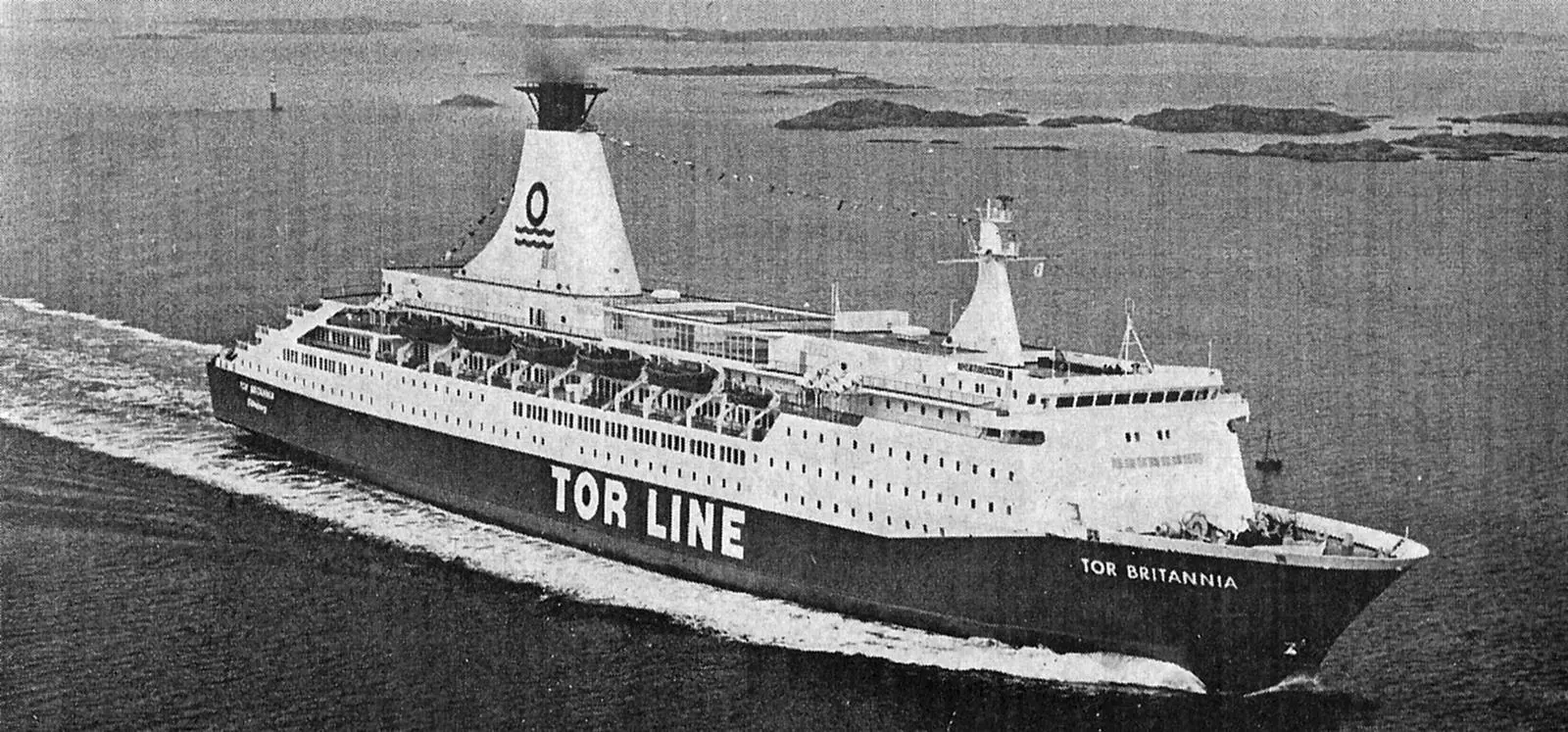
This time, it was passenger ships under the spotlight, where total engine outputs approaching 50,000 bhp were being specified, to enable vessels to reach speeds above 25 knots. The operators argued that this would enable more voyages, therefore more revenue, but our editorial predecessors were not sure they would adequately pay their way.
We had to go ‘down under’ to find an example of this latest trend for novel, high speed propulsion in action, with the entry into service of the first gas turbine electric cargo vessel, the 4,150 dwt Seaway Prince, built at Whyalla in Australia for the Union Steamship Company in New Zealand. The attraction in this case was more to do with space than speed. The compact size and light weight of the GE heavy duty two-shaft regenerative gas turbine allowed it to be housed above deck, feeding electric power to two GE propulsion motors, and freeing the normal machinery room space for extra ro-ro decks. The Whyalla yard was becoming something of a gas turbine specialist, having already built two ro-ro vessels with gas turbines mechanically coupled to CP propellers, for its parent company, Broken Hill Pty (BHP). The company had on order five more gas turbine ships: a sister vessel for Seaway Prince, plus two larger electrically-driven ro-ro ships for Union Steamship and a pair of mechanically-driven bulk carriers for BHP. Although Seaway Prince was expensive to build, and more expenditure on fuel was expected compared to a medium-speed plant, the extra cargo space would more than compensate, and maintenance costs for the gas turbine should be lower.
With the rapid expansion of oil and gas exploration, a dedicated class of specialist ship was needed, a gap that was being filled by Norwegian company Ulstein Verft. The company’s UT 704 design had attracted 24 orders, from various shipyards, and the first to be built at Ulstein’s own yard, the Stad Sea, had entered service. At 64.4m long and 1000 dwt this was a small vessel by current standards, but other larger designs were in preparation. Stad Sea followed established practice of accommodation and bridge well forward, providing a large aft working area. Two Nohab Polar 16-cylinder engines, each of 3,520 bhp, drove CP propellers through reduction gearing. Large-volume tanks, for drilling water, cement and mud, were provided below the working deck. The strong construction, for North Sea conditions, impressed The Motor Ship’s reporter.
Returning to the fast ships mentioned above, Europe’s most powerful ferry, Tor Britannia, had begun operations on the long Felixstowe-Gothenburg-Amsterdam route. The 182m long vessel, with a service speed of 24.5 knots, would later be eclipsed by Finnlines’ 30-knot gas turbine Finnjet as Europe’s fastest such ship. The ability to complete each voyage within 24 hours came at a cost – compared to the existing 22-knot vessels, Tor Brittania needed about twice the engine power, at 45,600 bhp total from four Pielstick 12PC3V engines. But Tor Line considered it worth the penalty, as it enabled six triangular voyages per week rather than five and a half. A total of 1,507 passengers, plus 143 officers and crew, could be accommodated, along with 470 cars and 70 trucks, with cabins and public areas tailored to the long voyage. Particular attention was given to crew accommodation, all in well-appointed outside cabins on Deck 8.
Related Articles
 PROPULSION
 GENERAL NEWS
 HYDROGEN