



CIMAC calls for more regulation on Methane Number
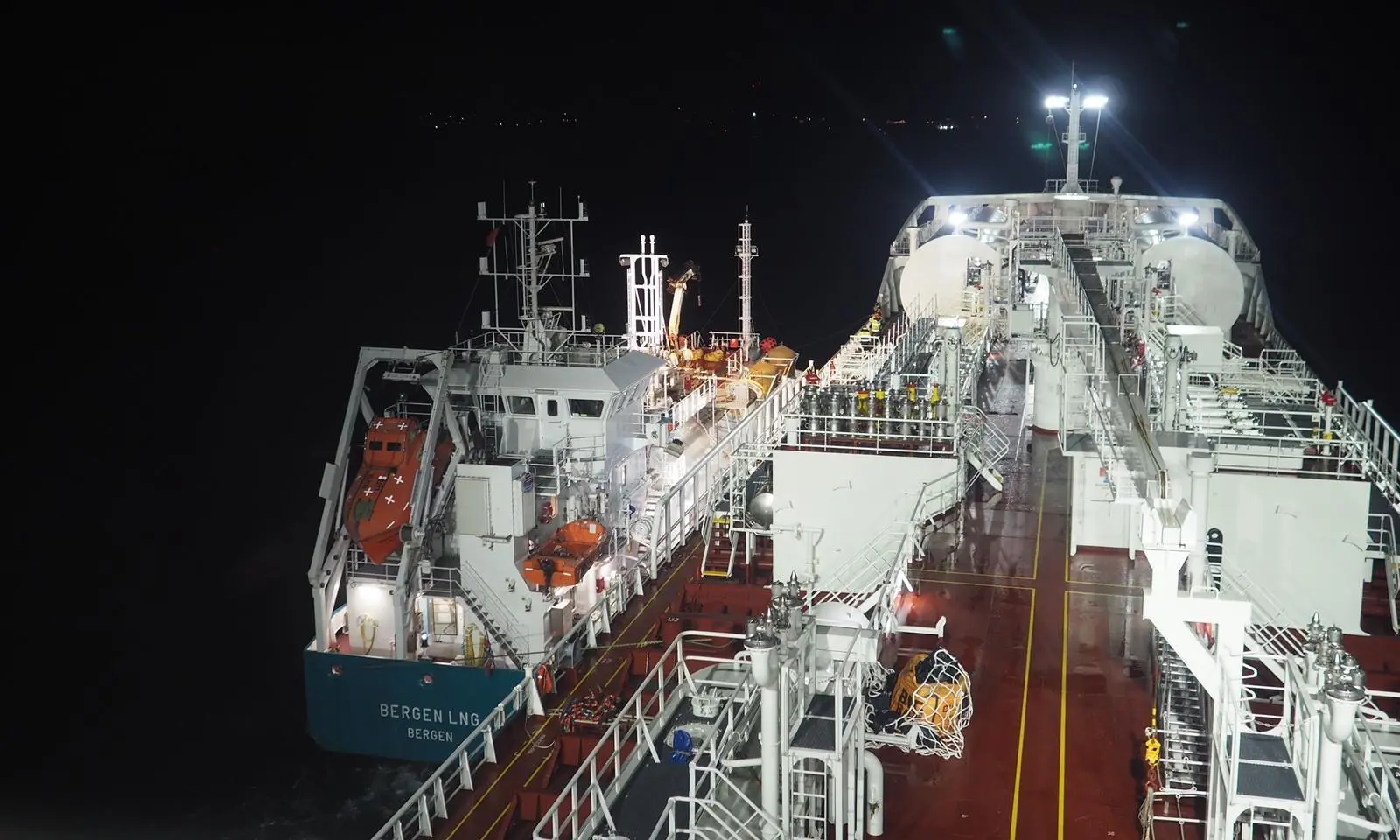
The current standards for LNG for marine use (ISO 23306:2020) don’t define limits for Methane Number even though it is an important fuel characteristic that can vary with fuel source and the addition of bioLNG into fuel blends.
CIMAC Working Group 17 has therefore released a guideline “Impact of Gas Quality on Gas Engine Performance.” It is an updated position paper on how gas engine performance is affected by fuel quality and provides insights into engine knock, Methane Number calculation methods, debris, LNG characteristics, and pipeline gas composition.
Methane Number is a measure of the fuel’s resistance to auto-ignition or engine knock. In diesel engine combustion, gaseous fuel in the cylinder is put under high temperature and pressure as the flame front advances. At a critical level, it will auto-ignite, causing a very rapid release of the chemical energy of the fuel. This is known as knocking as it causes ringing or a knocking sound.
To counter fuel quality variability, the engine controller must adapt operating parameters which can in turn affect exhaust emissions. When the fuel composition falls outside the design window, power can be reduced, the engine might shut down, or a dual-fuel engine might switch to fuel oil mode. It can cause dangerously slow transient performance, and the engine may only be able to operate at a steady load that is a fraction of its full rated power. In the worst case, damage to the engine or fuel gas supply system components can occur.
Engines are typically tuned for the lowest Methane Number fuel they are expected to be operated on. For Western engines, that is typically 70-80; for Japan it is around 65.
Pure methane has a Methane Number of 100, and hydrogen has a Methane Number of zero. LNG mostly consists of methane but can also contain nitrogen and longer-chain hydrocarbons which reduce Methane Number.
Boil-off gas from methane cargo, often used for fuel on LNG carriers, can have a Methane Number close to 100, higher than the LNG in the vessel’s cargo tanks. This is typically between 70 and 80, depending on its origin and liquefaction processing. The difference arises depending on whether the gas has evaporated from onboard tanks due to cooling or whether it has been “forced” for fuel, so switching between the two can impact combustion properties.
The working group also raises concern about impurities such as debris. As with conventional liquid fuels, the physical cleanliness and the levels of impurities of gas and LNG delivered to gas engines needs to be specified to avoid damage to fuel supply systems or engine components. The ISO 23306:2020 standard for marine LNG contains information on particles within Annex E of the standard but does not set quality limits.
CIMAC recommends that gas supply systems be provided with filtration arrangements capable of removing particles or solids to meet OEM cleanliness specifications. Particular care should be taken during commissioning of new installations to ensure systems are cleaned to the required standard.
The working group’s recommendations include:
- · Methane Number should be close to 80 or higher for highest efficiency and lowest GHG emissions
- · For the existing fleet, Methane Number should be maintained near the historical value as this will be the design point of the engines in most cases
- · Methane Number and flame speed at the operating site must be held within a narrow range for stable operation, low emissions, and high economy
- · Specification of Methane Number requirements should always be accompanied by a reference to the calculation method used, because the accuracy of different methods varies, especially when dealing with gases containing higher hydrocarbons and hydrogen
- · Impurities such as siloxanes and sulphur should be as low as possible to reduce SO2 pollution and reduce deterioration of abatement systems.
BioLNG’s net-negative potential
Liquified biomethane (LBM, bioLNG) produced from waste feedstock, particularly domestic and agricultural waste, can capture methane that would otherwise be vented into the atmosphere, resulting in a fuel that is not just potentially net zero in GHG emissions, but also potentially net negative in emissions, says Caspar Gooren, Commercial Director Renewable Fuels, Titan Clean Fuels. “By assisting with the reprocessing of waste materials, LBM can support the circular economy and help with yet another global concern: waste management.”
Additionally, says Gooren, the status of LNG as a more mainstream marine fuel provides a rock-solid safety basis for bioLNG and e-methane.
As with all alternative green fuels, high production costs remain a challenge for bioLNG but processes like physical mass balancing are helping to lower supply-side costs, he says. Mass balancing is a system where biomethane is injected into the gas network and transported to liquefaction plants and LNG terminals using the existing infrastructure. “It is expected to feature on many alternative fuel pathways and is a practical way of delivering clean molecules. The best analogy is when domestic energy companies provide consumers with renewable energy in a very similar way.”
Within FuelEU Maritime, ships using LNG will meet the GHG intensity requirements from day one, and then bioLNG can be introduced as required by the tightening regulations or to achieve overcompliance. “Through banking, ships that exceed compliance can save surplus credits for future use. Pooling allows ship operators to group with other vessels in their fleet or ships from other operators that have a compliance deficit and transfer overcompliance,” says Gooren.
Titan is already delivering LBM to provide FuelEU overcompliance and pooling benefits for customers. As part of United European Car Carriers’ “Sail for Change” sustainability strategy, for example, Titan has been bunkering nearly all UECC’s LNG-powered car carriers with bioLNG since mid-2024. The partnership has now been extended through 2025.
“Fuel suppliers, shipowners and technology providers have also turned their attention to addressing and valorising charterers’ scope 3 emissions, and getting these end-customers to buy-into shipping’s alternative fuels transition, through carbon accounting mechanisms like carbon insetting arranged by companies like 123Carbon.”
In 2024, Titan also completed the world’s largest ship-to-ship LBM bunkering. Titan bunkered 2,200 metric tons of mass balanced bioLNG to a Hapag-Lloyd containership in Rotterdam. The fuel was ISSC certified and recognised under the EU’s Renewable Energy Directive known as RED II.
Related Articles
 ALTERNATIVE FUELS & LUBRICANTS
 ALTERNATIVE FUELS & LUBRICANTS
 ALTERNATIVE FUELS & LUBRICANTS