



Hydrogen boost for bulk shipping
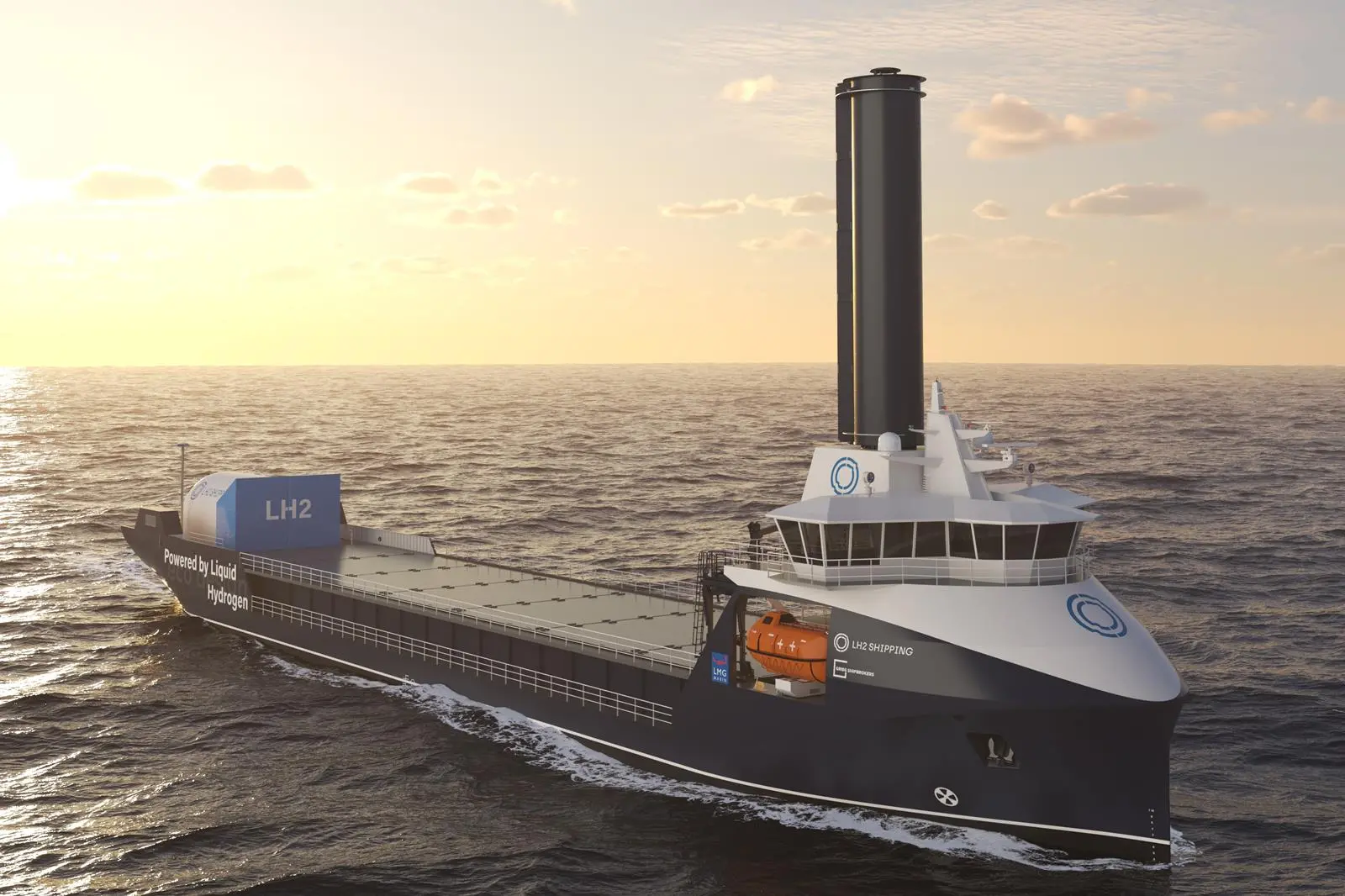
The vessels are being developed under the NordBulk Project in collaboration with Strand Shipping Bergen, part of Vertom Group BV, aligning with both companies’ long-term decarbonisation agendas.
“Strand Shipping Bergen AS is fortunate to be part of the forward-thinking Vertom Group BV and this project represents a new chapter in the pursuit of an environmentally sustainable future in shipping, as well as a significant step toward achieving zero emissions,” said Joergen Brandt, managing director, Strand Shipping Bergen.
”We look forward to continuing our collaboration on this project together with LH2 Shipping.”
Reduced financial risk
Backed by ENOVA, the funding supports construction of LH2-powered bulk carriers three and four. So far, more than half a billion NOK has been awarded for the four ships, sending a strong signal for marine decarbonisation in a segment where emissions reductions can be achieved at scale.
ENOVA is a Norwegian state-owned enterprise under the Ministry of Climate and Environment, providing public funding to accelerate the transition to low-emission technologies.
Its grants are designed to reduce financial risk for first-of-a-kind projects, support the development of terminal infrastructure, and enable the commercial uptake of alternative fuels such as ammonia.
Strand Shipping Bergen combines local market presence with Vertom’s modern fleet of more than 100 vessels operating across short-sea and multipurpose trades. The partnership strengthens efficient coastal logistics while prioritising rapid emissions reductions through climate-friendly transport alternatives.
Dr Ivan Oestvik, CEO, LH2 Shipping, said liquid hydrogen is proven technology, as already demonstrated on M/F Hydra, and it’s now being applied to bulk carriers using hydrogen fuel cells and hybrid energy systems.
He said that shortsea shipping experience shows fuel cells and batteries can be combined effectively, with hydrogen extending range where charging constraints apply.
With regulatory drivers such as the EU ETS and FuelEU Maritime narrowing the cost gap between fossil fuels and alternative fuels, the business case for zero-emission vessels is expected to strengthen significantly after 2030.
Related Articles
 AMMONIA
 HYDROGEN
 HYDROGEN