



Seabound reaches commercial deployment milestone
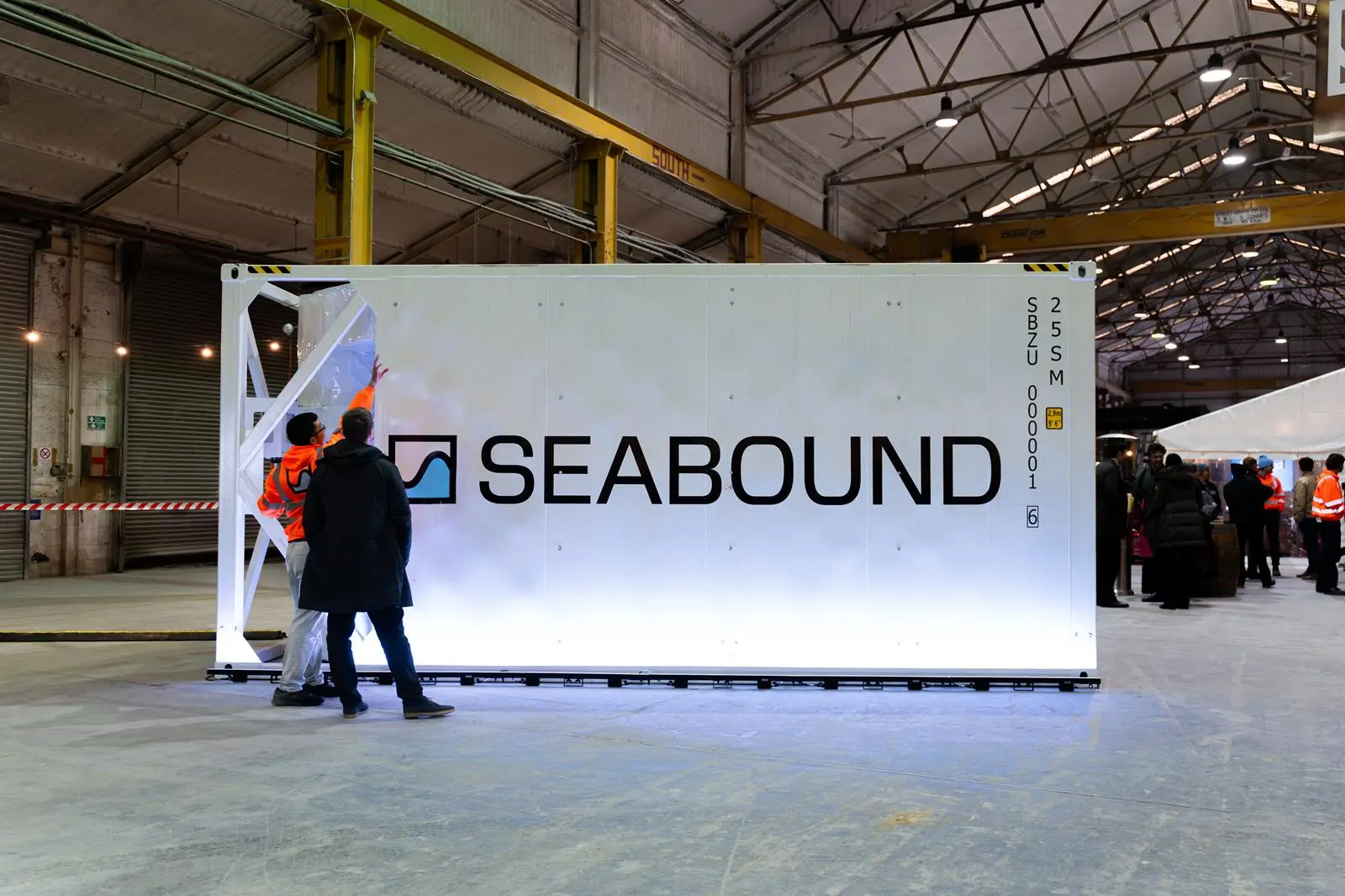
The systems were unveiled during a ‘Seabound Sendoff’ event at the company’s research and development facility in Doncaster. Following successful land-based testing using a large diesel generator, the modular units will now be deployed aboard the UBC Cork, a 5,700 gross tonne cement carrier.
The announcement coincided with confirmation of a new partnership with the European Space Agency (ESA), including €1.5 million in funding to support Seabound’s scale-up and commercial roll-out. The company also revealed a collaboration with thyssenkrupp Polysius to produce green lime, enabling scalable net-positive carbon capture onboard ships.
READ MORE: Carbon capture ready to come of age
“The maritime industry relies on space-based data and satellite communications every day,” said Nil Angli, Space Solutions Maritime lead at ESA. “We are proud to partner with early-stage companies as they move from innovation to commercialisation, and Seabound is a model of what our Business Applications and Space Solutions programme is designed to support.”
More than 70 representatives from government, shipping, manufacturing and investment sectors attended the event. Guests toured the facility and viewed Seabound’s ‘Seabound Containers’ – 20-foot container-sized systems designed to trap CO2 from ship exhaust gases while also removing sulphur emissions.
Founded in 2021, Seabound has raised more than £8.5 million to date and previously completed pilot projects with Lomar Shipping, Hapag-Lloyd, STAX Engineering and Wallenius Wilhelmsen.
https://www.motorship.com/carbon-capture/successful-onboard-carbon-looping-ccs-pilot/1491063.article
“This moment represents years of engineering, testing and collaboration finally coming together,” said chief executive and co-founder Alisha Fredriksson. “These systems will be the first of many over the years to come as we scale to even broader impact.”
Related Articles
 CARBON CAPTURE
 CARBON CAPTURE
 ALTERNATIVE FUELS & LUBRICANTS