



EXCLUSIVE: ClassNK tool eases emissions costs
As global and regional regulators advance frameworks to support low- and zero-carbon fuels, energy-efficient ship design and new technologies, shipping companies are grappling with the rising complexity of compliance. Estimating the long-term cost of transitioning to greener operations has become central to budgeting decisions, influencing investment in alternative fuels, energy-saving devices and fleet renewal strategies.
The challenge is compounded by overlapping regulatory regimes, including mid-term greenhouse gas measures from the International Maritime Organization, alongside Europe’s European Union Emissions Trading System and FuelEU Maritime framework. Each system applies distinct methodologies and timelines, creating uncertainty around future compliance costs.
Launched in July 2025 under ClassNK’s Transition Support Services, the Fleet Cost Simulation package is compatible with vessels regardless of classification society. The tool has already been applied to more than 200 ships by owners, shipyards and cargo interests. It also received a Best Project Innovation Award at the Saudi Maritime Awards for its contribution to sustainability and zero-emissions planning.
“This tool has a proven track record of adoption in evaluating future ship designs and newbuildings, as well as in formulating mid-to-long-term business plans, and it has been highly acclaimed by our users,” ClassNK told The Motorship.
“While full-scale investment decisions are expected to gain momentum following the postponed deliberations on IMO mid-term measures—which significantly impact corporate strategies—the ability to rapidly and quantitatively assess complex regulatory impacts through this tool provides a major advantage.
“Through this tool, ClassNK remains committed to strongly supporting sophisticated decision-making that balances decarbonisation with enhanced competitiveness.”
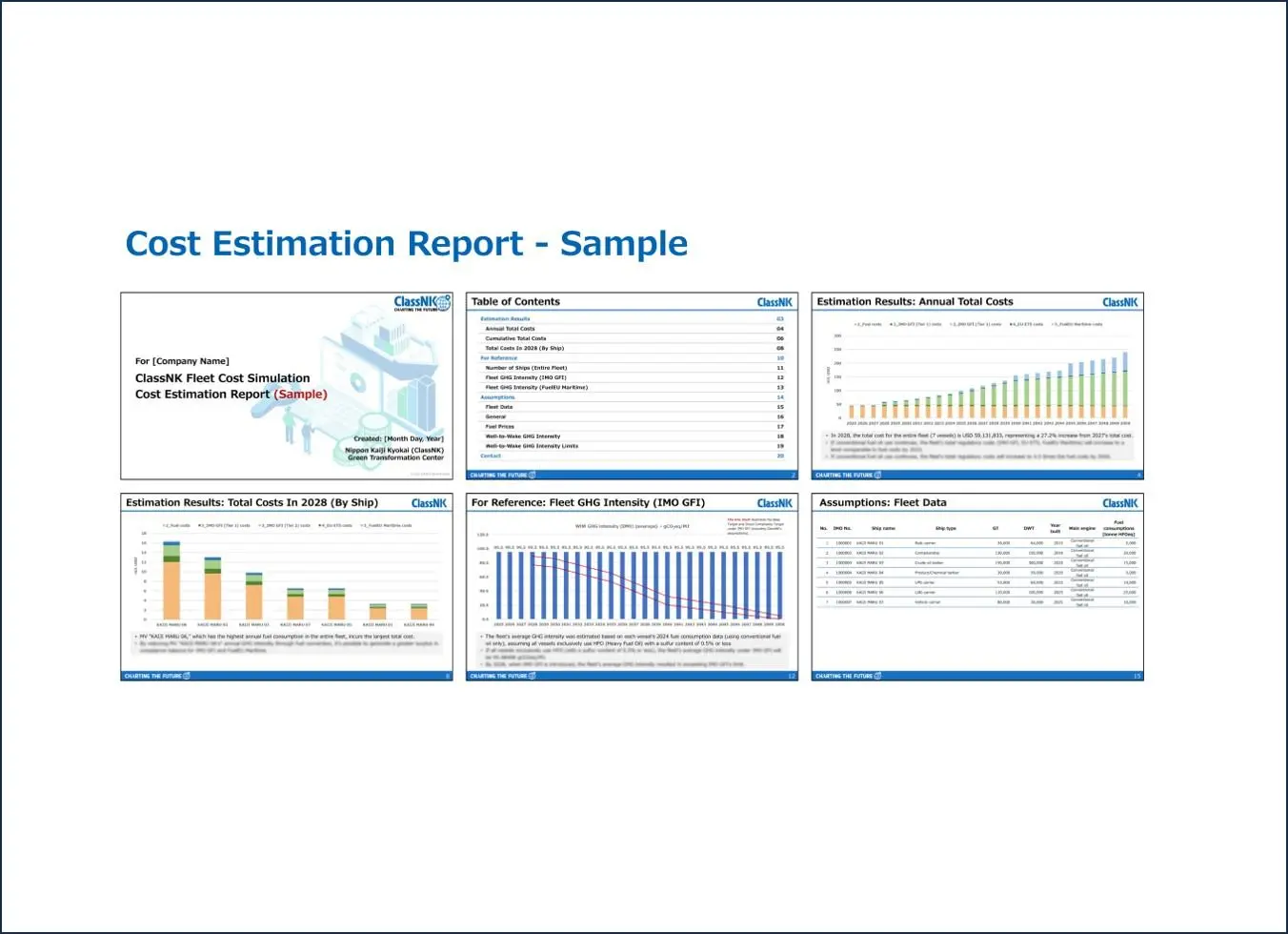
The service features two core components. The Fleet Cost Calculator, an Excel-based tool, models cumulative costs for individual ships or entire fleets, generating visual comparisons of fuel choices and emissions profiles. Users can adjust variables such as fuel prices, vessel replacement schedules and efficiency improvements to create tailored forecasts.
A second module, the Cost Estimation Report tool, produces presentation-ready summaries of projected costs through to 2050, incorporating fuel consumption data and compliance expenses.
Related Articles
 ENERGY SAVING DEVICES
 LNG
LNG
 ALTERNATIVE FUELS & LUBRICANTS