



Methanol engine retrofit marks milestone
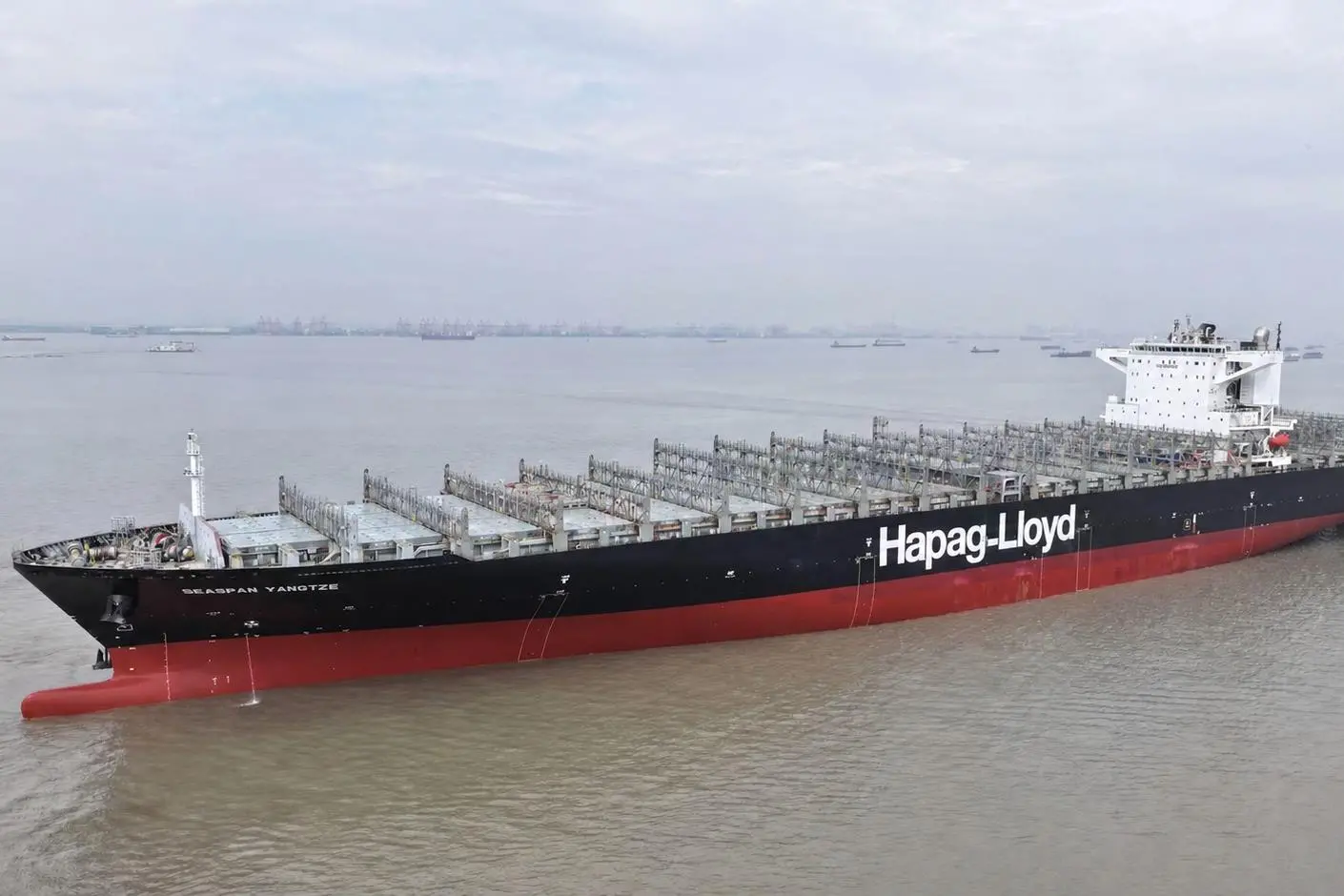
The project, at COSCO Shipping Heavy Industry (Shanghai), involved the conversion of the vessel’s main engine to methanol dual-fuel operation courtesy of Everllence’s PrimeServ division.
“The Seaspan Yangtze retrofit shows that upgrading existing vessels to methanol dual-fuel operation is no longer a concept, but a proven and repeatable engineering solution,” said Dr Christoph Thiem, director fleet innovation & project at Hapag-Lloyd.
“By combining OEM engine expertise, careful project preparation and close coordination with Seaspan, Everllence and the shipyard, we were able to deliver a technically complex conversion on time and support the vessel’s readiness for lower-carbon fuel operation.”
Scalable retrofit
The vessel, owned by Seaspan Corporation, has already returned to service as the companies accelerate adoption of alternative fuels and scalable retrofit solutions for the existing container fleet.
According to Everllence, the retrofit is the 30th dual-fuel upgrade delivered by its PrimeServ division across LNG, methanol and LPG platforms.
The company said the programme demonstrates that proven retrofit technology can provide shipowners with fuel flexibility, improved emissions performance and reduced off-hire periods of less than three months.
Peter Jackson, chief technology officer at Seaspan, said the success of the programme highlighted the commercial viability of methanol retrofits for existing tonnage.
He added that collaboration between Seaspan, Hapag-Lloyd, Everllence and the shipyard was helping to bridge the gap between today’s fleet and future fuel requirements.
The retrofit package also includes a two-year subscription to PrimeServ Assist, the company’s AI-enabled remote monitoring and advisory platform. The system uses expert diagnostics and data-driven analysis to monitor engine performance, identify anomalies and support maintenance planning aimed at improving operational efficiency.
Following the conversion, Seaspan reported that the vessel’s Energy Efficiency Existing Ship Index (EEXI) is around 55% below the international minimum Phase 0 standard, strengthening its emissions reduction and energy efficiency performance.
Related Articles
 METHANOL
 METHANOL
 2-STROKE & 4-STROKE