



The greening of the Solstad fleet
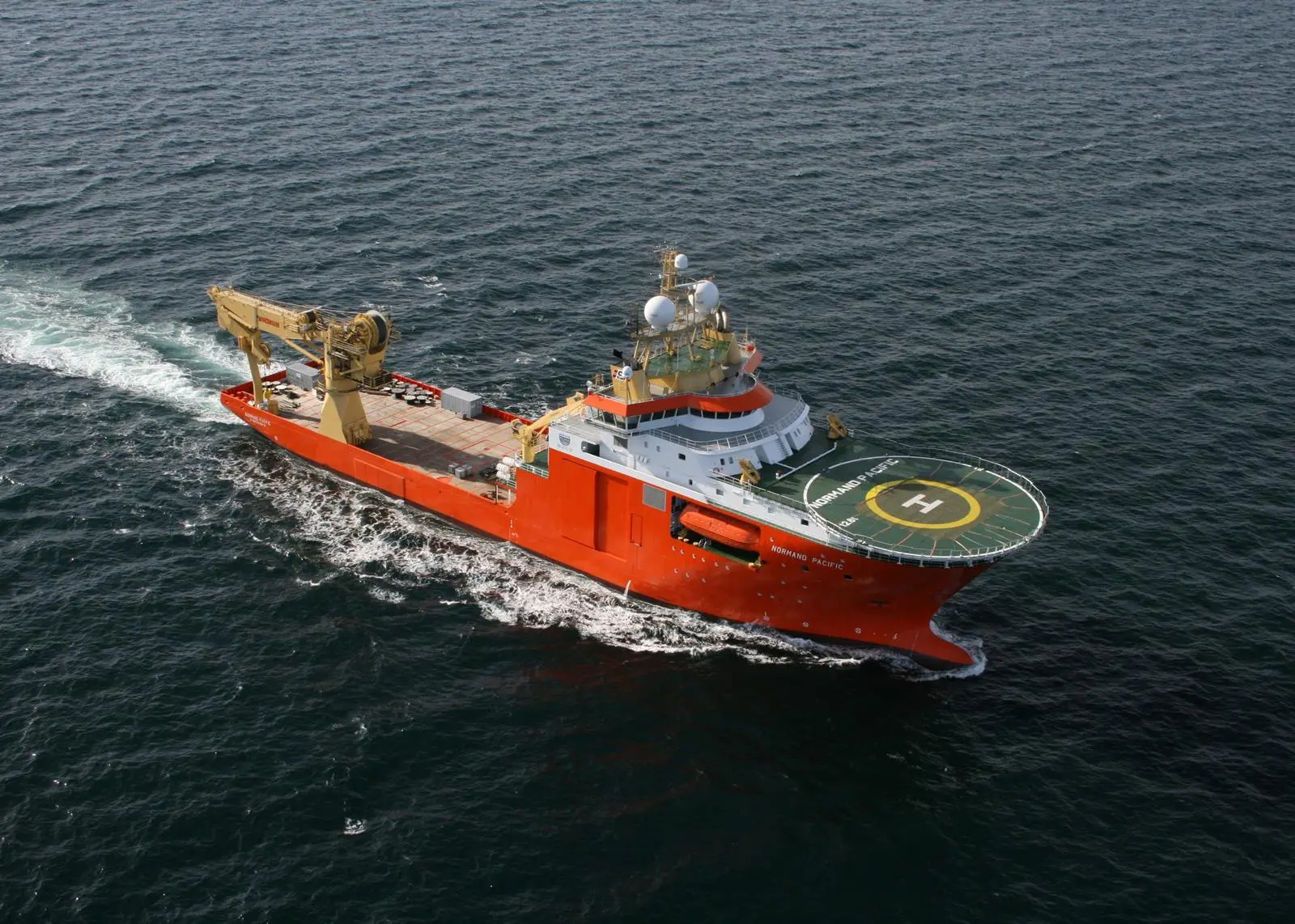
Although Solstad Offshore ASA in Skudeneshavn, on the island of Karmøy in Norway, can lay claim to having a modern and technically advanced fleet of energy efficient offshore support vessels, it has decided to go one step further with the objective of achieving carbon neutral operations.
Tor Inge Dale, environmental and development engineer at Solstad, explained to the Motorship that it was not enough to just encourage crews to recycle waste products such as glass, paper, chemicals and plastic, but that the carbon footprint of each vessel should also be reduced. Nobody, however, seemed to pay much attention to cutting down on operational costs particularly fuel consumption where, potentially, substantial savings can be made since this is the biggest single item affecting the CO2 emissions.
There are few incentives for fuel savings in offshore charter contracts and the general attitude by most crews is that the cost of fuel is paid by the client who is not overly concerned about the operational cost. This is despite the fact that offshore vessels use a lot of fuel and discharging large amounts of emissions particularly when standing by at sea awaiting instructions. Even on those vessels where the crews are fuel conscious and achieve reductions in consumption, their efforts are not being noticed or recognised.
Dale pointed out that a typical annual consumption for a large offshore vessel amounts to 5,000 tonnes which produces annual emissions of 15,000 tonnes CO2, 270 tonnes NOx and 10 tonnes SOx for low sulphur fuels. When applied to the Solstad Shipping fleet of 37 vessels, the CO2 emissions equal those of about 150,000 cars. In addition, the annual fleet fuel costs are estimated at 600+ million NOK while the maintenance cost for machinery is 150+ million NOK.
In response to this situation, Dale devised an innovative system whereby crews are encouraged to reduce fuel consumption, and thereby emissions, by adopting the Solstad Green Operations (SGO) code. This consists of seven basic voluntary actions which the captain of a vessel can adopt as follows:
– Anchoring: if idle and weather and water depth allows it.
– Drift: if idle or standby, instead of running in DP mode where anchoring is not possible.
– Reduced transit speed: plan voyage better, adapt speed to required ETA by coordinating with charterer.
– Green DP: reduce use of thrusters and/or reduce gain on DP to allow for drift.
– Stop main engines: reduce the number of running main engines to fit the actual need.
– Optimise trim: for better fuel economy when steaming.
– Reduce electrical consumption: switch off deck floodlights and other electrical equipment when not needed.
This would give an annual fleet saving potential of 10 to 20% or 20,000+ tonnes according to Dale. The beauty with this approach is that it cost nothing to implement!
While adherence to the SGO is not obligatory, captains and their crews are required to make a note on a daily basis recording whatever fuel saving measures they have carried out. A green operation for this purpose is defined as a fuel saving action that achieves a lowering of fuel consumption by at least 0.5m3 (500 litres) a day. This reporting system was started back in September 2009 and the company issues all the collated results to ships’ crews on a monthly basis showing the number of qualifying green operations for each vessel in a league table format. This identifies and highlights which are the greenest ships while it has the effect of ‘naming and shaming’ those at the bottom of the table.
More importantly, however, the report quantifies the amount of fuel saved by each vessel and, for the total fleet, this amounts to over 40 tonnes reported every day or 10 to 15% of the total fuel consumption. An indication of the success of this scheme is that SGOs registered since the start of the campaign in 2009 show a steady increase in the amount of fuel saved as follows:
– Q4 2009 922 SGOs fuel saved: 2,600 tonnes
– Q1 2010 1,101 SGOs fuel saved: 3,200 tonnes
– Q2 2010 1,550 SGOs fuel saved: 4,200 tonnes
As an added incentive, for every SGO submitted, Solstad supports the Rainforest Foundation for the protection of 1,000m2 of rainforest for one year.
With the success of the SGO programme, Dale, the project manager for SGO, decided to extend the company’s commitment to environmental friendly operations by introducing an industry-leading environmental concept for the company’s fleet. It’s called ‘climate neutral operations (CNO) and is probably the world’s first shipping company to introduce the opportunity to operate climate-neutral ships.
Saving money with climate neutrality
Since the SGO produces not only environmental savings but also cost savings for the company’s customers, Dale decided to extend the scope of the project to bring Solstad’s environmental work a step further by inviting its customers to use some of the cost savings from SGO on fuel on CNO. Dale explained that in practice this means charterers and clients will be involved at three levels of the company’s environmental work:
– 1. The customer is given an overview of the ship’s CO2 accounts.
– 2. The SGO 2010 target is that each ship will carry out about 185 green operations each year which will save 6.5 million m2 of rainforest which equals the quantity of CO2 produced by the company’s total emissions.
– 3. In collaboration with its customers, Solstad Offshore compensates for its emissions by investing in and supporting projects that are certified for CO2 cuts in accordance with the UN climate quotas.
Dale said that the CNO initiative is a breakthrough on the road to Solstad becoming a climate-neutral company and, because of the savings from SGO, it is actually more expensive for customers to operate a ship without environmental measures than using a climate-neutral ship. This means that climate-neutral shipping is a commercially profitable measure which can be introduced together with customers.
The way the CNO initiative works is that, because the savings achieved from SGO benefit the customers in terms of reduced fuel bills, the customers agree to purchase emissions credits through as third party to compensate for the remaining emissions in order to achieve full carbon neutrality for the vessels. The amount paid is based on 50% of the SGO savings which still allows the customers to retain half of the fuel savings. The third party then uses the emissions credits to pay for renewable energy projects in third-world countries such as solar panels and wind generators.
This is a win-win situation for all parties and Solstad are offering CNO as an option in their standard chartering contracts. When asked what the reaction is from customers, Dale replied that there has been a positive response so far from several clients and that Solstad hopes to sign an agreement with a significant customer in the near future.
The environmental efforts of Solstad Offshore have also been recognized on an international level. At the recent ‘Sustainable Shipping Awards 2010’ in London, Solstad Offshore was nominated as one of the three shipping companies for the prize ‘Green Shipping Initiative’ of the year. This is in recognition that the company has taken the initiative to add a commercial viewpoint on such an important and forward-thinking environmental concept which is ahead of both current market and regulatory requirements.
Related Articles
 PROPULSION
 GENERAL NEWS
 HYDROGEN