



Alternative fuels drive eco-craft developments
Shipping has made considerable progress in this area where the main incentive has been to reduce operating costs. Here the approach has been to fine tune hull designs, propulsion systems and similar technology but on smaller vessels such as workboats and small ships there is scope for a more innovative approach. Here we can look to the leisure sector to find several new initiatives that could be applied in the commercial market.
Engine manufacturers have been set strict standards to reduce harmful emissions from diesel exhausts and have developed systems such as particulate filters, exhaust scrubbers and new engine operating systems to reduce NOx, SOx and soot particles. Many such systems are under trial so that the manufacturers can be ready to meet the new standard when they come into force. These additions to the engine will incur penalties in three ways: more space will be required in the engine room; the cost of the engines will rise; and there will be increased weight so what might be gained from the emission reduction will be paid for in other ways.
This still leaves the problem of how to reduce the amount of CO2 that comes from the engine exhaust. This is a natural product of burning diesel fuel so here the main approach has to be to burn less fuel. This can be achieved three ways: reduce speed; improved and more efficient hull design; and the use of renewables. In the leisure sector there has been much focus on hybrid diesel and electric propulsion but in these systems may increase, rather than decrease, overall fuel consumption.
In a hybrid system a generator produces electrical power which is stored in a bank of batteries. This battery stored power can be used to supply electrical energy to a propulsion motor so that the vessel can operate on electric power alone when required. In electric mode there are no emissions but emissions have been produced when that electric power was generated – so no saving in emissions there. Then there are the inherent losses in the system, perhaps 10% every time the electric power is generated, stored and then reused.
In normal vessel operation there is no emission reduction with a hybrid system but there are operating scenarios where a hybrid system could make savings. A vessel such as a tug requires high power over generally quite short periods. For the rest of the time the engines may be idling or operating at low power and this is where the electrical propulsion of a hybrid system could take over. Operator Foss in the US has such a tug operating and reports considerable fuel savings – but the extra capital costs were only viable because the operator was given grant aid for the system.
Solar power and wind energy are free sources of power but they can be expensive to harness. Solar panels require a lot of space on board which could compromise the operation of the vessel. Tourist vessels currently exist which are powered solely by solar energy; the 30m Planet Solar is currently on a round-the -world voyage powered only by the sun, but she requires 537 m2 of panels and an ultra-low resistance hull.
To harness the wind, German company Skysails offer a soft kite-like sail installed at the bow of a vessel that can be deployed and recovered from the wheelhouse. The system can be retro-fitted and some commercial ships and fishing vessels are currently using the system with promising results. However such systems are not cheap,and could add 10% or more to the capital cost of the vessel.
Alternative fuels can reduce emissions, and fuels such as bio-diesel, methanol, hydrogen and LPG and LNG all have potential and are in use. Bio-diesel, LPG and LNG can work with slightly modified diesel engines whilst methanol and hydrogen are probably best when being used in conjunction with fuel cells to generate electricity. One of the main problems with using these cleaner alternative fuels is supply and at present they are only viable for vessels operating a fixed route such as ferries and supply vessels where arrangements for the fuel can be made in the home port – though specially adapted bunker ships are in development.
Several new hull designs have been developed to offer reduced resistance. Catamaran and trimaran hull forms, and long thin hulls with a proven low resistance are not necessarily suitable for commercial operations and the aim of some designers is to find a hull design that offers the volume of a conventional hull matched to low resistance. This usually entails a reduction in seaworthiness so a balance has to be found. The favoured development appears to be a large central monohull with embryo side hulls in trimaran form, and one version has taken this format to extremes with a long this forward hull that changes to a trimaran shape towards the stern.
Bray Yacht Design in Canada has spent years refining and tank testing displacement hull designs to improve efficiency. The company’s concepts focus on the bulbous bow, side pods and stern skegs and they claim improvements of 15% or more over conventional designs.
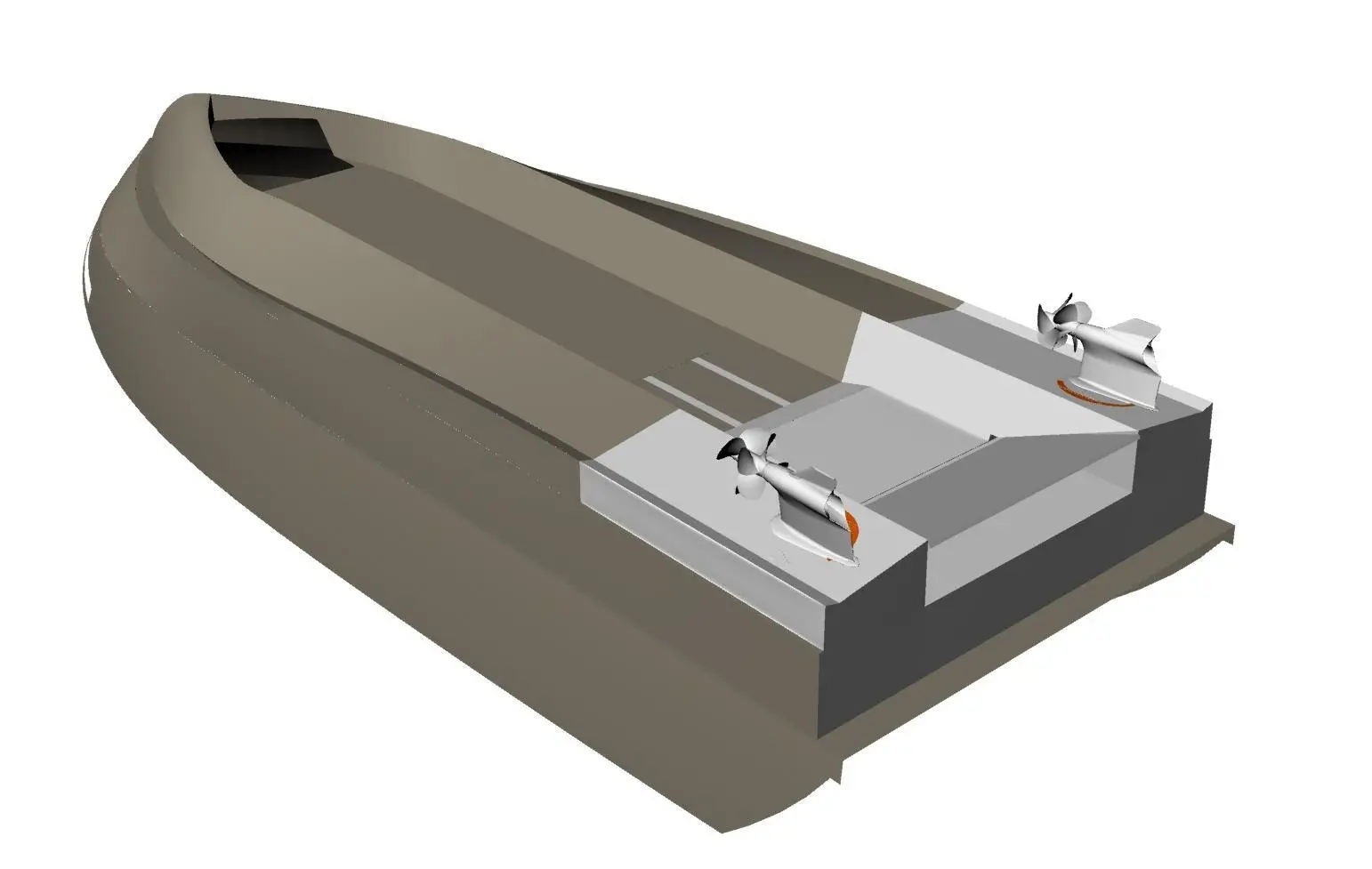
A new approach is, effectively, a re-modelling of the hovercraft principle. This latest concept incorporates the air chamber within the hull moulding so no flexible skirts are required. Developed by SES Europe, an 18.5m prototype is running at 33 knots with just 870 hp plus 170 hp for the lift engine, showing a 30% increase in efficiency with no reported loss of seaworthiness. Several commercial builders are showing interest in this concept.
At the end of the day it is quite simple really, the faster you go the more fuel you will burn and the higher your emissions. So the easiest way to reduce emissions is to reduce speed. If operators could operate effectively at lower speeds there would not only be a saving in fuel costs but a considerable reduction in emissions. Where high speed craft are concerned, we could see a return to the use of highly economical displacement hulls rather than planing or semi-planing hulls, with a dramatic saving in fuel consumption. The alternative is to invest large amounts in alternative systems that may or may not offer good returns. With low emission engines there will be no choice – but for CO2 reduction speed is the critical factor
Related Articles
 ALTERNATIVE FUELS & LUBRICANTS
 FUELS & LUBRICANTS