



Instrument analyses hydrogen suphide in marine fuel
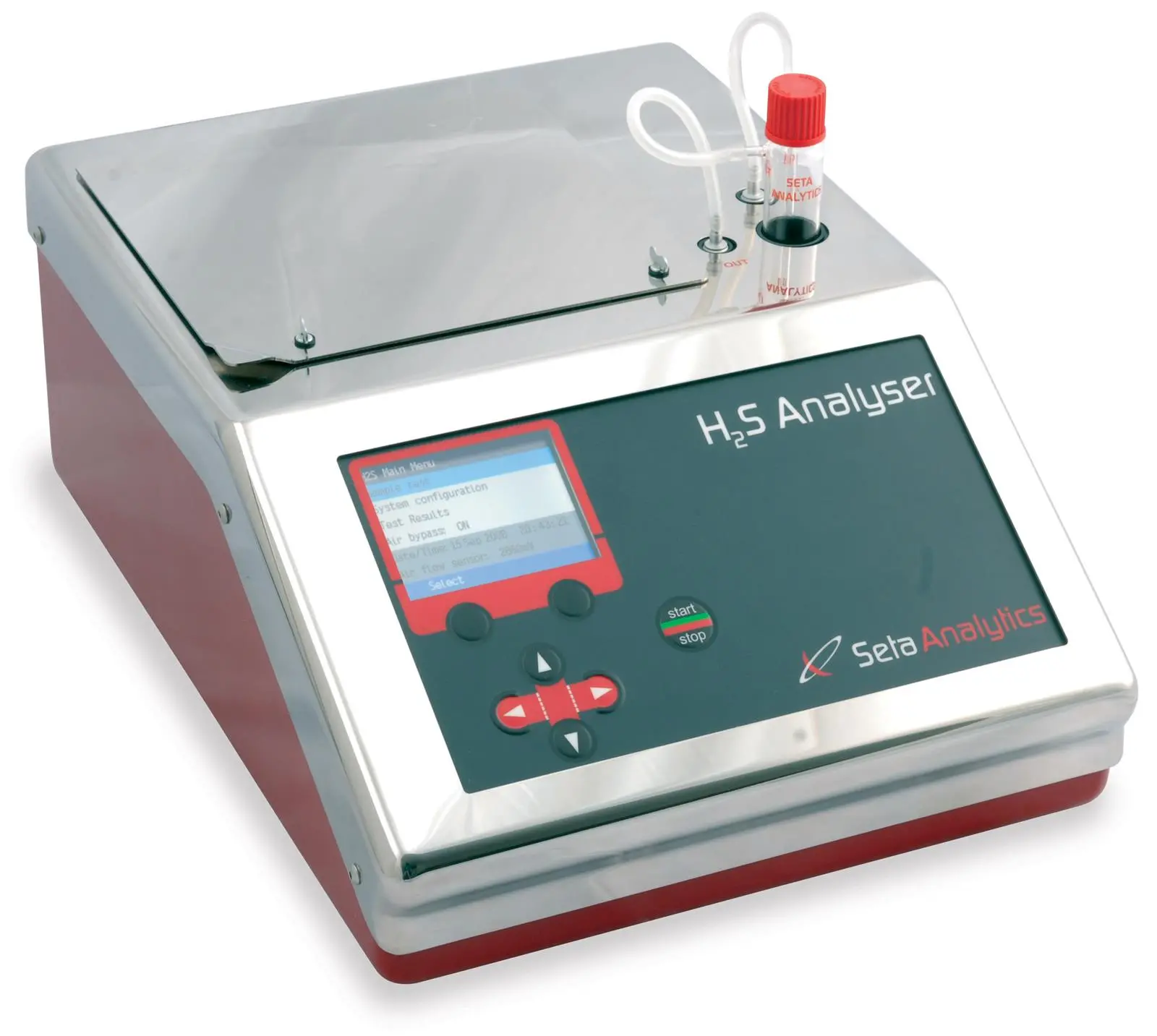
The company says that method outlined in IP 570 and included in the ISO 8217 marine fuel specification represents a significant development in testing. It says that H2S has long been acknowledged as a potential marine safety issue , and traditional testing methods may not detect low levels of H2S or fully evaluate whether entrained H2S might be released from the fuel during onboard storage and handling. H2S is, according to the company, highly toxic and can corrode pipelines, storage tanks and other components. H2S can accumulate in headspaces of storage and bunker tanks.
Previous testing methods were complex and require trained chemists to obtain a result. Therefore the industry decided to adopt new analytical technology under IP 570, which is suitable for field analysis. According to Seta, the key issue is to measure the for release of H2S over a period of time when that fuel is transferred, heated or agitated by the rolling action of the ship.
The H2S Analyser has been developed by SetaAnalytics to determine the potential amount of entrained Hydrogen Sulphide that could be released by a fuel. It complies with IP 570 and has been designed for use with all types of fuels. It uses integrated analytical sensor technology to analyse the H2S in the fuel, which Seta says removes operator subjectivity and gives reliable and rapid results.
No chemicals are employed in the process, in which a weighed 5 ml sample of fuel is mixed with a proprietary diluent whilst being heated at 60°C to maximise solubility and optimise release of the entrained H2S. The sample is purged with air at a fixed flow rate and the liberated H2S passes over a proprietary H2S selective sensor. The sensor output is integrated and the amount of H2S in the fuel calculated in mg/kg. The instrument can measure over the range 0 to 250 mg/kg (ppm) and total test duration from sample introduction to result is 15 minutes.
Related Articles
 ALTERNATIVE FUELS & LUBRICANTS
 FUELS & LUBRICANTS