



MOL completes concept for new-generation vessels
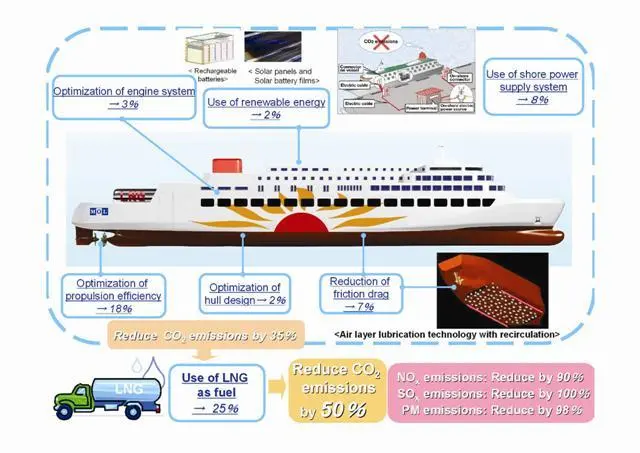
The vessel is an environment-friendly ferry that can transport both cargo and passengers (ISHIN-II) and maximises advancement of technologies already developed and adopted. The ferry plays a key role in the modal shift, an initiative to shift logistics from trucks and airplanes to more environmentally-friendly modes of transportation, such as shipping and railways. It is claimed to have potential to further reduce the environmental burden and enhance comfort for passengers.
The three main features are as follows:
(1) Use of LNG as fuel: cleaner exhaust gas and larger reduction of CO2 emissions.
(2) Use of shore power supply system while in port: achieves zero emission by use of electricity supplied from shore and rechargeable batteries.
(3) Emphasis on comfort: passengers can travel in freedom and comfort, with the catch phrase “Let’s stay aboard.” The design minimises vibration and noise in passenger spaces, while maximising comfort, convenience, and service quality for passengers.
The first vessel in this series, the next-generation environment-friendly car carrier ISHIN-I, was reviewed in the October 2009 issue of The Motorship. MOL named the first concept vessel ISHIN-I (ishin one), which stands for “innovations in sustainability backed by historically proven, integrated technologies.”
ISHIN-II‘s main engine and power generation system will be fueled by LNG which generates over 20% less CO2 per thermal unit compared to the heavy fuel oil used by most conventional ferries. This results in a significant reduction in CO2 emissions. LNG also cuts emissions of NOx, SOx, and particulate matters (PM) such as soot, dust, and smoke, by typical values of about 90% to 100%, which is claimed to significantly reduces the vessel’s environmental burden.
Solar battery films will be installed on all cabin windows to reduce light entering the cabins and solar power, a renewable energy source, will supply electricity. Excess energy generated while under way will be stored in the high-capacity rechargeable lithium ion batteries. The batteries also supply part of the vessel’s electricity needs in port, allowing it to achieve zero emissions while the vessel is in port or berthed.
ISHIN-II will have both a diesel engine and electric propulsion motor driving a contra-rotating propeller system, which aims for increased efficiency. The vessel will also have advanced propeller boss cap fins (PBCF) fitted. This MOL-developed energy-saving device has been adopted on more than 1,700 vessels and the latest model will be used on the ISHIN-II vessels.
An air lubrication system will be installed which releases minute air bubbles creating an air layer that covers the ship bottom and reduces friction drag. Collecting and recirculating the air will save even more energy.
In addition, ISHIN-II will have an improved hull form below the surface and will be coated with the next-generation ultra-low friction ship’s bottom paint in which smooth micro patterned indentations form on the painted surface, trapping water and reducing friction drag.
Electronic control will optimise fuel supply to the engine while a waste heat recovery system will retrieval and reuse of thermal energy from the exhaust gasses.
ISHIN-II will maximise passenger comfort and convenience. The smaller, more efficient engine will optimise propulsion efficiency, while minimising noise and vibration. The vessel will also provide passenger-friendly facilities and passenger-focused services such as simplified IT-based boarding procedures and smoother loading and offloading of vehicles thanks to a dedicated ramp for cars.
Related Articles
 PROPULSION
 GENERAL NEWS
 HYDROGEN