



Paint manufacturer is prepared to guarantee performance improvements
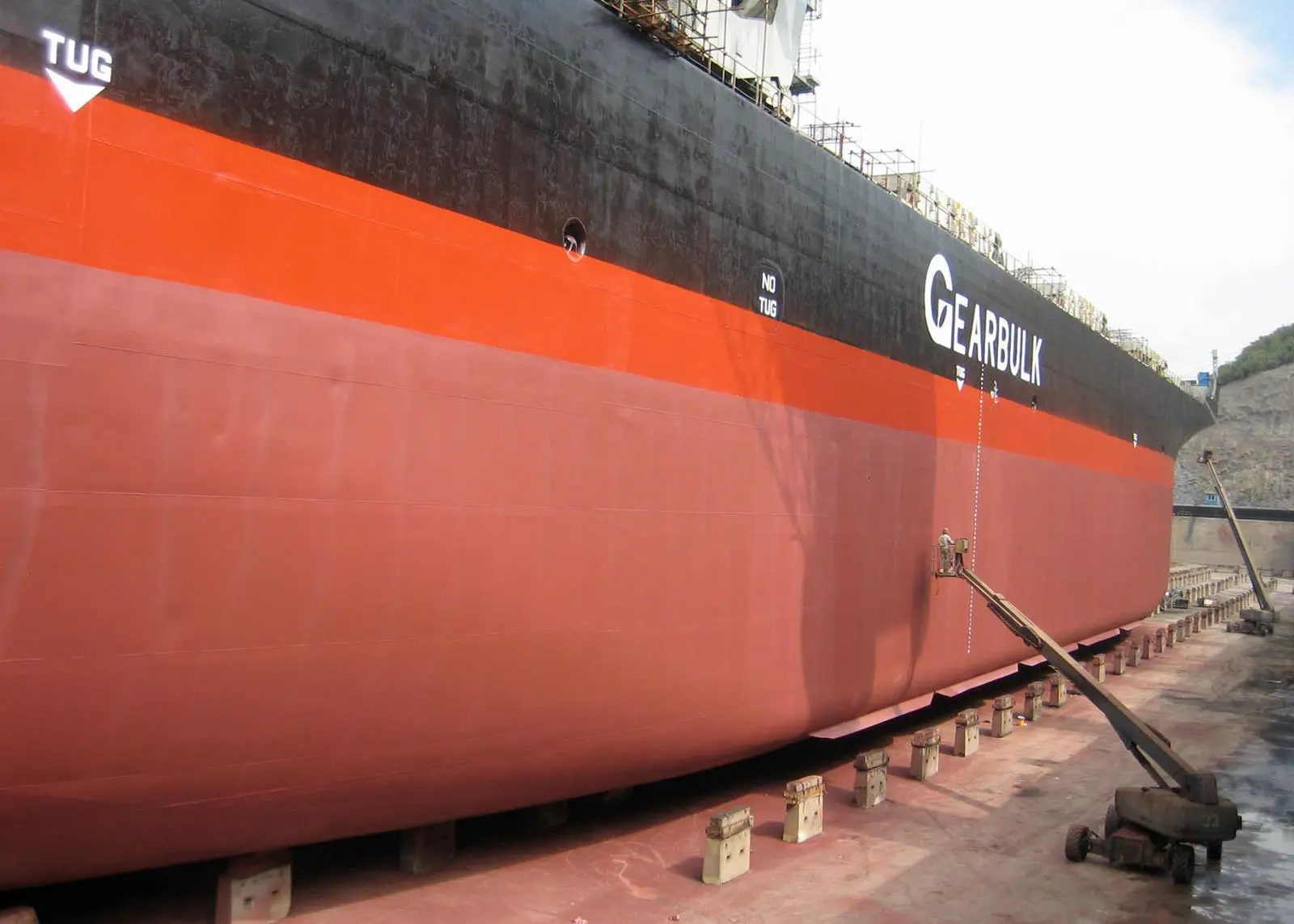
HPS offers a new method for quantifying hull performance, which the company says was not previously possible. HPS is based on Jotun’s next-generation silyl acrylate antifouling product, SeaQuantum X200. When Jotun introduced the first generation of SeaQuantum in 2000 it promised an average of 2-5% fuel savings, but at that time it was very difficult to identify the actual saving, because of many variable factors. Since then Jotun has been working on a method to measure the fuel savings, and says it now has a fully identifiable method using existing data that is already being captured onboard many medium to large vessels.
The measuring and analysis system, developed by Jotun as part of HPS, uses sensors to measure shaft power, vessel speed, wind and draught. Using the collected data, Jotun says that it can plot the speed deviation relative to the vessel’s speed performance measured after dry-docking. A long trend analysis of the hull performance provides a reliable statistical foundation, and this enables the company to offer its guarantee for SeaQuantum X200.
Jotun says that the data-capture technology is not new; it has just not been previously used in this way. The system is automatic, so there is no extra work for the crew. Many vessels already use this information, by way of an engine data logger, and a Doppler log to measure speed through water. Combining the speed information with draught and wind measurements is claimed to eliminate any outside influence from weather, noise or wave conditions.
The correlation between power and speed through water is of paramount importance to the concept of HPS. To put it simply it can be explained as shaft torsion multiplied by revolutions per minute = power output. This combination of power output and speed through water is already described through vessel design curves. This allows Jotun to measure and guarantee on speed loss/gain in a time perspective of 60 months.
Jotun adds that In a recent study sponsored by Marintek, average vessel speed loss has been calculated at 5% for the 60 months lifetime of an antifouling paint. Converting this to the extra fuel needed to maintain speed, vessels will consume about 15% more fuel for the given 60-month period. The company stresses that its performance measurement is completely transparent, not a secret, rather a new way of looking at an old problem.
“HPS represents a genuine game-changer in the marine coatings segment,” says Geir Boe, divisional vice president, marine coatings. “Jotun is the industry’s first marine coatings manufacturer to back fuel reductions claims with a guarantee, based on verifiable results.”
“By using sensors to capture information from different data points, we have a basis to calculate fuel savings over time,” says Boe. “Based on these data, Jotun can offer HPS customers a guarante that SeaQuantum X200 will provide a clean hull and less than 1.5% speed loss or a maximum 4.5% increase in fuel consumption over 60 months, compared to the condition of the vessel after dry-dock. Either we deliver on high performance, or we return the additional investment in SeaQuantum X200. That’s how confident we are.”
Dr. Morten Eikenes, Jotun’s HPS concept development director, explains that Jotun’s SeaQuantum line has established a strong reputation in the market, developed to reduce film thickness through a process known as hydrolysis. SeaQuantum X200, based on silyl methacrylate binder technology, represents the latest generation in this technology.
“SeaQuantum X200 was specifically formulated to improve hull performance,” he says. “As optimum hull performance in addition to the antifouling paint itself, relies on surface preparation and application, HPS customers will also have exclusive access to a dedicated project manager supported by a team of experience technical advisors.”
Eikenes notes that in 2010, bunker consumption for the world fleet was about 400 million tonnes. “By choosing the right anti-fouling solutions, fuel costs can be reduced by 15% annually, with a corresponding reduction in carbon emissions of an estimated 190 million tonnes,” he says. “For shipowners serious about cutting fuel cost and reducing carbon emissions, one solution can be the Hull Performance Solutions concept provided by Jotun.“
Bjørn Wallentin, global sales director for HPS, says: “If the speed loss that is logged during operations exceeds 1.5% over the full five year period then Jotun will return 60% of the paint cost to the customer – you only pay for performance if performance is delivered.”
Wallentin emphasises that the main difference between HPS and other claims from paint companies is that Jotun analyses and guarantees on the hull performance development in the full dry-docking interval. “A common misunderstanding is to compare and guarantee on performance just before and just after a docking. This is what we call a ‘time zero’ perspective that really only shows the effect of the surface pre-treatment done while in dock and has no relevance to the long term performance of the antifouling.”
Wallentin concludes: “If this method for measuring and analysing hull performance was to become the standard evaluation for all antifouling products then this would give a truthful reflection of the performance of a vessel. This would remove the current confusion experienced by our customers relating to real performance of all the different technologies and products available in the market today.”
Related Articles
 PROPULSION
 GENERAL NEWS
 HYDROGEN