



Fishing vessels show the way

The British shipping and shipbuilding industry seemed willing to accommodate the press, so first-hand accounts were the norm. it seemed any type of vessel was worth a visit, and, true to form, the September 1961 edition of The Motor Ship carried a description and photographs of a Soviet trawler which had called at Tilbury to discharge an uncharacteristic cargo of bagged sugar. At 265ft length oa and an eight-cylinder 43cm-bore Prague trunk-piston main engine the Leon Paegle was probably large enough to merit the detailed coverage, despite being a mere ‘fishing boat’.
Trawlers featured strongly in the current issue 50 years ago, with a “unique trawler propulsion plant” receiving equal billing. This comprised twin four-cylinder Bristol Siddeley-Maybach 394bhp engines, running at a constant 1,400rpm, driving a single Hindmarch-Berg CP propeller. The constant speed output from the gearbox was harnessed to drive a 95kW generator to power the trawl winch. One feature of the arrangement was to provide low maintenance levels, taking into account the lack of qualified engineers – with routine maintenance limited to checking oil levels, cleaning filters and, after 10,000 hours, replacement in dock of both main engines with factory-reconditioned units.
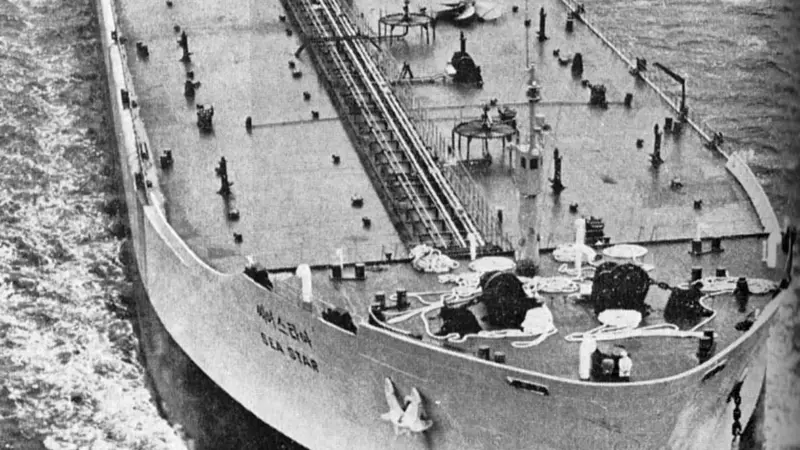
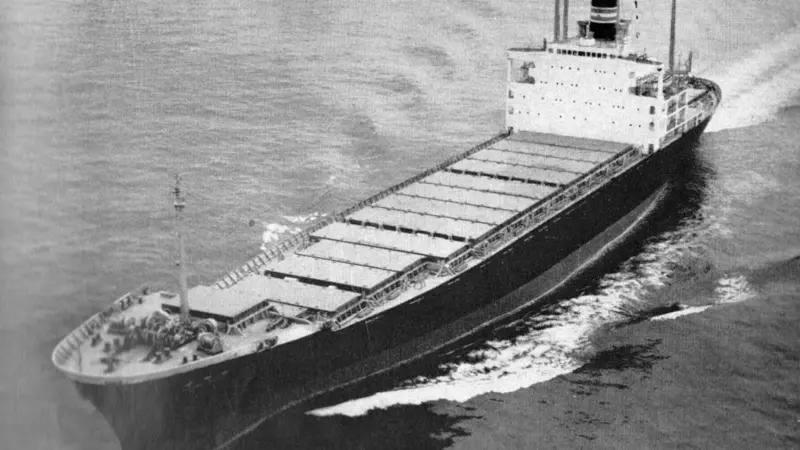
Not all was fishing-related. The emerging Norwegian merchant fleet was described briefly, as was a new development by Blohm & Voss in what was to become the ro-ro market – “portable” – now better known as ‘hoistable’ vehicle decks, installed in a pioneering Hoegh Autoliner. And the launch of the “world’s largest motor tanker” – a 249m 92,000m3 behemoth from Mitsubishi in Japan, powered by a MAN-designed 12-cylinder 22,000bhp main engine.
Related Articles
 50 YEARS AGO
 50 YEARS AGO
 50 YEARS AGO