



The courage of its conviction
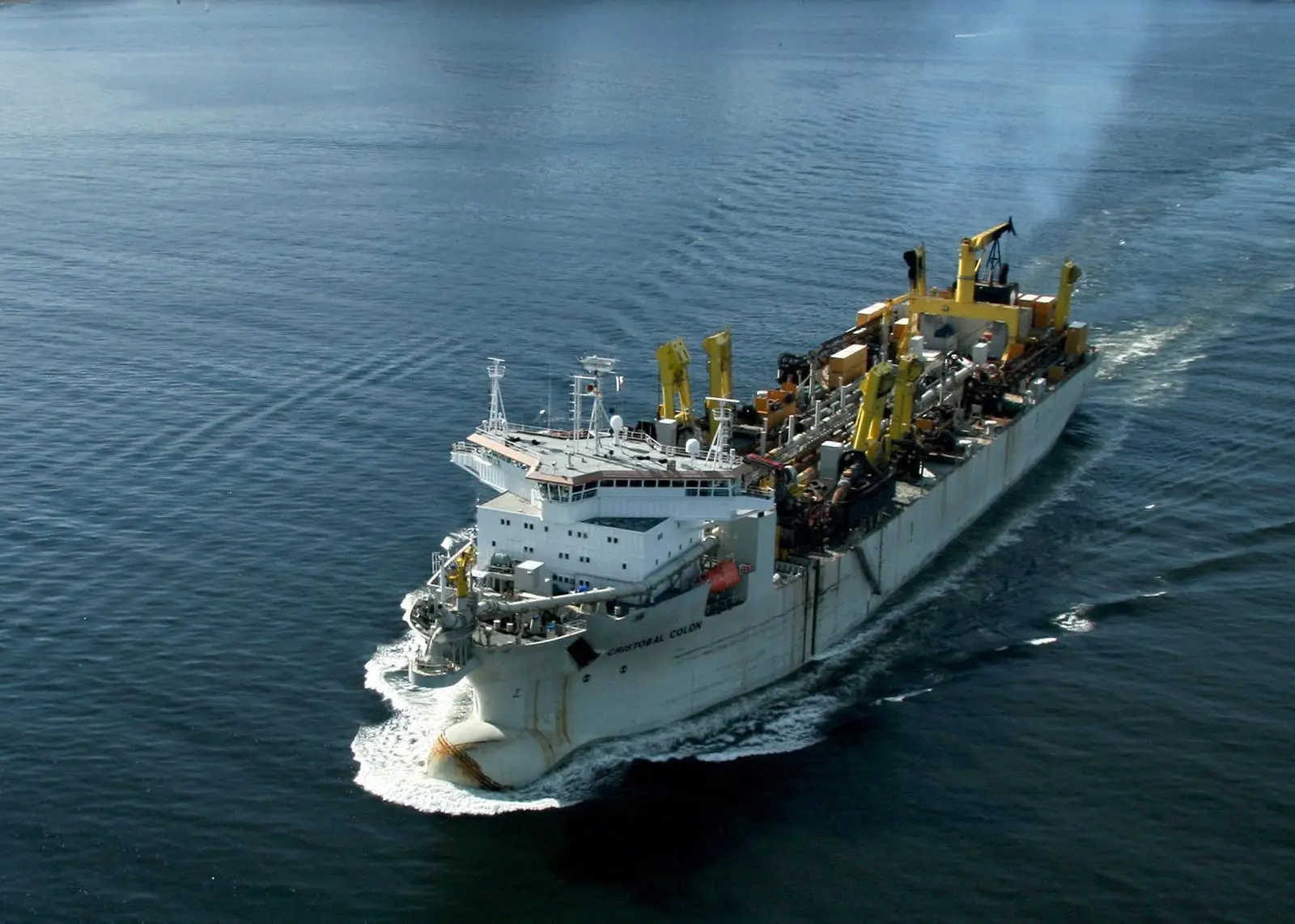
As it stands today, there is no legislation governing the lubricants used onboard vessels. This is despite the fact that all machinery uses lubricants, with spills and leaks impossible to eliminate. Some may argue that generally leakages occur in small quantities and the impact is therefore negligible. But with today’s worldwide fleet estimated at more than 100,000, the cumulative effect must absolutely be regarded as significant. Indeed, an independent study conducted by Dr Dagmar Etkin in 2004 estimated that worldwide, operational lubricant discharges from vessels in portwatersare estimated to be up to 60 million litres. And according to the US Environmental Protection Agency, one litre of mineral lubricant pollutes 1,000,000 litres of seawater. Given the indisputable impact of lubricants on the marine environment, some forward thinking ship owners are already pro-actively tackling this challenge and Belgium-based Jan de Nul is one of these.
Ranking at the top of the international dredging sector, Jan de Nul has an ultramodern fleet, which includes a number of the most powerful self-propelled cutter suction dredgers and largest trailing suction hopper dredgers in the world.
“As far as is possible, we want to operate in a sustainable way and the use of bio lubricants is just one of the outputs of this principle,” explains Jan de Nul’s Willy Blomme. Bio lubricants have at least the performance of other lubricants, but the main advantage is that when they come into contact with the sea they are non-toxic from day one and they decompose by at least 60% after 28 days. In addition, the decomposition is completely non-toxic for aquatic organisms at any stage.
“At present, we are not obliged to use bio lubes for any region, customer or authority, although it may go that way for some applications eventually.” Despite the absence of regulation, Jan de Nul believes that demonstrating a commitment to environmental responsibility is central to its reputation as a world leader in its field.
There are several product areas within the range of available bio lubes, including stern tubes, hydraulic systems, enclosed gears and wire ropes. But the one most difficult to find in terms of performance is multipurpose grease for bearings.
Jan de Nul uses bio grease – Biomultis SEP2 multipurpose grease – from Total Lubmarine on vessels that require significant amounts of greases, due to total loss lubrication systems, including its seven main cutter dredgers. The main consumer of grease on this vessel is the cutter shaft, followed closely by the guiding sheaves and the central spudtcarrier system. Blomme explains: “The cutter dredgers are extremely powerful and continuously working machines. The grease is therefore fundamental to maintaining uptime – any unscheduled downtime costs us money.”
When comparing 2010 with 2011, the amount of Biomultis SEP2 ordered by Jan de Nul quadrupled, and as it continues to expand and take receipt of newbuildings, consumption is forecast to increase even further, despite efforts made to change the bearing design in order to apply less grease lubrication, even water lubrication.
Jan de Nul is a truly global operator pursuing activities across all continents. “Logistics and availability is absolutely critical for us,” explains Blomme. “We’re moving a lot and sometimes operating in extremely challenging locations. So we need a supplier than can deliver what we need, where and when we need it. The whole dredging world is not centred around Dubai and Singapore.”
To be at the top of bio standards, the bio lubricant has to meet the OECD 301 B specification for biodegradability in which the % of lubricant decomposed after 28 days is measured – decomposition must be 60% or more. The entire bio lubes range from Total Lubmarine meets this specification without compromising the performance of the lubricant. This is especially evident in the formulation of the Biomultis SEP2 multipurpose grease.
“Jan de Nul starting using bio greases four years ago and if there had been any significant signs of reduced quality we would have had to rethink our approach,” says Blomme. Reduced equipment reliability, increased maintenance requirements and compromised safety are in no way an acceptable environmental trade off.
Jan De Nul has tested other products but the biodegradable Biomultis SEP 2 from Total Lubmarine was selected as it performed better against criteria including technical matters, availability and price.
Another source of grease consumption are the wire cables. “You cannot imagine how much grease is pumped into the sea water,” stresses Blomme. “When used for applications on deck, it is washed down by rain and splash water. All of it goes overboard, into the sea. There is no other final destination.”
“There are a lot of steel cables on our vessels and to keep them in good condition, they must be greased,” Blomme explains. Ultimately, this grease enters the environment and we would like to address this through the adoption of a bio grease suitable for this application.”
Jan de Nul plans to organise a pilot in conjunction with Total Lubmarine to test its Bio Adhesive Plus product, which meets the most stringent OECD standards regarding biodegradability and eco-toxicity and is especially designed for wire ropes. Existing users report that Bio Adhesive Plus leaves almost no grease stains on the deck and whilst at sea, the structure and colour of the grease remains completely stable.
Jan de Nul is a company that is focused on preparing itself for the future and embracing the unavoidable change that it will bring. “There’s a lot of willingness within the business to continue to grow,” says Blomme. “We know that regulation is coming and that it’s only moving in one direction. So we believe it’s best to start experiencing products now so that we find our feet and proactively identify the best possible products before it becomes mandatory and we’re rushed into making decisions.”
Jan de Nul attributes its success to its vision and courage. Blomme concludes: “We are happy to invest in the latest products and equipment if we believe that they will add value to our company. It is impossible to eliminate all spills and leaks from our vessels, so biodegradable products give us a viable alternative as we continuously strive to reduce our impact on the world’s marine environment.”
Related Articles
 ALTERNATIVE FUELS & LUBRICANTS
 FUELS & LUBRICANTS