



Rolls-Royce gains design foothold in Chinese market
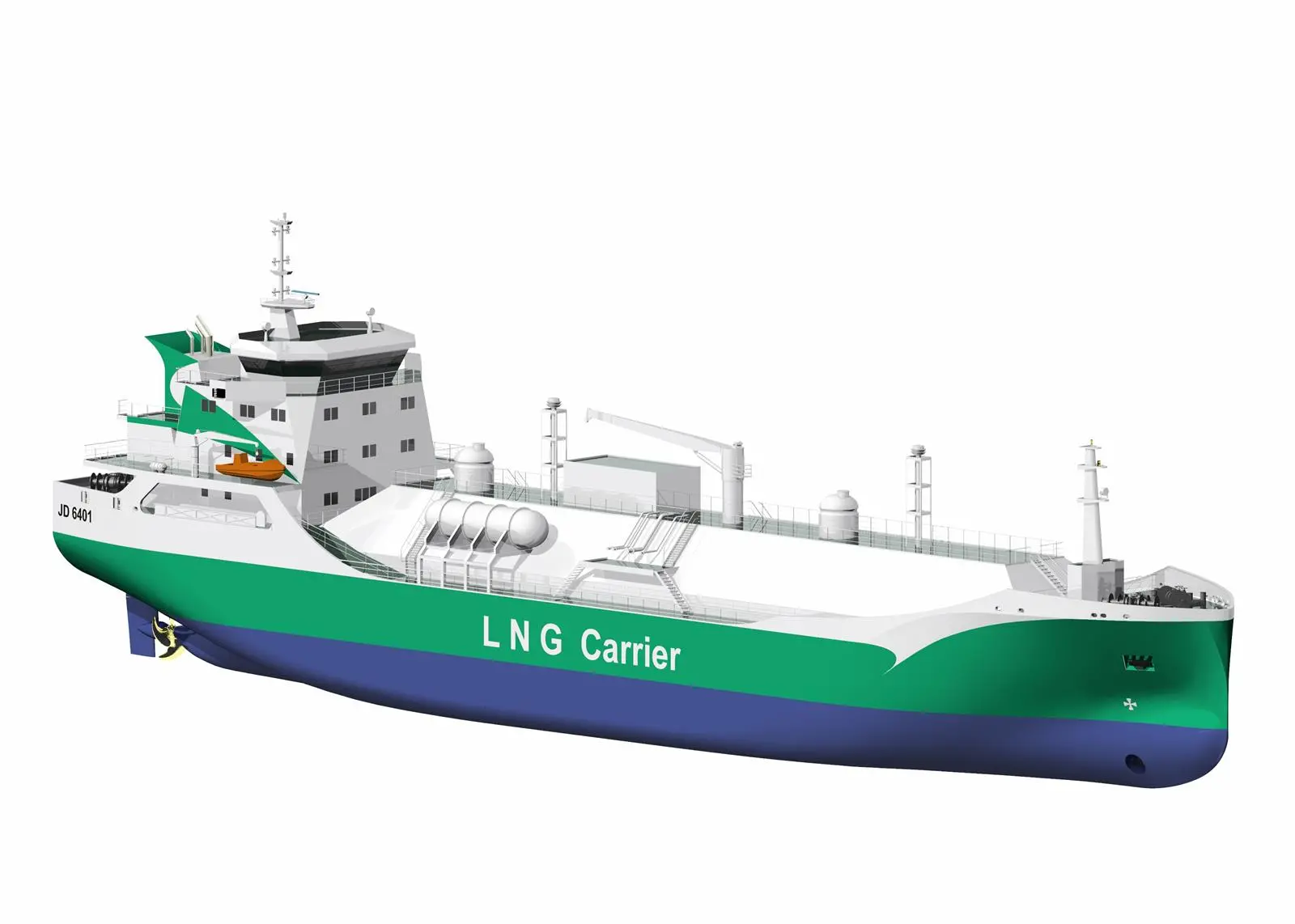
The new high-efficiency designs feature advanced Rolls-Royce propulsion systems and are said to combine the experience of Rolls-Royce in propulsion systems and hull design with Bestway’s knowledge of the Far Eastern markets and shipbuilding industry. The designs focus on the anticipated future needs of merchant shipping, driven by low emissions and reduced operating costs. As well as being able to deliver the required performance and low operating costs, the ships need to be cost-effective to build and maintain.
Rolls-Royce and Bestway Engineering announced their collaboration in 2010, and these new designs are the first to emerge from the companies’ joint project team. Projects investigated include LNG carriers, container vessels and general cargo ships, all designed to comply with and exceed future emission targets. The propulsion systems proposed include options for Rolls-Royce gas engines, and these ships will meet IMO Tier III requirements as far as NOx, SOx and CO2 emissions are concerned. Tier III is due to come into force from 2016 onwards.
Oddbjørn Eliassen, Rolls-Royce, president – merchant, says: “As international emissions controls are progressively introduced, the marine industry is increasingly collaborating to create highly efficient vessels that reduce operating costs and environmental impacts. Through our partnership with Bestway, we are well positioned to lead the development of ship designs that will meet the future demands of merchant operators.”
The new vessel design portfolio is said to be tailored to meet the evolving low emissions requirements of growing global, intra regional and inland shipping trade. The concepts range from 2,500dwt to 37,000dwt, and include the 4100 series ro-ro cargo carriers (9,000 – 11,000dwt), the 4400 series container carriers (up to 2,000TEU), the 4600 series general cargo carriers (up to 37,000dwt), the 4800 series bulk carriers (up to 100,000dwt) and the 6400 series LNG carriers (up to 30,000 m³).
Related Articles
 PROPULSION
 GENERAL NEWS
 HYDROGEN