



Slow steaming: one owner’s view
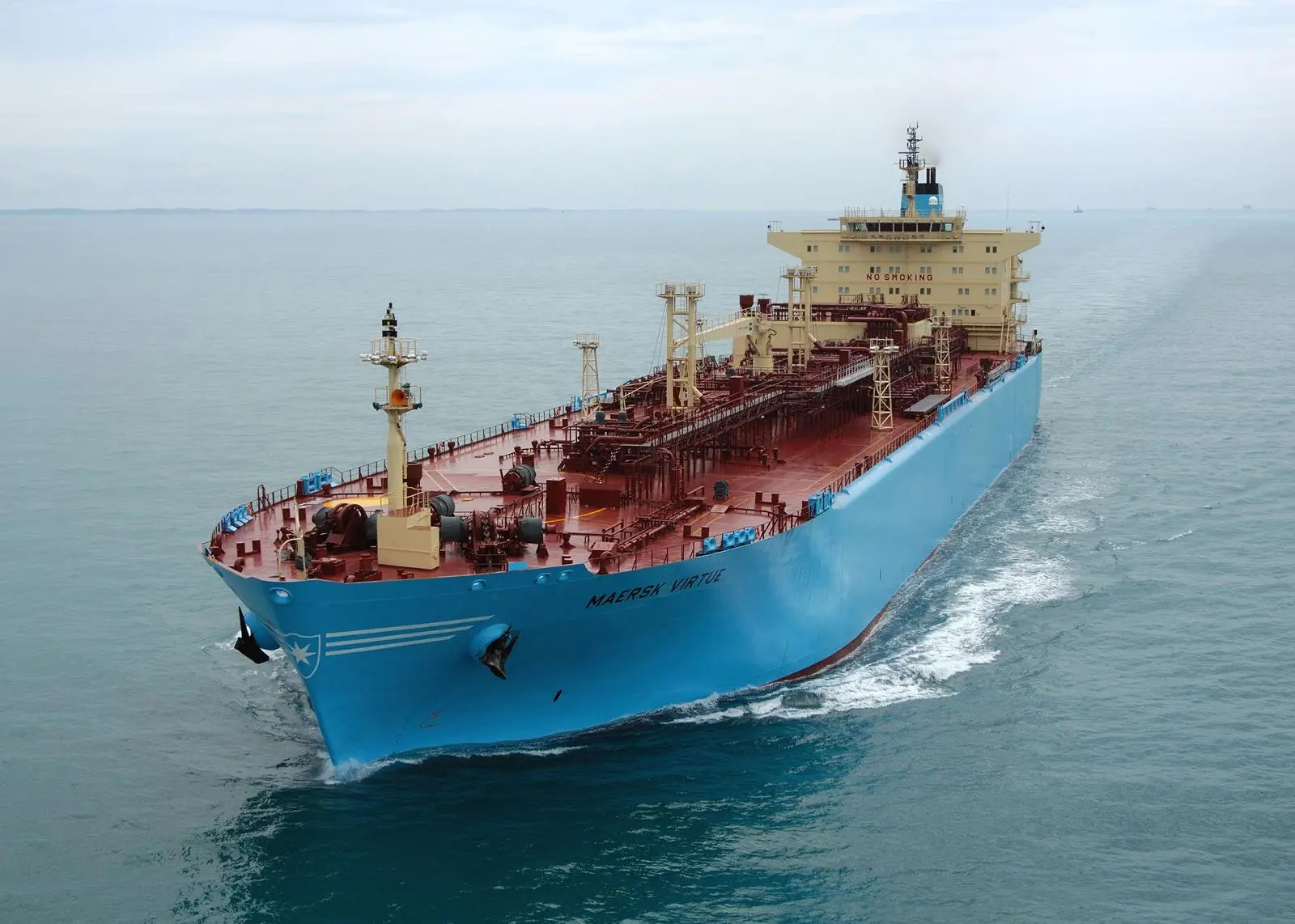
CEO Hanne B Sørensen says that all tanker companies are seriously affected by the downturn, which has been largely driven by over-supply, and additional caopacity coming on stream could delay the recovery. The effect on rates has been strongly negative. CCO Klaus Rud Sejling says that customers are still demanding safe, responsive and efficient service from shipowners, at the same time expecting them to maintain fleets to the highest standards. Owners have to find a sustainable solution to ever-increasing bunker prices, with, in most market segments, daily rates not even covering basic operating costs.
COO Henrik Ramskov has set a target – cut bunker costs by $35 million, and reduce CO2 emissions by 100,000tons. Maersk Tankers’ strategy is to reduce specific fuel oil consumption through super-slow steaming, and focus on hull cleaning and eco-optimised voyage planning (eco-voyages). Super-slow steaming is already proving successful, with a near-40% reduction in both fuel cost and CO2 between January and February 2012. Reducing over-capacity has an important side effect: a 1 knot reduction in speed for a VLCC leads to about 8% more favourable utilisation of capacity.
The scale of reduction is significant. Mr Ramskov explains: “What we have been doing for some time now, and what we are taking a much more systematic approach to now, is super-slow steaming”. And Mr Ramskov explains that super-slow steaming means, in the case of a VLCC, operating at 10% engine load or less – something that can need special procedures.
“For the last couple of years we have been looking closely at our VLCCs, for both the actual levels of consumption that a VLCC has, and also the opportunities from the patters of trading with long voyages that allow us to make the maximum savings,” he says. “With bunker prices as they are now, we are forced to look at our other tankers, and, indeed, across all segments. Of course, with some of the smaller vessels on short voyages the opportunities are less, but even looking at bunkers consumed when in port we can see potential savings.”
Actual speeds achieved through super-slow steaming vary considerably across market segments, but for a typical VLCC something just under 10% can be achieved – this being the point where the auxiliary blower kicks in because the turbocharger stops. This obviously has to be carefully monitored, because it can impact on wear and tear of the engine, but the saving in bunker costs makes it worthwhile.
“Super-slow steaming is now an integral part of how we do business, and, we hope, is how the rest of the industry will do business,” Mr Ramskov says. “We have set ourselves a target for a considerable reduction in bunker spend in 2012; and of course a significant part of lower bunker consumption is a reduction in CO2 emissions. This is becoming increasingly important across the industry.
“On our own Maersk vessels, we have had for some time an in-house developed system, the Maersk Ship Performance System. Data from the main engines and the auxiliary engines provides us with a great deal of information about the performance of our vessels.”
Mr Ramskov explains that the company has now introduced the same system on the vessels they charter in, and have introduced the same system on the vessels belonging to Maersk’s pool partners, because they purchase bunkers across the whole pool.
For super slow steaming, hull cleaning and eco-voyages, the operator has to work very closely with the Master on the individual vessel, he points out. “We have to take into account matters like weather conditions and port congestion.”
“We are now trying out different things in both voyage optimisation and technical operation, that may not have been feasible before,” says Mr Ramskov. “This is an area where we will see more and more things coming into play as we look at how we can optimise the entire voyage.
Maersk says that charterers have supported the super-slow steaming, and as the company extends the practice from VLCCs to other types of tanker, it is looking at its charter agreements so that energy-saving practices can be better accommodated, in terms of how speeds are defined – by knots, by rpm, or in other ways. Traders are beginning to look at environmental issues, and CO2 is something that is increasingly coming into play, particularly among the oil majors.
“Should bunker prices ever get to $1,000, we will then be having different discussions,” says Mr Ramskov. “And these are goal posts that will constantly be moved.”
“Slow steaming has gone much further than we would ever have imagined several years ago,” says Hanne Sørensen. “And it will probably continue to go further still.”
Related Articles
 ALTERNATIVE FUELS & LUBRICANTS
 FUELS & LUBRICANTS