Hamburg event highlights sulphur limits and energy saving
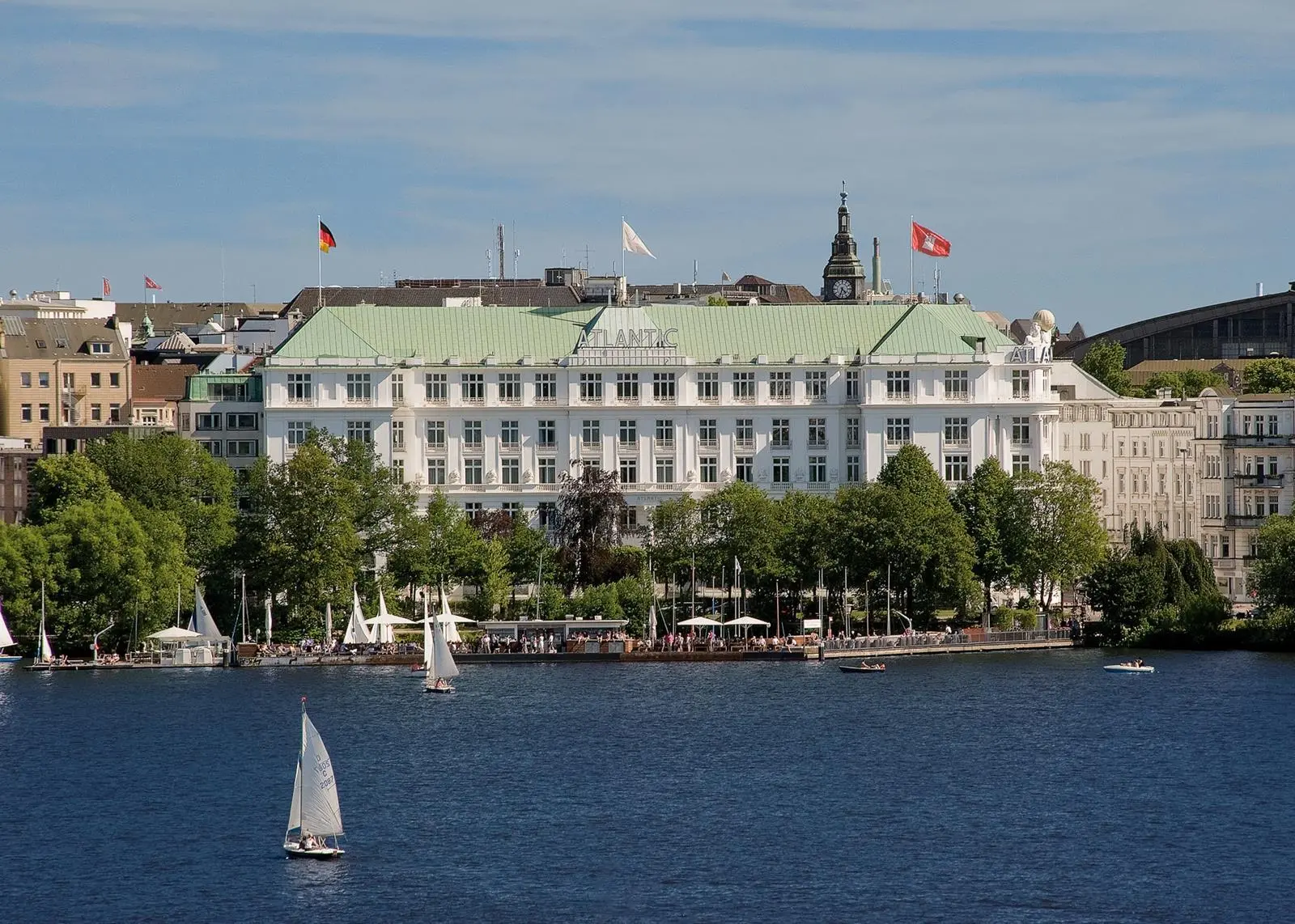
Unsurprisingly, Mercator Media’s conference team was feeling upbeat in advance of the 34th Motorship conference, held once again at the Atlantic Kempinski in Hamburg. An innovation for 2012 – an ad hoc ‘steering committee’ including representatives of shipowners, suppliers, designers and classification societies – had made a great contribution to the content of the programme, having decided that the dilemma facing the industry brought about by the 2015 sulphur limits was the most appropriate main theme at present.
Limiting emissions by imposing a 0.1% fuel sulphur content (or mandating the use of equipment t o bring sulphur oxides in exhaust gas to an equivalent level) was considered – rightly – to bring major problems, that many sectors of the industry had apparently failed to grasp. There is an easy solution; the use of ultra low sulphur distillate fuel. But this means probable modifications to fuel pumps and systems, boilers and other ancillary equipment that is set up for the use of residual fuels. The reduced lubricity of low sulphur fuels is another potential obstacle to reliable operation. And the biggest problem is one of cost. Distillate fuel, naturally enough, carries a price premium over residual, and if most ships operating in ECAs were to change to burning such fuel, demand would skyrocket with likely further widening of the price gap. There is also the unanswered question of whether or not the current refining capacity could cope with a sudden increase in demand, particularly as far from all current grades of distillates are likely to meet the 0.1% specification. These worries bring about more concerns, such as how can shipowners be certain that the fuel supplied, and paid for, would meet the tight specifications, and how would the limits be controlled and enforced by the regulatory bodies.
Such questions make the after-treatment option look attractive. But exhaust gas scrubbers are still large, heavy, expensive pieces of kit that despite some promising test programmes are still mostly untried in real seagoing conditions, on large main propulsion engines. And again, how can those who invest considerable sums in fitting scrubbers be sure that they are actually achieving what they are supposed to?
There is of course a third option, which is to burn gaseous rather than liquid fuels. Natural gas fuels have the potential to almost eliminate sulphur and particulate emissions, to drastically reduce nitrogen oxides in exhaust gases, and despite the fact that the exhaust can contain unburnt methane gas, and methane is a far more potent greenhouse gas than carbon dioxide, the use of gas as a fuel still promises a significant reduction in greenhouse gas emissions. LNG fuel now represents an established technology, though one that is not likely to provide an answer to the 2015 question because much remains to be done to establish a proper pricing and supply structure. Nevertheless, gas fuel is seen as an increasingly viable solution for several ship types in the medium to long term, and so was worthy of consideration at P&E34, as well as justifying its own, more in-depth, coverage at our sister Gas Fuelled Ships conference, taking place in Bergen, Norway, in September.
One message from the steering committee was that there was still a view in some parts of the industry that the 2015 rules were likely to be delayed in their introduction. This was countered by the strong message that these changes would go ahead, come what may, and shipowners had to be prepared for them, at whatever cost. The following stage, a global 0.5% sulphur limit, scheduled for 2020, and likely to have a similar effect on all ships – not just those whose operations bring them into ECAs – may well have a five-year period of grace, but this is not going to apply to the 2015 rules. And as more areas adopt ECA status, things will get tighter still.
So with that background, we expected a good attendance of shipowners, who would need to attend an established event with a sound technical reputation and a selection of high-calibre speakers from across the board. The organisers, and, we hope, the delegates, were not disappointed. Places filled rapidly, attracting a wide variety from all branches of the industry, including shipowners, and by the first day of the event, 23 May, it was close to full capacity.
In the chair, we had senior figures from local classification society Germanischer Lloyd. For the first day, Dr Pierre Sames, GL’s vice-president of strategic research and development, who is well known to those involved with Motorship conferences, being a leading light behind the Gas Fuelled Ships event. For the second day, he handed over to his colleague Dr Fabian Kock, head of GL’s environmental certification department, and head of the emissions measurements laboratory. Both ensured the conference ran efficiently and to schedule – there were many sessions to be fitted into the available time.
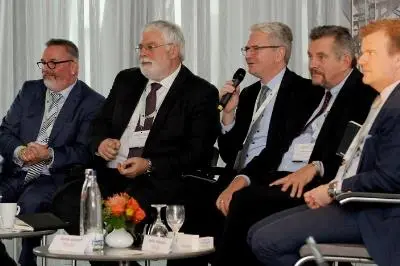
For the keynote session, we were fortunate to have speakers from a number of notable bodies, starting with a welcome address from Achim Wehrmann, director of shipping at the German Federal Ministry of transportation, building and urban development. He stressed Germany’s commitment to MARPOL and the importance of shipping to industry in Germany. Acknowledging the environmental advantages of shipping, he stated that tighter emissions limits in other transport sectors, and the predicted increase in sea transportation, meant that shipping was in danger losing its ‘green’ advantages. In areas like the Baltic where there is direct competition with road transport, there is a real danger of a ‘modal shift’. Mr Wehrmann announced that in his view, the current legislation programme is irreversible, so shipping has to invest, and the German marine industry plans to support this investment. The distillate fuels option will increase operational costs, the LNG solution relies on an infrastructure which does not yet exist, so the favoured channel for German support is after-treatment, particularly as retrofits. One German company has been running a successful scrubber trial, but more trial installations are needed to give a full picture.
Maximilian Strotmann represented the EU in the keynote presentations; he is a member of the private office of EC vice-president Siim Kallas, in charge of transport. Mr Strotmann regards 2015 as a particularly tough challenge to the European, and international, transport system. For the second keynote speech, we were fortunate to have the chairman of the IMO MEPC, Andreas Chrysostomu, who said that although IMO and the other regulatory bodies may be ready for 2015, much more preparatory work needs to be done in the industry in general. Not only the 2015 sulphur challenge needs to be addressed, because in addition the maritime industry will need to be ready with firm proposals about how it intends to cut greenhouse gas emissions. It is the responsibility of the regulators to give the industry a clear picture, to ensure that agreement is reached, and IMO is right at the heart of these moves, saidMr Chrysostomu.
And so the conference proper got under way, led by a session giving shipowner perspectives. Capt Stefan Bülow of Ernst Russ dealt with the container, ro-ro and short sea sectors, and how they were likely to be affected by the upcoming limits. The other two presenters, Gerry Docherty of Ardmore Shipping and Kasper Moos of DFDS both appeared to regard the after-treatment option with some interest. In fact in DFDS’s case it goes beyond mere interest, the operator having had a scrubber fitted to its ro-ro ship Tor Ficaria as part of a comprehensive conversion project. They acknowledged that scrubber retrofits involve a high capital outlay, and can impact on revenue-earning space onboard, but the attraction of being able to use cheap residual fuels and still comply is indeed attractive. Mr Docherty summed up the tone of the whole event by stating that “Non-compliance is not an option”.
The rest of the two days provided a variety of presentations from the industry, covering, on the first day, diverse matters including engine technology – particularly the impact of changeover between different fuel types for operation inside and outside ECAs – gas, electric and hybrid propulsion solutions, and fuels. Several of the presentations will be revisited over the next year in future issues of The Motorship.
The evening between the two conference days provided the opportunity for delegates to attend the gala dinner, once again kindly supported by DNV, and held at the Groningen brewery and restaurant in central Hamburg. Traditional German food was washed down by various drinks, including beer made on the premises, providing a fitting end to the first day.
The second day offered still more of the same, with sessions dealing with exhaust gas cleaning, lubrication and propellers. The final session – on compliance, management and enforcement of the 2015 limits – promised to answer some of the shipowners’ concerns. Carsten Fahrenkrug, representing the Hamburg Waterway Police, managed to set some minds at rest with a statement that, at least in his own area of jurisdiction, ships that had taken on ‘out of spec’ fuel were likely to be treated sympathetically. Finally, before the Chairman wound up the event, there was a question and answer session – as there had been following each session – and a presentation by Maersk’s head of business development, Jesper Mortensen, about how this major shipowner would be dealing with 2015 and beyond.
The event would not be possible without the many companies and organisations that gave sponsorship and support. These included Castrol Marine as Gold sponsor, Rolls-Royce as Silver sponsor, DNV supporting the dinner, ABS providing the coffee breaks, SAJ Ship Dynamics sponsoring the lunches, plus additional sponsorship from Wärtsilä, GEA, Kral, Kistler, Germanischer Lloyd, ExxonMobil, Kittiwake, Lubmarine, TecnoVeritas, Couple Systems, Leutert, Novenco and Sauer.