



ECA compliance solutions should be chosen wisely
The North American emissions control area (ECA) has recently taken effect, signalling the next stage of sulphur regulation, which is fundamentally – and exponentially – changing the way ship owners and operators run their businesses. With the 2015 sulphur drop to 0.1% just around the corner and the 2020 global 0.5% limit looming on the horizon, industry players are taking decisions now that will not only shape the future of their companies but, indeed, the shipping industry as a whole. As with any important decision, making the right choice depends largely upon being well informed of the available options and considering carefully how the pros and cons of each of them relate to your particular situation.
There are three potential solutions available in the current market for achieving ECA compliance; burning distillate fuel, using LNG as a bunker fuel or installing abatement technology such as scrubbers. Owners and operators need to make sure that comprehensive analysis and planning is undertaken to ascertain which of these options is the most viable and profitable for their business.
In the near term, it is widely considered that distillate fuels are likely to be the most popular choice. This is largely because – of each of the three options – switching to burning distillates within ECAs requires the least up front operational investment, albeit at a 45% cost premium over regular HSFO. However, the rapid increase in demand post-2015 is expected to exert extreme pressure on the supply chain. Furthermore, despite the general perception of fuel switching as the ‘easy’ option, changing from HSFO to distillates is not necessarily a simple process. Fuel changeover must be 100% completed before entering into ECA waters and the full transition can take more than a day to complete. So the crew must plan appropriately to ensure it is fully aware of when and where the vessel enters – and indeed exits – an ECA.
The implementation of timely switching procedures is not the only consideration associated with this approach to ECA compliance. As greater demands are placed upon fuel oil systems, crews’ attention must also be heightened to condition monitoring, maintenance and processes. This is because fuel switching increases the dangers of sludge formation that could impact fuel filters and separators, fuel injection pumps or fuel nozzles. There is also the possibility of cylinder liner lacquering if an inappropriate lubricant is used. Any one of these problems could lead to expensive repair bills or, in worst-case scenarios, propulsion failure and according to studies from the US Coast Guard, improper maintenance and testing of systems is already one of the leading causes. This information is not designed to shock or dissuade – distillates may very well be the best option for some owners and operators, particularly those who will operate only for short periods within ECAs. However, as an option for compliance, distillates must be analysed in the same way as LNG and scrubbers; objectively and with all the technical challenges of operation considered.
Owners and operators should also be aware of the financial viability of choosing to make use of distillates as their option for ECA compliance. Fuel costs, which now represent up to 70% of the operating costs of a vessel, already present one of the industry’s greatest challenges. The 0.1% MGO that will be required inside ECAs would increase that fuel bill by 45% at current prices – MGO is on average $980/tonne compared to $680/tonne for conventional HSFO. However, fuel price projections beyond 2015 suggest that the price gap between the bunker fuel options will continue to widen. According to forecasts from bunker industry veteran and MD of Marine and Energy Consulting, Robin Meech, by 2020 MGO will cost $1,125/tonne – not just an overall increase in cost but over 55% more expensive than HSFO projected at $720/tonne. Taking all of this into consideration, owners and operators should not simply assume that distillates represent the ‘easy option’ for ECA compliance. It may not require the up front capital investment for specialist technologies associated with LNG fuelling or exhaust gas scrubbing. However it certainly requires other investments, not all of which are as straightforward to calculate as exacerbated fuel costs.
Moving on to the second option, LNG as bunker fuel presents an attractive proposition. Natural gas delivered as LNG has almost no sulphur content, reduced NOx and lower carbon emissions, as well as offering lower fuel costs than even conventional bunkers at current prices. As such, it is no surprise that the dual-fuel option for LNG is one that is attracting significant attention for its future industry potential. Wärtsilä has pioneered dual-fuel engines, which have been the chosen propulsion for LNG carriers since 2005 and now provide a cost-effective alternative to burning distillates inside ECAs. Despite the youth of LNG bunkering, its longer term potential is becoming increasingly clear. Ongoing development of the LNG bunkering infrastructure will support organic growth until the use of LNG as a fuel becomes widespread practise.
The third option for ECA compliance is the installation of exhaust gas cleaning systems, or scrubbers, to reduce the emission of sulphur and other particulate matter from HSFO. From an operational perspective, Wärtsilä Hamworthy scrubbers remove SOx by up to 98% and harmful particulate matter emissions can be reduced by 85%.
Scrubbers do require an initial investment for purchase, installation and testing. However, the potential cost savings achieved through the subsequent use of the cheaper HSFO rather than distillates mean that the return on investment period is very attractive, and the more a vessel operates within ECAs, the shorter the payback period of that investment becomes. A report published this year by leading classification society Germanischer Lloyd provided an interesting illustration of this. The report demonstrated that for a 4,600TEU container vessel post 2015, the payback period on a scrubber would be just under 72 months if under 10% of operations were within ECAs, but this was reduced to just over 24 months if operations within ECAs grew to only 45%. Based on the widening price gap between HSFO and distillates, one can assume that this ROI period will only become a more appealing proposition as time goes on.
The viability of scrubbers has been recognised not only by the IMO and the European Union, but also in February 2012 by the US Environmental Protection Agency followed by the British Parliament in May. In addition, extensive testing is performed upon each newly installed scrubber system to ensure that they are able to meet the demands placed upon them by the varying operational conditions that they will be working under. As increasing numbers of scrubbers are being installed and the industry’s understanding of their ability to achieve compliance develops, confidence in scrubbers continues to grow.
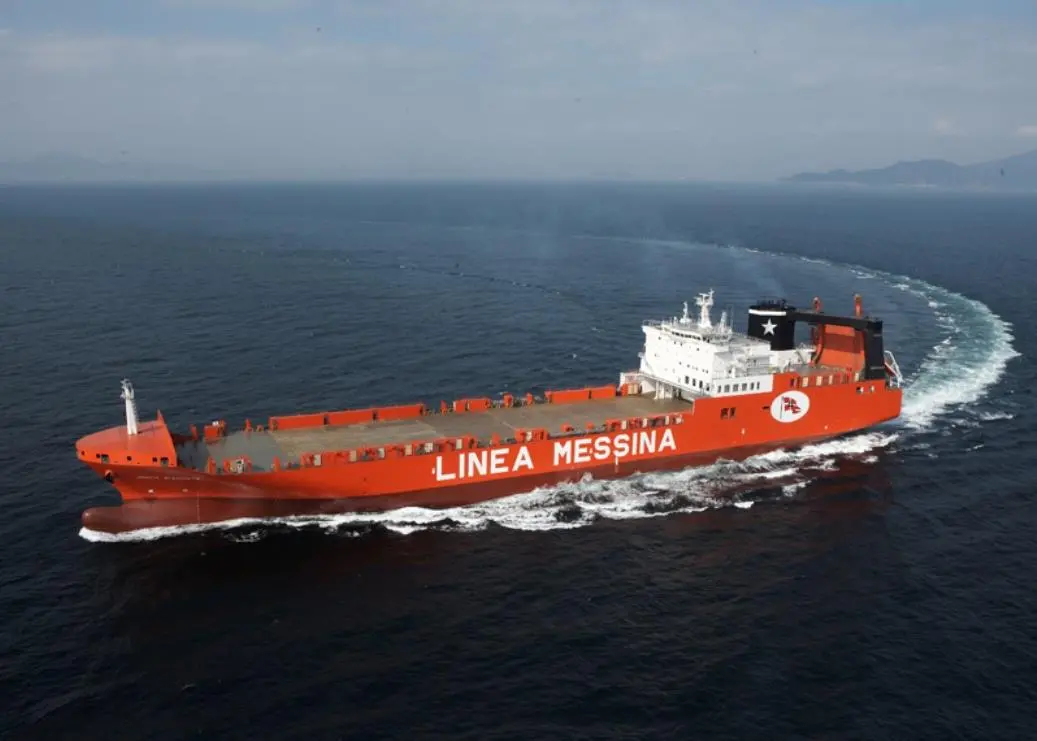
In testament to this, commercial vessels with scrubbers installed are starting to enter operation. Notably the Jolly Diamante, a 45,000dwt ro-ro vessel owned by Ignazio Messina with four Wärtsilä Hamworthy scrubber units for its auxiliary engines and a fifth for the auxiliary boiler, was delivered at the start of this year. Deliveries such as this and the increasing orders that the scrubber market is experiencing show a clear trend towards an awareness and understanding of the operational capability and economic viability of scrubbing systems.
Ultimately, owners or operators transiting ECAs must not only consider regulatory compliance but also their competitive position. As discussed, anyone burning distillates is likely to face a significant increase in their operational overheads. This could mean a dilemma over raising rates to reflect these increased costs or witnessing a reduction in profits at a time when some owners and operators are already struggling with profitability. Those who can maintain a business-as-usual approach to their bunker supply and expenditure through the installation of scrubbers, as well as those who can power a vessel on cheaper LNG within ECAs, may realise a significant competitive advantage in terms of the rates they can offer customers and the profits they can achieve.
Clearly, the details that need to be weighed up in deciding on the most suitable method for ECA compliance are many and significant. From the practical operations and logistical considerations to the financial ramifications, each solution has its individual pros and cons that will vary depending on the vessel in question. There is no panacea, no one-size-fits-all solution, nor is there one that allows operations within ECAs to simply continue business-as-usual. However there is at least a choice. And as long as owners and operators invest the time and energy in systematically analysing each of the potential solutions available to them, they can be confident in making an informed decision best suited to securing the long-term success of their business.
Wärtsilä Hamworthy: Scrubbing up well
There are currently four vessels in commercial operation fitted with Wärtsilä Hamworthy scrubbers. There are a further 20 vessels with confirmed orders.
Vessels currently operating with Wärtsilä Hamworthy scrubber systems:
Related Articles
 ALTERNATIVE FUELS & LUBRICANTS
 FUELS & LUBRICANTS