



Are single oil solutions the future of cylinder lubricants?
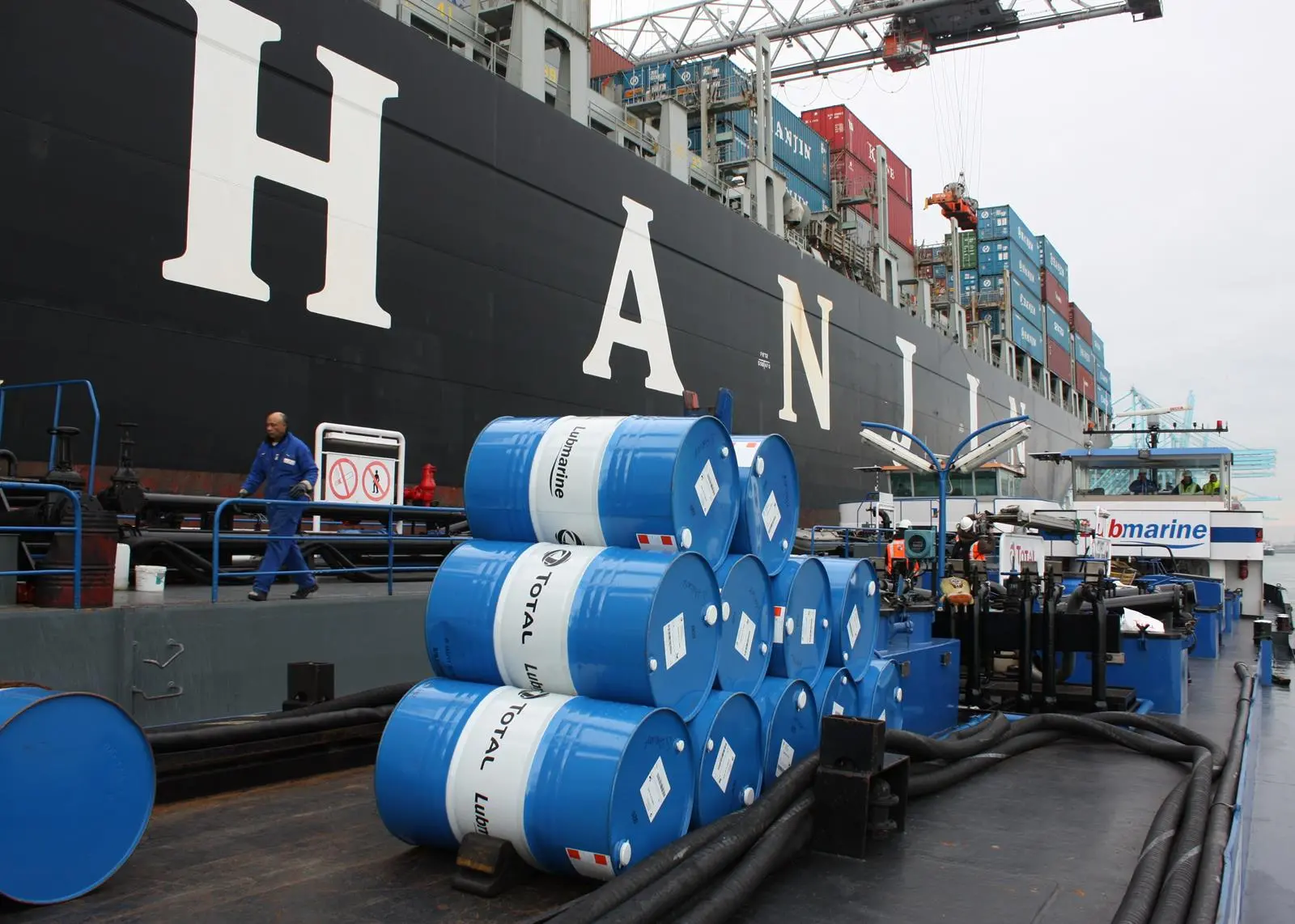
Everyone across the shipping value chain continues to react to manage the effects of these deep-seated changes, not least marine cylinder lubricant (MCL) suppliers who must research and develop MCLs that meet the requirements of both today and tomorrow.
This demands constant evolution and, Total Lubmarine believes, a new era in MCL chemistry. With five year’s experience of operating using this new chemistry, knowledge of it is maturing, data continues to accumulate and evidence is conclusive confirming that this is absolutely the right direction for MCLs. Moreover, this is a position that is substantiated by others at the forefront of the MCL marketplace that also subscribe to the same thinking and have recently launched new ‘single solution’ lubricants into the marketplace.
The use of extra high, 80 BN (base number), cylinder oils has recently been suggested as the best method of meeting the challenges placed on today’s marine engines. The background to this is that although it had recognised limitations, for many years BN was the only data available with which to gauge the ability of the oil to fight acids within the cylinder. This is why experts believed that, to be effective, cylinder oil should have a BN that matched the sulphur content of the fuel, for example BN should be 70 for high (3.5% range) sulphur content fuels and 40 for lower sulphur content fuels.
Over the past decade, however, conventional wisdom has changed and it has been clearly proven that the BN argument is now an outdated one. As such, Total Lubmarine believes that the implications of this ‘high BN with conventional chemistry’ approach are at best risky and at worst dangerous.
General operations for two-stroke diesel engines are becoming more severe, increasing the technical challenges required for deposit control, cleanliness and wear protection. Although Total Lubmarine was the first to launch a universal product utilising this new, patented chemistry in 2008, the majority of the other main MCL suppliers are following with their own, similar versions that are suitable for use across a range of sulphur level fuels. These leading companies understand that what counts is neutralisation efficiency – fundamentally, the neutralisation capability of the new generation MCL is more efficient than a conventional BN 70/80 MCL.
It is important to note that it is not the level of basicity that is dangerous, but the underlying chemistry with which products are formulated. Using conventional chemistry, increasing BN to high levels presents a high-risk strategy; too low a BN for the sulphur content can lead to acid corrosion of the liners, whilst too high a BN can lead to hard calcium deposits and an increased risk of bore polishing and liner scuffing. Which is why basing a choice on predominant operating patterns is so risky.
It has long been widely accepted that a high BN product cannot be used for long periods within ECAs, which means that users of conventional products will have to switch between two lubricants; 70-80 BN to 40BN. Suggestions that ships choosing a high or low BN lubricant based upon their predominant operating patterns will only have to carry one cylinder oil is not only restrictive but also potentially dangerous. Without a back up providing the option to switch between high and low sulphur fuels and corresponding MCLs, certain route changes would prove impossible and operational safety could be compromised.
As some ‘universal’ MCLs are compatible with fuel of sulphur levels from 0.5% right up to 3.5%, their deployment eliminates the requirement to switch lubricants to match different fuel sulphur levels – greatly simplifying onboard operation and increasing efficiencies as only one cylinder oil has to be managed. Furthermore, economic pressures have made the adoption of slow steaming common practice on certain shipping routes and across several ship types to varying degrees. However MAN Diesel & Turbo’s recently released customer survey results revealed that only a small number, corresponding to 6%, were committed to slow steaming alone, at engines loads below 50%. Indeed most combined slow steaming with operating at normal load. This demands not only superior wear control but a flexible lubricant that can cope with a variety of operating conditions. Indeed five years of at sea evaluation underlines that the “universal” concept is reliable even when vessels are slow steaming. With more than 2,000 samples from slow steaming vessels, Total Lubmarine can attest that the iron measured in the drain oil – which denotes engine wear – is lower with the new universal MCL than with a conventional BN70.
The company believes that it has become increasingly clear that the conventional approach to formulating MCLs is no longer meeting the requirements of the modern marine engine. Universal lubricants may represent a paradigm shift for the industry but they are also a conclusively proven, break-through in product applicability for shipowners and operators facing unprecedented economic and environmental challenges.
Related Articles
 ALTERNATIVE FUELS & LUBRICANTS
 FUELS & LUBRICANTS