



Russian government encourages domestic recovery
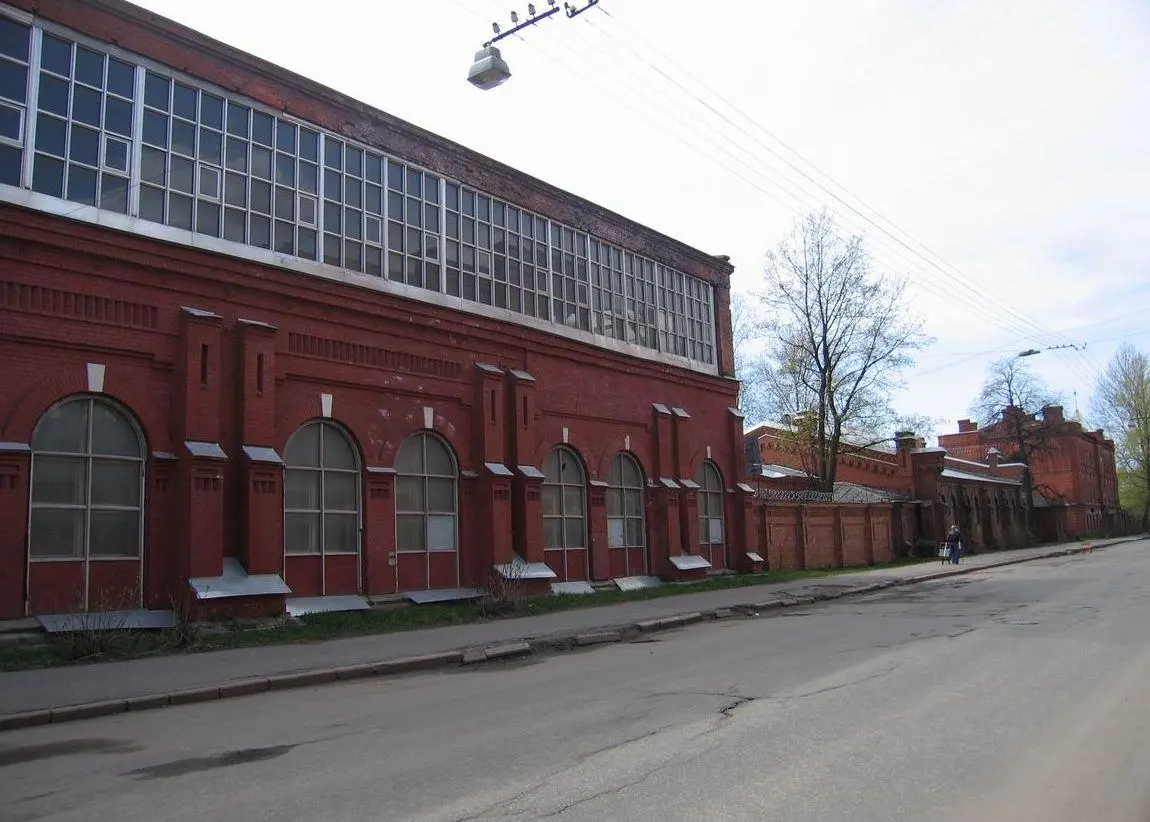
As part of these plans, a new large industrial park for the manufacture of marine equipment in Kronstadt, the historical centre of Russian shipping and shipbuilding, is expected to be established in the coming years.
The main initiator of the Kronstadt project is United Shipbuilding Corporation (USC), the largest association of Russian shipbuilding companies, which has already started the search for the first residents for the new project. It is planned that one of the first participants of the new project will be Wärtsilä, the Finnish shipboard equipment company, which has already reached an agreement with USC on the establishment of a joint venture.
The new joint venture will become the first resident of the new industrial park and will specialise in production of shipboard equipment,and in particular rudders. Financial details of the agreement, as well as stakes of the companies in the venture were not disclosed.
At the same time, in addition to Wärtsilä, there is a possibility that the new project may also involve the participation of Hakkinen, another Finnish marine engineering company, which is considering establishing a joint venture with the local ‘Proletarian Zavod’, which is also owned by USC. According to Mika Pentin, Hakkinen’s managing director, the volume of investments in the project at the initial stage is expected to reach €10 million, most of which is expected to be allocated for the establishment of production facilities. Proletarian Zavod will hold a 51% stake in the venture, the remaining 49% being owned by Hakkinen.
USC is currently conducting negotiations with other potential participants. According to Kyril Lavretsky, head of the department of capital construction and modernisation at USC, construction of the new industrial park, which will have an area of about 15 hectares, has already started. The park will have free economic zone status, providing tax and customs benefits with, in particular, VAT exemption.
There is a possibility that a further new industrial park may be merged with a new ‘supershipyard’, to be built near St. Petersburg, established on the basis of capacities of Admiralty Shipyards,, one of Russia’s largest shipbuilders. This new project is another part of government plans for recovery of domestic marine engineering and instrument making, industries which were seriously hit by the collapse of the Soviet Union and the associated stoppage of major R&D activities in this field.
These are part of the current federal ‘Development of Civilian Marine Engineering in Russia, 2009-2016’ programme. This includes a series of promising projects, to develop new types of shipboard equipment, which may soon be implemented with the support of the Russian government. As an example of these developments, Russian scientists are proposing:
- atomic steam-generating plants for ships, with increased safety and efficiency;
- development of a new generation of marine power plants, operating on liquid hydrocarbon, with increased manoeuvrability and safety;
- projects associated with equipment for shipboard processing of fish and seafood; and
- anti-piracy equipment.
Russia has an estimated 40 manufacturers of marine equipment, of which 13 carry out research and design. A further 50 companies are involved in the design and production of marine instrumentation, and these are the companies likely to be implementing these projects. Among the major Russian instrumentation corporations are the Central Elektropribor research institute, which designs navigation devices, Granit-Electron, a producer of tracking apparatus and Oceanpribor, with a sphere of interest including hydro-acoustics. During the Soviet period. Most of these companies’ work was focussed on naval vessels, but since 1990 priorities have changed.
According to Lev Klyachko, CEO of Central Research Institute Course, one of Russia’s leading marine equipment producers, hitherto the Russian marine equipment industry has been hampered by outdated technologies, lack of human resources and the loss connections with the rest of the maritime cluster, brought about by the collapse of the USSR and subsequent economical and political crises. Mr Klyachko says that in recent years the situation has significantly improved, thanks to government intervention.
Government representatives believe that establishment of the new marine engineering cluster and the implementation of other industry projects are vital for the domestic shipbuilding industry, which currently experiences an acute need for quality shipboard equipment. In addition, the Russian commercial fleet is currently in a need of modernisation, about 70% being older than 25 years.
Denis Manturov, Russia’s deputy minister of industry and trade, comments: “We are considering all necessary steps to change such a situation, including through the use of state incentives. Some Russian marine equipment producers are already patenting their own developments. We have ambitious plans: to design more than 700 new marine engineering technologies by 2016.”
The government plans to involve itself in classification of locally-produced marine equipment , and to harmonise Russian technical regulations with global standards. To achieve this, the government is seeking the assistance of Russia’s leading research institutes and universities.
Related Articles
 ALTERNATIVE FUELS & LUBRICANTS
 ALTERNATIVE FUELS & LUBRICANTS
 OPINION