



Automation, large bores and short strokes
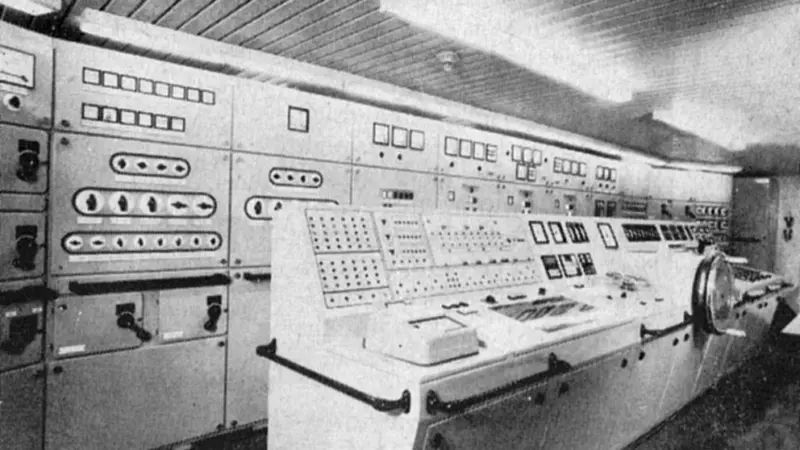
However, the opposite was to the fore in The Motor Ship of October 1962. But before we explore the differences, let our time machine take us back to more familiar ground, i.e. earlier examples of modern practices. One of the subjects that cropped up several times in that issue was automation, with a look at a ‘completely automated’ ship from Japan. The 12,000dwt cargo liner Sadoharu Maru seems pretty unremarkable today, but at the time it broke new ground. The main engines could be controlled remotely, by electro-hydraulic control, from the bridge, as well as from hand-levers on the engine itself. This was a step forward from one of the Japanese predecessors described just four months previously, where the engine was operated from a control room in the machinery space. Sadoharu Maru had a control room in the machinery space, but this was used for supervision rather than control, housing the instruments, switchboards and alarms. In fact the ship was a precursor for much of today’s automation, with engine starting, water cooling, fuel purification, lube oil and boiler feed all operated remotely, as was the fuel system. In fact the last-mentioned system provided a surprise in that the article spoke of automatic switchover between heavy oil and Diesel fuel when entering port – an operation that still seems troublesome today.
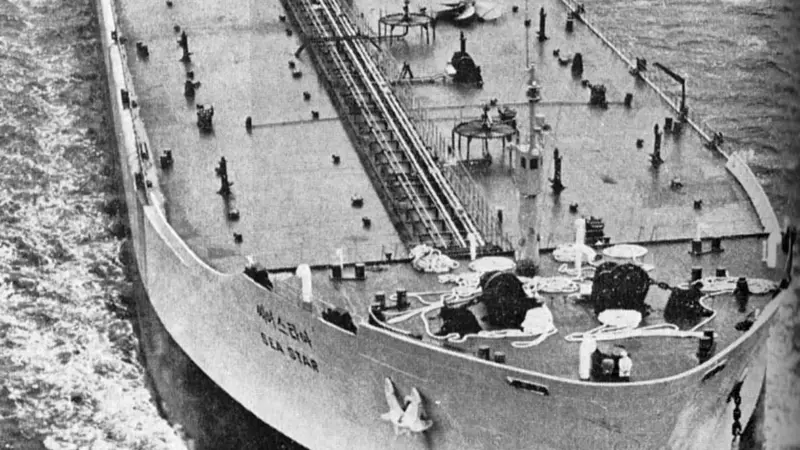
Another ‘automatic’ ship got a mention in that issue – Clan Lines’ 11,000dwt cargo vessel Clan Macgillivray, the Barclay, Curle-Sulzer RD76 main engine of which was provided with full instrumentation and control in a separate engine control room, allowing a significant reduction in the number of officers on watch. Meanwhile, the use of a remote control console to operate the IHI-Sulzer 9RD90 engine of a Japanese tanker newbuild was thought worthy of mention, it being one of the first attempts at automating a large-bore engine.
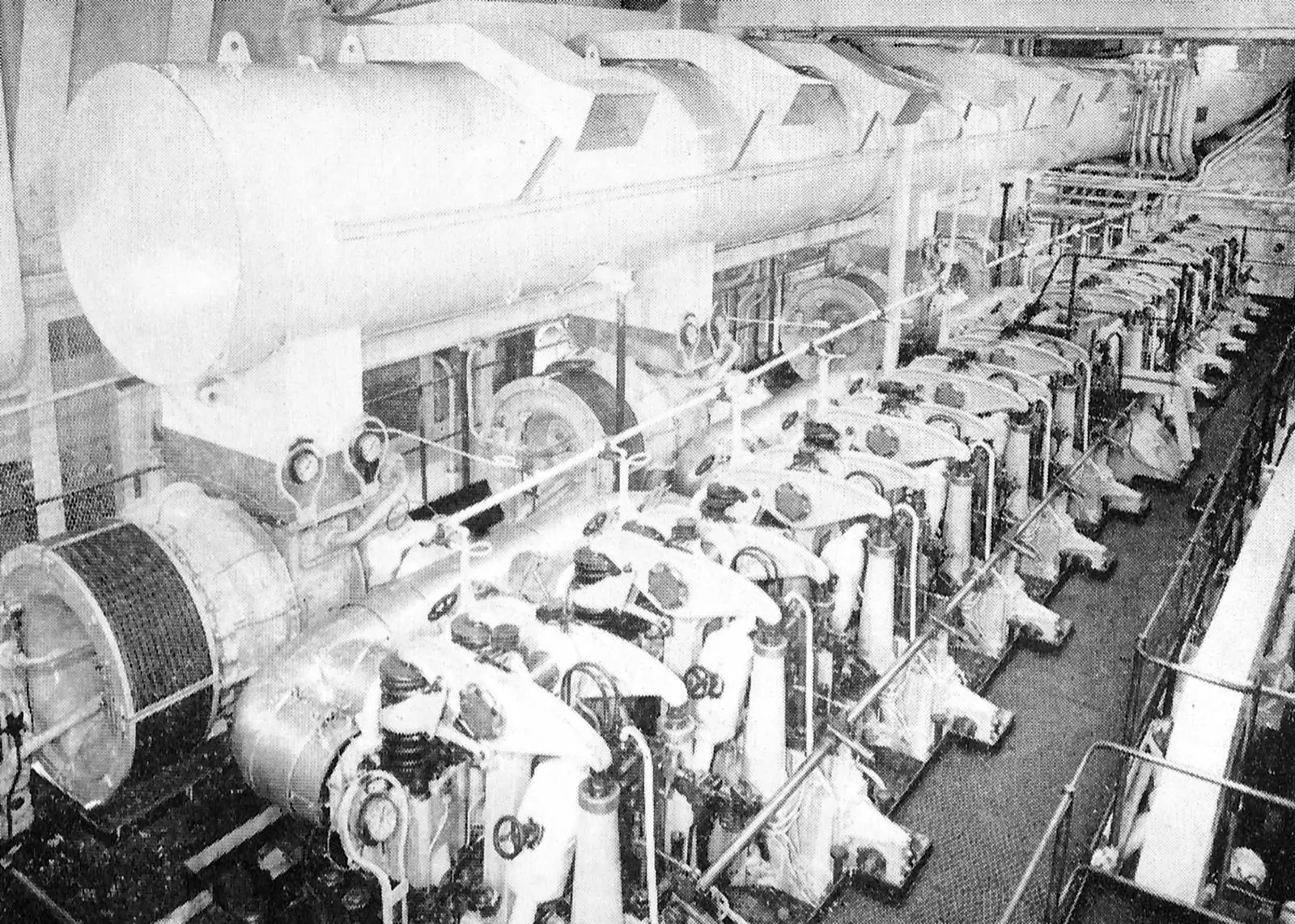
Large engine bores are something else that occupied considerable space in that issue. We may have previously seen this as a foretaste of later trends, as indeed it was, though nowadays the preference for slower steaming and greater fuel economy is driving the industry back to smaller cylinder sizes. Among the large-bore units described were the first from Stork – an 850mm bore, eight-cylinder, 18,500bhp engine which was currently on test.
The conservatism of our industry drew comment even then; not only was this seen as holding back progress in automation, at least outside Japan, but doubts were expressed about the reliability of the new bigger engines. Japan (again) sought to allay those fears, the record being cited of a Hitachi-B&W 12-cylinder 74VTBF-160 engine which had achieved a year’s running – 6,546 hours – without overhaul. Examining three of the cyclinders, it was concluded that the engine was good for still longer operation on the other nine.
The main trend that 50 years went against current thinking was the adoption of short engine strokes. In the first example examined, an Italian ferry Citta di Napoli, the reason was the reduced height in the engine room. Rather than opt for an inherently shorter trunk-piston engine, the designers chose a pair of Fiat nine-cylinder crosshead engines with bore of 600mm and stroke of 800mm. The crankshaft speed of 215rpm was still considered low enough for direct drive.
Similar thinking was applied to another new passenger vessel, the French liner Ancerville. This, the first Diesel passenger ship in the Paquet fleet, used B&W designed machinery comprising two main 12-cylinder two-stroke engines of 620mm bore and 900mm stroke. Each was rated 12,000bhp at 200rpm. Levels of noise, particularly from the Brown-Boveri turbochargers, were said to be particularly low.
Finally, signs of Diesel supplanting steam were evident in the favourable results recorded by four of the ubiquitous Liberty ships, converted by their Israeli owner in France to SEMT-Pielstick medium-speed machinery. Around 100t was saved in weight of the machinery, while the reduced bunker capacity needed meant that a further 830t payload could be carried. Most impressive, though, was that the new Diesel machinery burned 13t of HFO per day at 13 knots, a great improvement over the 22t/23h at 10.4 knots of the steam plant.
Related Articles
 50 YEARS AGO
 50 YEARS AGO
 50 YEARS AGO