



Payback on sensors not assured
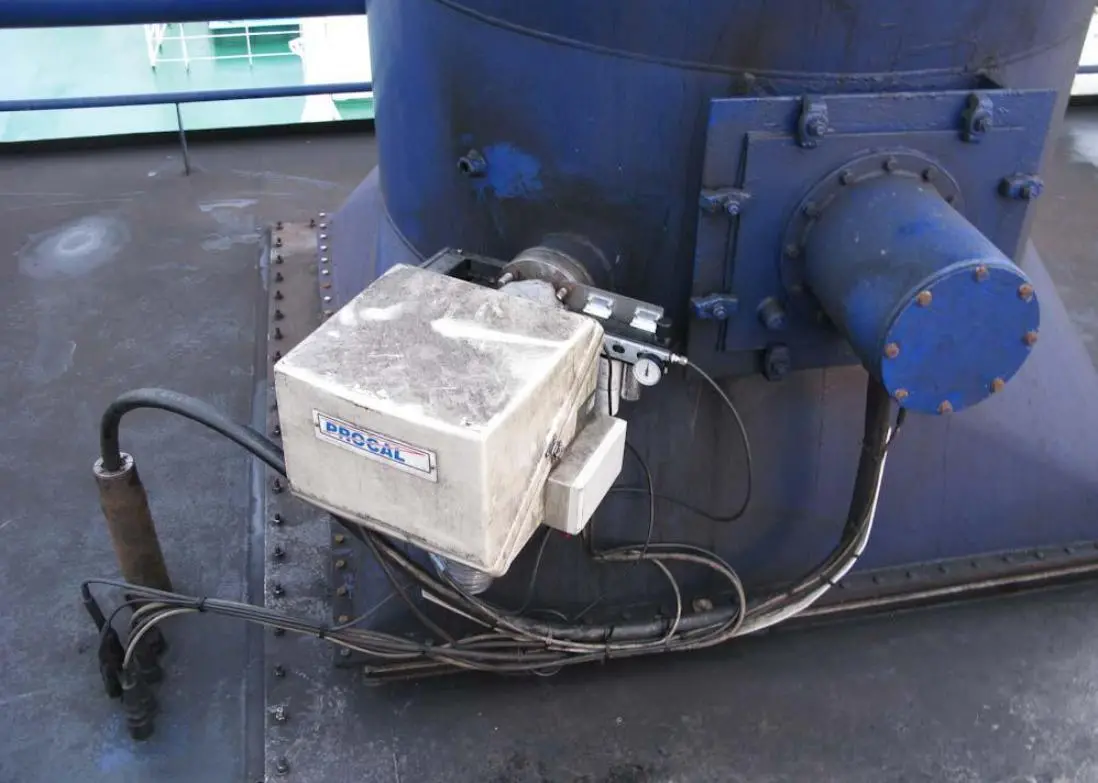
Tritech Engineers has sold around 25 emissions monitoring systems to the marine industry. This is about 35% of the current market, claims managing director Allen Franklin. “There is a catch phrase: ‘If you can’t measure it you can’t improve it.’ This is true of the current situation in shipping,” he says. “Schemes such as EEDI are all very well but these are subjective one time paper exercises that generate income for class societies and do little else.”
For Mr Franklin, the market has been slow due to shipowner resistance to monitoring emissions. “We have been slightly fortunate in that some class societies such as Bureau Veritas in France have a mandatory requirement for real time emissions monitoring of ships’ engines for their notation Clean Ship Super and several owners have had a payback with tax refunds from the taxes paid into the Norwegian tax fund.”
That raises the question of what payback can shipowners expect from monitoring emissions, either from a greenhouse gas and fuel efficiency point of view, or for monitoring pollutants such as SOx and NOx. “It sounds like a lot of effort and cost. If you are burning compliant fuel, you should be OK,” said one shipowner, expressing a commonly held view.
The sensor technology currently available is able to measure a range of gases including CO and CO2 but its current use focuses on the NOx technical code and more recently, the need to monitor SOx emissions if a scrubber is installed on a ship. At present, scrubber guidelines MEPC 184(59) allow for two methods of approval: Scheme A where initial certification of performance is followed by periodic survey with continuous operating parameter and daily emission checks from a portable system to confirm performance in service; and Scheme B where performance is confirmed by an installed continuous monitoring system.
Tony Bowers, UK and European sales manager for Parker Procal, strongly believes Scheme B should be the single allowable method to mitigate any technical uncertainty surrounding scrubbers. Scheme B gives complete and ongoing assurance of emissions at exit from the ship. In contrast, there is a potential risk that the indirect Scheme A method of monitoring system parameters could result in non-compliant emissions going undetected between daily emissions spot checks, which is a situation particularly undesirable in port and inside ECAs. “It rather defeats the object of the exercise,” he says.
The additional cost of installed sensors is minor compared with the cost of installing a scrubber, and with calibration and maintenance required every 3-6 months it represents lower operational costs in comparison with the time and training required for the ship’s crew to take daily measurements. “There is no certified portable analyser for the job, so the first risk is that the company involved buys an analyser that is not actually specified for the job. Because it is a portable analyser, the person who is using it needs to have some training, albeit minimal, to ensure that they do it correctly day after day and get accurate results that relate to each other,” says Mr Bowers. An additional advantage is that they can link into other digital systems such as GPS, and data can be transmitted to shore electronically.
Carlo Aiachini, manager of machinery and automation at class society RINA warns that not all continuous systems have the required certification. For example, sensors based on laser spectroscopy show promise for marine applications but have not yet been officially recognised.
RINA’s Green Plus notification awards some credit for the installation of a continuous emissions monitoring system, but Aiachini concedes there is little motivation at present for installing such systems, particularly from the point of view of monitoring fuel efficiency because monitoring fuel consumption directly is a more efficient way. “We expect 2015, 2016 and 2020 to be the driving factors for the spread of emissions monitoring systems.” Aiachini also expects that in the future, some monitoring for black carbon may be required.
Niels Bjerregaard, general manager of Danfoss IXA, agrees that many ship owners are unlikely to get tangible paybacks from installing continuous monitoring systems. The company is instead focusing on application-specific sensors and is concentrating on integrated research projects with engine manufacturers and other OEMs. The company is working on a CO2 sensor dedicated to marine engines fitted with exhaust gas recirculation systems. To have an optimised exhaust gas recirculation process, the ideal solution is to be able to measure the CO2 concentration in the exhaust gas that you recirculate, he says. In addition, the company is working on combining a NOx sensor output with the marine engine control system with the aim of reducing fuel consumption.
Wärtsilä offers continuous emissions monitoring technology and their current research is also focused on producing a model system that predicts emissions without using sensors to measure them directly. The model is based on input such as engine load, fuel consumption and temperature and is expected to be used not only for NOx but additionally O2, CO, CO2 and SOx. The advantage of the system is that it negates the need for installed equipment and associated maintenance costs.
Related Articles
 ALTERNATIVE FUELS & LUBRICANTS
 FUELS & LUBRICANTS