



The new ‘golden age of sail’
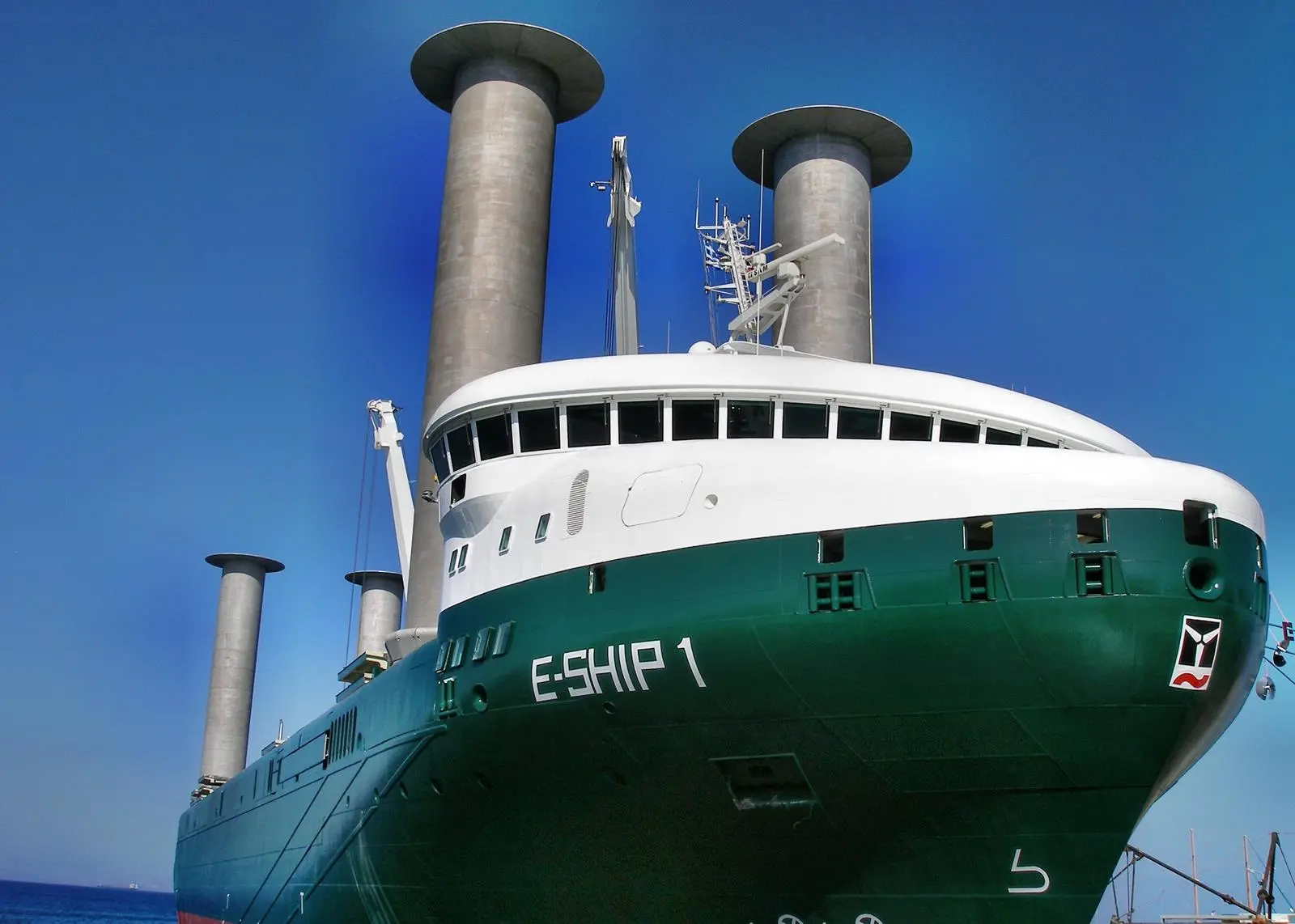
From scrubbers to paint, shipping’s clean technology market is enjoying a renewed interest as shipowners search for options that can unlock fuel savings and align themselves with increasing emissions regulation. Fuel prices continue to hold the industry hostage, with fuel costs representing 70% of a vessel’s total outgoings, and despite ongoing debate at regulatory level of the need to reduce shipping’s environmental impact, it is the commercial argument that will motivate shipowners to take action.
The transformations seen in the shipping industry have served as a catalyst for innovative technology, with solutions being developed either as newbuild eco-efficiency vessels or, the more viable option for many, retrofit installations that can enhance the efficiency of the current fleet. However, it is the new era of wind-powered vessels that has sparked much discussion and awareness across the industry.
Drawing on the oldest tradition from the ‘golden age of sail’, the potential for wind-powered technology to abate emissions is significant. In particular, the option to retrofit this type of technology is highly alluring in times of financial constraint.
Although wind power technology will not replace conventional engines to propel a vessel, it will supplement them, significantly reducing a vessels fuel cost and ensuring it meets both current and future regulation. Harnessing wind technology can produce fuel savings of up to 50%, offering those in the industry a huge incentive, as double-digit fuel savings can still rarely be achieved from one single solution.
One solution on the market that converts wind into forward thrust aboard a vessel is the Magnuss Vertically-variable Ocean Sail System (VOSS). This consists of a mechanical sail that augments ship propulsion. The Magnuss VOSS is based on a concept established in the 19th century and first used in the shipping industry in 1926 and is a fully retractable rotating cylinder that uses the wind to produce forward thrust. It does this using the Magnus Effect, which states that a rotating cylinder exposed to a stream of air generates a force perpendicular to the air stream. As wind hits the rotating cylinder, it passes on either side. The wind is accelerated in the direction of rotation, setting up a high and low-pressure differential perpendicular to the initial wind direction.
This system can be fitted to newbuilds and retrofits, which is particularly advantageous to shipowners and operators who are looking to make considerable savings. The technology has been tested and found to deliver a 50% reduction in a vessel’s fuel bill in optimal conditions (20-35% on average), within a payback period of just two years. Combining clean technology with weather routing software to enhance fuel and emission savings further is another increasingly attractive option, to ensure optimum efficiency. One such partnership is the weather routing system, designed by Magnuss in conjunction with FleetWeather and AWT Worldwide, which provides customers with extensive advisory services to understand the prevailing wind conditions. Working with experienced marine meteorologists and ship routers, the system maps real life ship voyages, providing shipowners and operators with a wind propulsion forecasting system, allowing them to accurately gauge fuel savings and emission reductions.
Testing clean technologies is essential to encourage uptake and awareness of its capabilities and mark out those that can truly deliver their promises in a crowded marketplace. Shipowners’ budgets are tight and only those solutions that can make a genuine positive impact on the bottom line, by providing data and ongoing testing to continually evolve and improve will make the cut.
Clean technology providers also need to communicate with the market directly, to fully understand its needs and concerns. After meeting with ship owner/operators, industrials, charterers and brokers to understand their needs and concerns, Magnuss engaged an expert team of engineers from MIT and within the maritime industry. For over a year, the team ran thousands of computer simulations, adjusting every conceivable parameter including sea and wind conditions to develop the optimal design, materials and installation of the Magnuss VOSS.
Exploring new and innovative technologies is fast becoming a necessity as pressure is mounting on shipowners and operators to consider the long-term future of their fleets. The role of wind power and particularly when it is harnessed in a retrofit solution has tremendous potential to safeguard efficiency and future-proof against further emissions regulation, making a return to the ‘golden age of sail’ a reality for the industry.
Related Articles
 ALTERNATIVE FUELS & LUBRICANTS
 FUELS & LUBRICANTS