



How long is a lifetime?
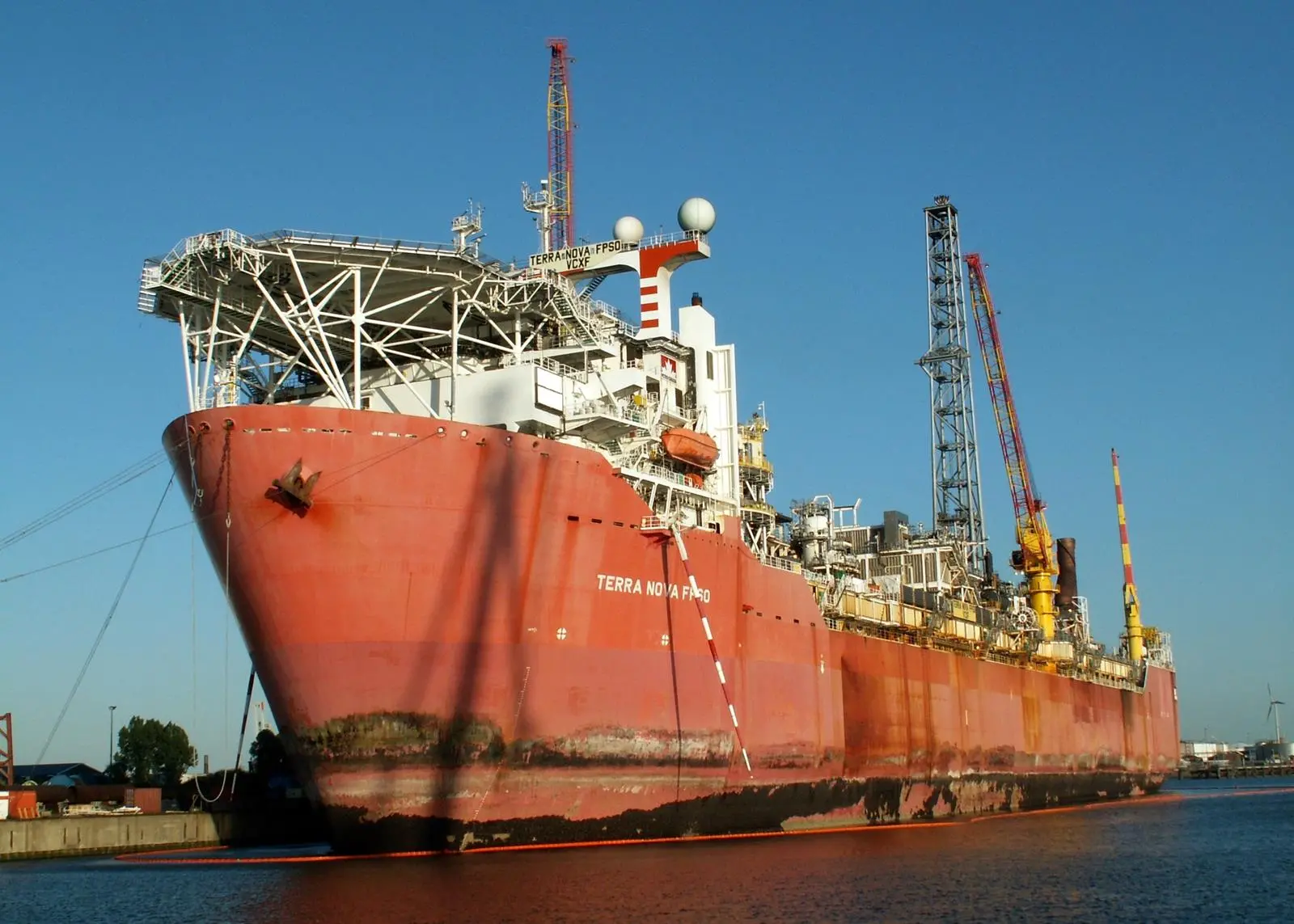
Mooring systems on floating production systems with a design life of 15 years can still be in service two decades later. So, how do industry operators balance the costs of maintenance and downtime against the risk of failure?
It’s an issue that is gaining in importance because advances in drilling and production technologies are leading operators to deeper and more remote locations. This in turn is creating a greater demand for older facilities such as FPSOs.
“We deploy imaging technologies to identify a problem before it becomes a problem,” said Richard Hall of Welaptega Marine, the Halifax-Nova Scotia based inspection company.
The evaluation tools include an optical, ‘caliper’ unit that measures the chain link length and diameter taking pictures that can be modeled in 3D to determine its strength using finite element analysis.
However, the company is also developing a magnetic tool that will travel the length of wire ropes and pick up corroded regions or damaged sections, even on sheathed wire ropes, giving the inside story on their state.
“These inspections are complicated and have to be done over a period of time in order to get a good assessment of the asset’s condition,” explains Mr Hall, adding that “spot checks” simply can’t give the whole picture.
“The point is, sometimes there are mooring systems failures that come as a surprise because the deterioration has taken place at a much faster rate than you’d expect,” he says.
Inspections start with the baseline data which captures the condition of mooring systems ‘as new’. Periodic inspections give a timeline of wear that can be recorded as part of the asset’s maintenance history.
“Looked at over time like this operators might find a few surprises that don’t show up with a simple ‘snapshot’,” explains Mr Hall.
The best inspections, according to Mr Hall, are those carried out by engineers who understand the way mooring systems deteriorate: although experience might lead an investigation on the areas where problems are known to occur, inspections must also identify anomalies “which have not been associated with failure in the past but that could lead to failure in the future”.
It’s all a bit of a moving target as there are a number of factors that come into play which bear on a mooring system’s lifespan. Microbiologically-influenced corrosion for example tends to occur more in warmer waters and this can accelerate issues.
Other deteriorative mechanisms include heavy wear and corrosion at the turret or anywhere else the chain might be rubbing. The splash zone close to the asset itself can be problematic: “There are usually some issues wherever movement and corrosion intersect, for instance shackled connections can give trouble,” he adds.
But there are also a number of less obvious points that can cause difficulties, such as the touchdown area where the chains bounce off the ocean floor. “When chains interface with the seabed, surface corrosion is knocked off, exposing the chain to bacteria and salt water which speeds up the process,” explains Mr Hall.
Despite the multitude of corrosion issues, the surprises aren’t always bad: “Sometimes these links can look like they are in a really terrible state, but – and it does happen – if the links have been over-specified in the first place, the system can still have more life left in it,” explains Mr Hall.
However, there can still be some resistance on the part of owners and operators to a regular assessment regime, and ‘old-school attitudes’ are part of the barrier to getting these checks done. Mr Hall says: “To be blunt, this kind of old-school thought can be summed up as ‘if you are not on the revenue generation side, you are a cost’, and as such to be avoided where possible.”
“However it is changing and although jobs still get cancelled at the last minute because a ROV asset is wanted somewhere else, more and more people are realising that the state of these mooring systems is critical,” he concludes.
“After all, if you lose and FPSO because you haven’t looked at the moorings, it’s a very, very expensive business loss.”
Related Articles
 PROPULSION
 GENERAL NEWS
 HYDROGEN