



Universal lubricants make sense, says Total
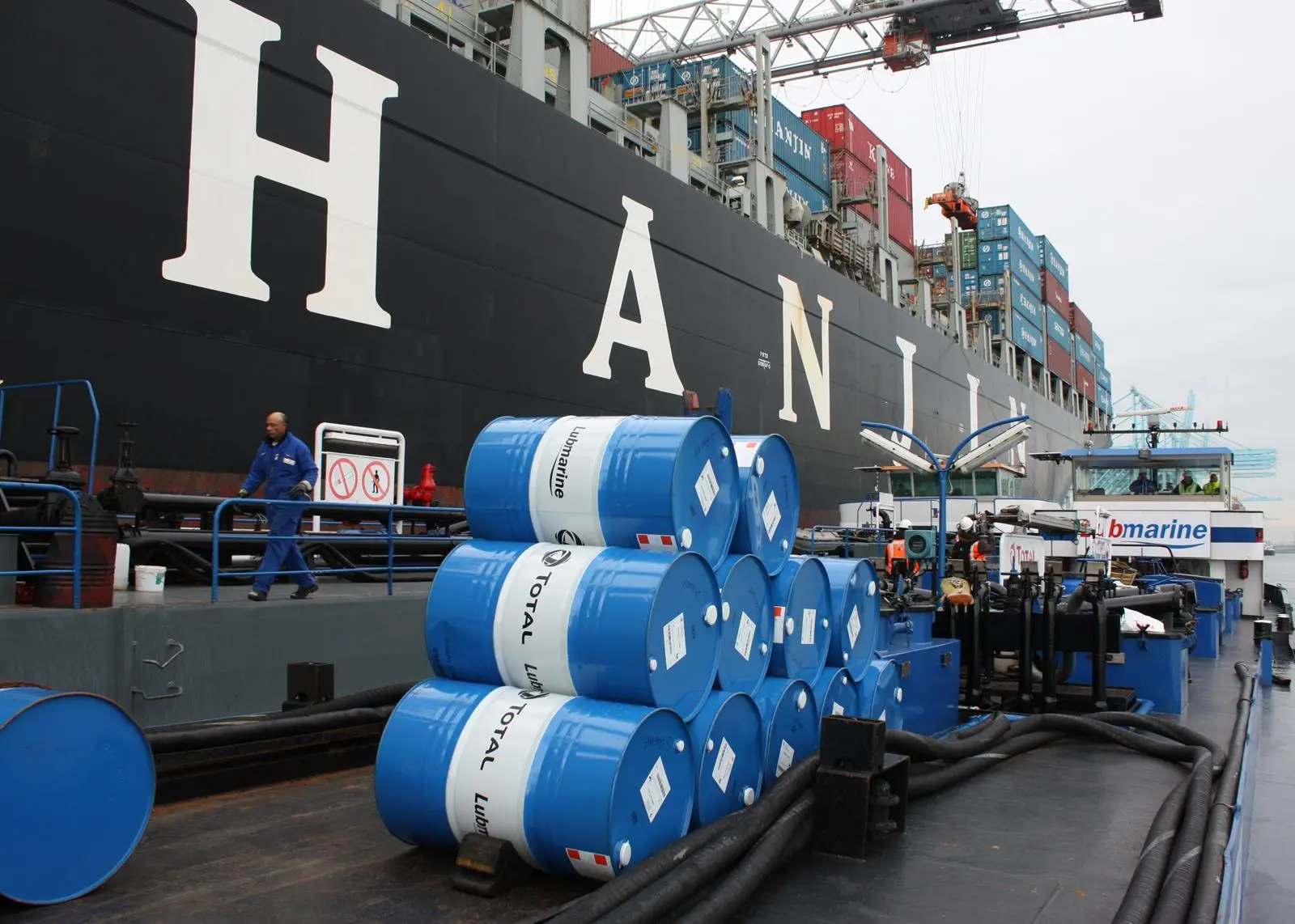
The lubricant was introduced in 2008, as a cylinder lubricant compatible with fuels of sulphur levels from 0.5% to 4.5%, though IMO limits introduced subsequently imposed a maximum of 3.5% suphur content. The rationale was to provide one product that avoids the necessity to switch cylinder lubricant when changing from high to low sulphur fuel. Additionally, it was intended to improve neutralisation efficiency and meet changing regulations, and to reduce the risk of human error.
The company says that Talusia Universal has been tested exhaustively with high and low sulphur HFO, including during slow steaming and with very low sulphur fuels. As a mid-BN oil, it neutralises the risk of calcium deposit formation that may occur with conventional high BN lubricants. It has accumulated some 45 million hours of successful operation in over 4,300 vessels and gained type approval from the major OEMs.
Total Lubmarine sees forthcoming emission requirements forcing ships to burn a more diverse range of fuels with varying composition and combustion quality. Along with greater power outputs from, electronically controlled engines and lower cylinder lubricant feed rates, lubricants face even greater challenges – second only to those faced by shipowners thanks to high fuel costs and increasing emissions regulation. For example, the company predicts that by 2015, ECAs will impact 95% of container routes, while variable steaming methods look set to stay. Most container vessels have cut cruising speeds from 22-25 knots to 18-20, while others, like bulkers and tankers, have reduced speeds to as low as 8-12 knots, significantly increasing strain marine engines. Talusia Universal has, the company claims, been proven to manage all these operating conditions.
Suppliers of conventional cylinder oils recommend a BN 40 oil (low basicity lubricant) with low sulphur HFO, and a BN 70 (high basicity lubricant) lubricant with high sulphur HFO, switching between the two when operating inside and outside ECAs. However, although OEMs agree with this approach for users of conventional BN products, they also recognise Talusia Universal for use with fuel of sulphur levels from 0.5% up to 3.5% as an alternative to switching lubricants.
Mr Del Farra says that whereas BN 70, and above, products can lead to excess calcium deposits when used with very low sulphur fuels, Talusia Universal’s chemistry avoids this, as shown laboratory tests and a 4,200 hour OEM approval trial, as well as many hours at sea in different ships, on different routes and in varying operating conditions. And avoiding oil switching saves time and effort, and improves safety because there is no risk of human error in mismatching cylinder oils. Moreover, the adoption of a single lubricant maximises storage space and eliminates additional cylinder oil tanks and pipelines.
Talusia Universal test results have shown that lube oil feed rates can be set at the lowest recommended levels. This means that there is a potential for additional cost savings when running with low-sulphur fuels.
Mr Del Farra points out that conventional wisdom has changed and it is proven that the BN argument is now outdated; the implications of a high BN with conventional chemistry approach are at best risky and at worst dangerous. He says that while too low a BN for the sulphur content can lead to acid corrosion of the liners, too high a BN can lead to hard calcium deposits and an increased risk of bore polishing and liner scuffing. He says that knowledge built with the nniversal concept is being applied to oils for the 2015 to 2020/25 and beyond emissions regulations.
Although Talusia Universal was developed when most vessels where sailing at medium to full engine loads, the concept has successfully transitioned to variable steaming and lower fuel sulphur levels. Pressure to reduce costs and emissions has increased the prevalence of slow steaming, leading to increased strain on engines as a result of these engines being operated at speeds for which they were not designed . More acids are created in these operating conditions and there is an increased risk of corrosive wear as well as thermal and mechanical constraints.
TOTAL Lubmarine respects the views of those that maintain that cylinder oil should have a BN that matches the sulphur content of the fuel, and accepts that it will take time for the whole shipping community to adjust to the idea of a universal lubricant, so the company still offers a BN70 product.
“This is a period of change for shipping,” says Mr Dal Farra, “and as the industry evolves into more energy efficient and sustainable operations, lubricant providers must remain one step ahead to ensure that the global fleet is protected and fully equipped to take up evolving fuel and technology solutions of the future.”
Related Articles
 ALTERNATIVE FUELS & LUBRICANTS
 FUELS & LUBRICANTS