



Low feed rates for minimal wear
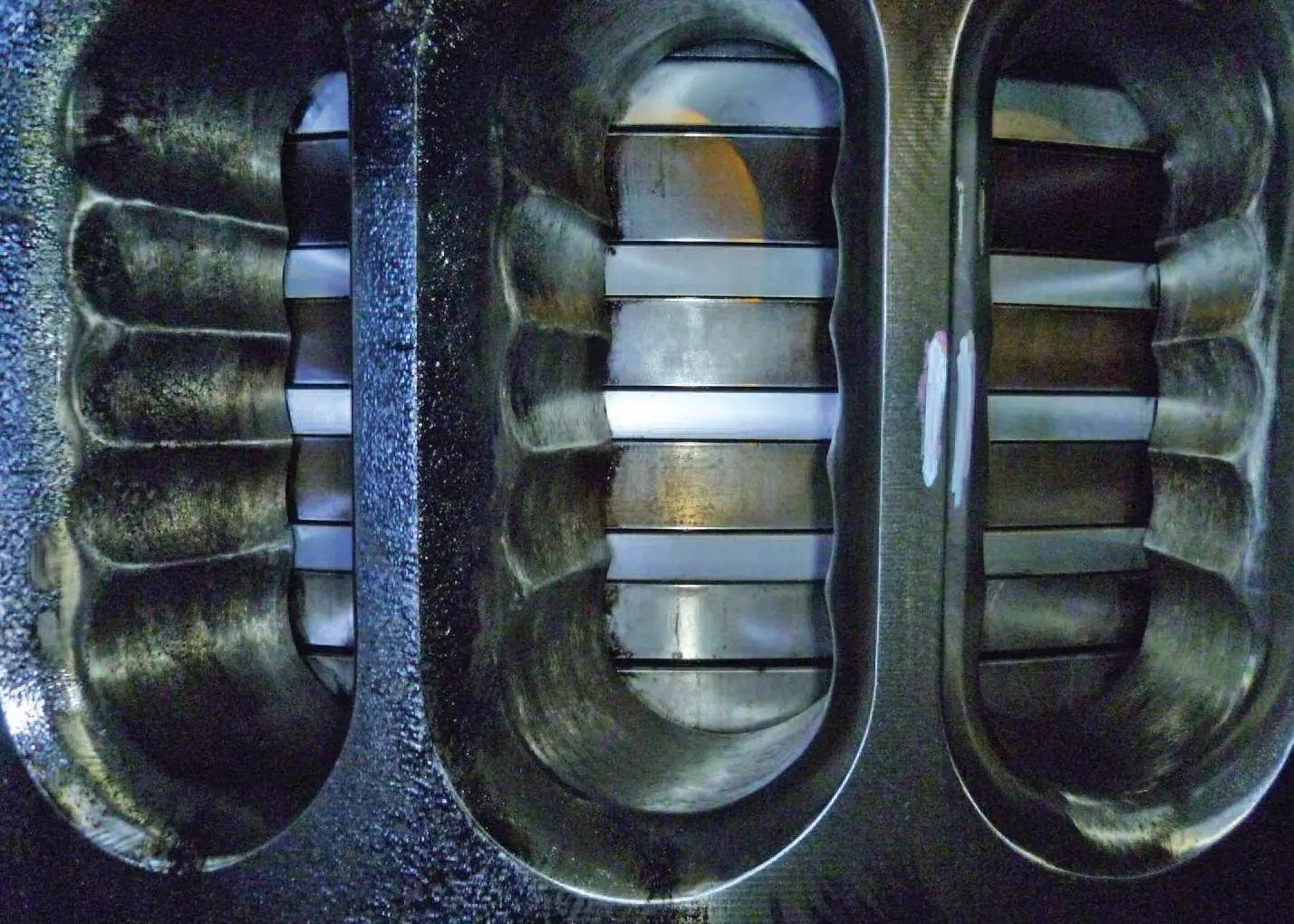
According to ExxonMobil, the principal duty of an engine lubricating oil is to minimise wear and reduce risk of deposits forming; this helps to extend engine life, reduce maintenance costs and lessen a ship’s environmental impact. Additionally, as lubricating oil is a high-cost item for ship operators, it makes sense to keep feed rates at the lowest practicable level. To achieve these contradictory goals, the chosen oil must include high reserves of performance.
Mobilgard 560 VS cylinder oil is designed to operate with variable fuel sulphur levels, and tested to operate in most large two-stroke engines burning residual fuels containing up to 4% sulphur. The company says that this eliminates the need for multiple cylinder oils, helping to save time and storage space, and also help reduce the risk of human error. 560 VS is not, however, recommended for the latest generation of long-stroke MAN B&W Mark 9 and G-type engines burning high-sulphur marine fuels.
ExxonMobil says that Mobilgard 560 VS was developed in response to the challenges posed by current and forthcoming trends in the industry. Evolving international emission standards, changes in operating speeds and cost-saving reductions in cylinder oil feed rates contribute to unprecedented operating challenges for today’s two-stroke marine diesel engines, many of which now must perform at levels beyond the capabilities conceived for their original designs. Increasingly, ship operators are focussing on the capacity of cylinder oil to protect engines operating under severe conditions and burning fuel with variable sulphur content.
Before launching 560 VS, ExxonMobil conducted extensive tests on the product both in the laboratory and in vessels at sea. These included field trials onboard a 9,469TEU container ship powered by a Hyundai-MAN B&W 12K98MC main engine. Of particular interest was the performance of Mobilgard 560 VS at ultra-low feed rates.
The ship’s Hyundai-MAN B&W 12K98MC main engine was regularly inspected throughout the test, which started at cylinder oil feed rates running at 0.6g/kWh and were lowered in increments of 0.05g/kWh to 0.45g/Kwh. This was accomplished by using an Alpha ACC cylinder oil system specially modified by MAN Diesel & Turbo to achieve feed rates down to 0.45g/Kwh at 15% load.
The proprietary formulation used in Mobilgard 560 VS is claimed to provide particularly good control of piston deposits and wear, plus effective neutralisation and anti-corrosion performance. The trials confirmed Mobilgard 560 VS’s ability to protect the engine from wear and deposits. The oil’s performance reserve was demonstrated by its ability to work effectively, despite operating under extreme conditions that not only included slow steaming and the use of residual fuels with variable sulphur content, but also with ultra-low feed rates. In its service bulletins, MAN Diesel & Turbo recommends the use of a cylinder lube oil feed rate according to the base number (BN) of the cylinder oil and the fuel sulphur content. ExxonMobil points out that MAN Diesel & Turbo is aware that some engines may be operated satisfactorily at even lower feed rates and with this in mind, the company will be issuing a new service letter which will describe how the cylinder lube oil feed rate can be optimised. The trials carried out using Mobilgard 560 VS provide one example of a MAN Diesel & Turbo engine operating at lower feed rates without adverse consequences.
The results of more than 8,000 hours of in-service testing in the container ship’s 12K98MC main engine are said to have confirmed ExxonMobil’s expectations that Mobilgard 560 VS would show the ability to minimise engine wear and deposits, despite the challenges posed by slow-steaming operations, the use of residual fuels with variable sulphur content, and ultra-low feed rates.
Related Articles
 ALTERNATIVE FUELS & LUBRICANTS
 FUELS & LUBRICANTS