



The technical challenges of ship management
What are the challenges you, as a ship manager face in the current economic climate?
More than anything, the dramatic shifts in shipping market fortunes have highlighted the value of correctly timing asset purchases and sales. Outsourced ship management has, over the years, provided many an owner with the flexibility to focus on the paramount economic decision – namely when to get on and off the rollercoaster.
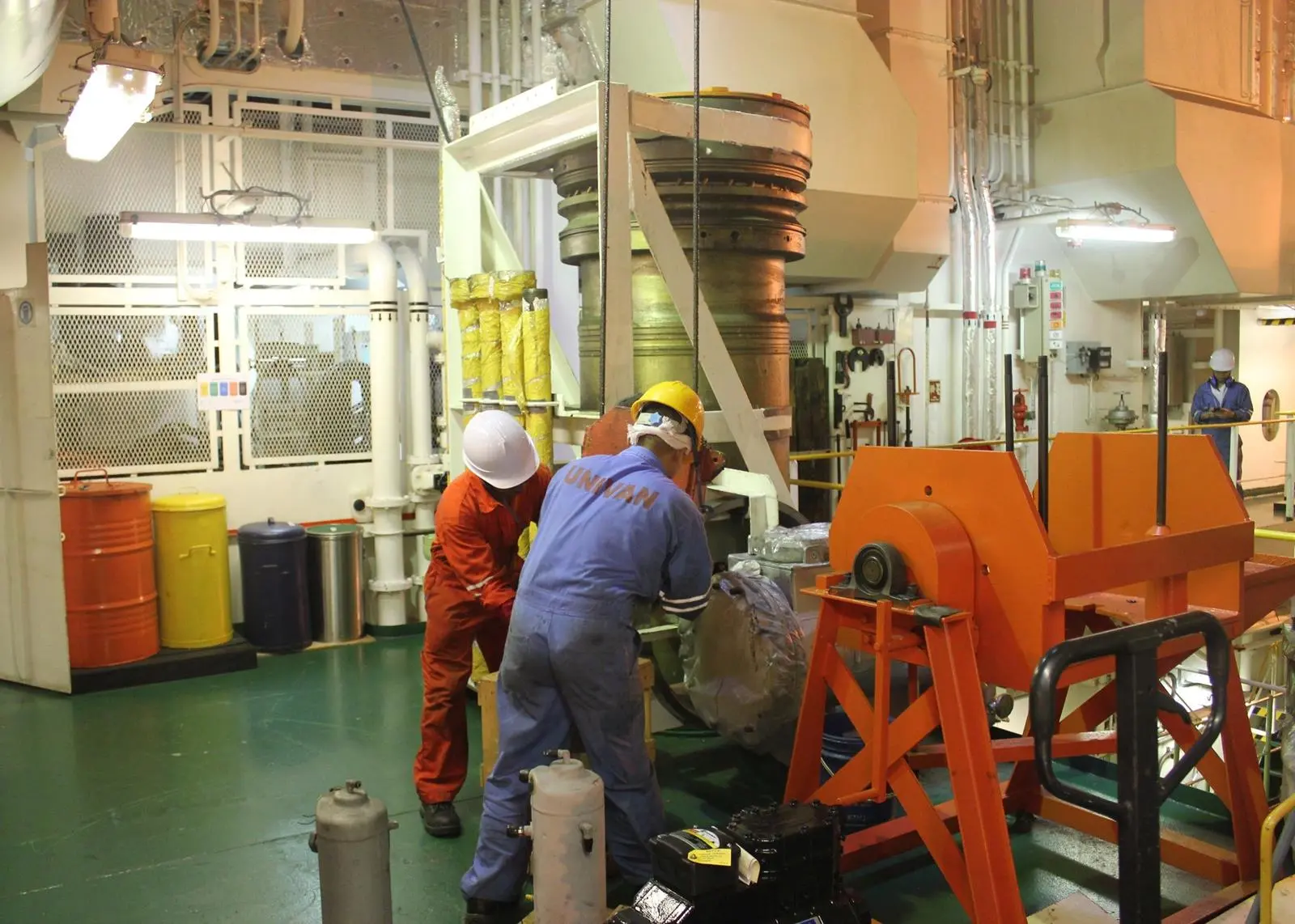
In the current climate Univan has introduced many innovative solutions for ships under management. The company’s mission as a ship management firm is to ensure safe ship operation within the predetermined budget and sustain the on-hire state of vessels for the shipowners. We engage in these activities every day to map out improvements, indicating that the company introduce incremental changes toward the realisation of safe and efficient operation.
We are advocates of green shipping looking to optimise each ship under management, through various methods including retro-fitting, optimising trim and speeds during each journey. Cumulatively this results in significant bunker savings.
Do you find that there is a lower budget available for repair and maintenance, so owners are wanting to cut costs of things like hull coatings, lubrication oils, etc?
I think this is the advantage ship management companies have in that they have greater bargaining power with suppliers for lubricant oils and hull coatings power because of the number of vessels they have under management, when compared to individual owners. We always work within the budget agreed with the owner, with budgets based on our ‘real world’ calculations.
Are the ships under your management employing slow steaming as a means of saving fuel?
One of the biggest challenges facing the maritime industry is how to successfully meet the ever growing number of environmental and operational cost issues, particularly when considering the prevailing poor market conditions.
Yes, many of the vessels under management are slow steaming. We are more focused on the overall performance of each vessel and consider a number of factors that will contribute to reduced bunker charges.
As you practice slow steaming, have you carried out any modifications to the ships or engines to improve efficiency and reliability at part load?
In order to help improve operational efficiency technical managers can help owners achieve environmentally sound voyage management, track and record voyage-related events including fuel and lube oil consumption, switching fuel oil grades, cargo information and ballast activities. This can be accomplished through facilitating the collection of key environmental data in real-time, which allows for tracking, trending and reporting of information for operational cost compliance.
With regards to hull and design, the aim is to lower hull resistance and correct the application of additional devices to minimise fuel consumption. For vessel design we recommend due diligence in the selection of vessel design to match its trading requirements. The hull condition is also important with a good surface preparation during docking and application of the most cost effective hull coating.
We also look to optimise performance through propeller modification, analysing engine data and deciding if the propeller is running in torque rich condition. Propeller edge modification can result in fuel savings of between 2-4%.
Propeller efficiency can be improved by installation of Mewis duct or propeller boss cap fin, fuel savings of between 3-4% could be achieved by using of these devices.
Fuel savings of between 2%-7% can also be achieved through bulbous bow modification.
Have you experienced any difficulties as a result of slow steaming, e.g. increased engine wear, the need to adjust oil feed rates?
Our experience until now has been quite good as slow steaming is carried out with increased frequency of inspections and performance monitoring. Additionally ship staff is provided with detailed guidelines and support to ensure that corrective actions, if any are needed, are proactively taken.
How do you intend to meet the challenges posed by the reduced fuel sulphur levels, first of all the 0.1% limit in ECAs from 2015 and subsequently the global 0.5% sulphur cap?
The cost for change to low sulphur fuel (0.1%) is estimated to be US$200 billion. Much of these costs will result from the switch to low sulphur distillate fuel, assuming that a 0.5% global sulphur cap comes into effect in 2020, in addition to the 0.1% sulphur requirements that are expected to be enforced in Emission Control Areas in North West Europe and North America from 2015. This change to more expensive, low sulphur distillate fuel is a very serious concern and is compounded by issues such as supply of same and dangers of modal shift.
Would you consider LNG as a ship fuel to be a viable option for the future?
LNG will replace low sulphur fuel due to some of the above mentioned and impending legislation. In order to become viable alternative considerable infrastructure development is necessary – particularly for long-haul voyages for cargo vessels. Dual fuel technology for using LNG as fuel in the marine industry has been available for some time now. A few vessels are already in service covering niche markets and future developments including slow speed engines suitable for duel fuel being ordered by a US-based owner for vessel to operate in North American ECA.
Related Articles
 ALTERNATIVE FUELS & LUBRICANTS
 ALTERNATIVE FUELS & LUBRICANTS
 OPINION