



Robots gain the advantage
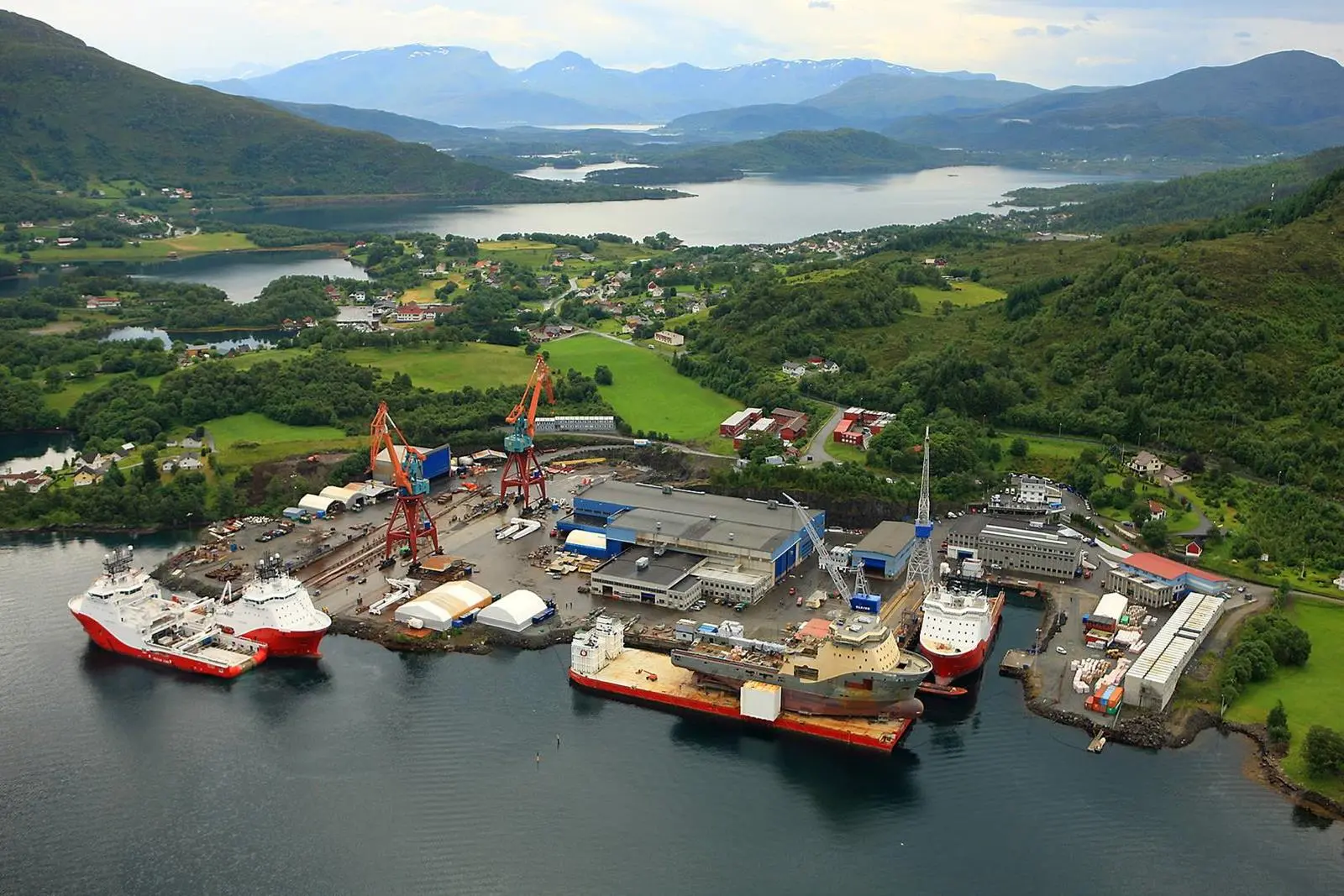
It’s an extension of Kleven’s modular construction process. This brings slipway construction time down in some cases to between 40 and 50 days by fitting out whole slices of hull separately, even down to the handrails, before stitching them together. A bonus for a Norwegian yard which tends to have some restrictions on slipway space, a very tight orderbook and even tighter designs which leave little room to manoeuvre.
“We realised that if the engineering is part of our core value, we needed to have control over it: this automation will make us competitive, even against, say, Chinese or Polish builds,” says Ståle Rasmussen, Kleven’s CEO.
It is a concern for the expensive, high end Norwegian builders that so far have kept a large slice of the technically demanding North Sea market: after all, the Asian builds are beginning to bite at their heels and it’s only a matter of time before they are competing on the same ground.
However, the new facility may hold a number of answers. It brings together Swedish automotive expertise and Japanese robotised units common to the car industry, “but scaled up to take on everything from PSVs to the latest subsea construction vessels”, says Tore Roppen of Kleven.
He explains that the robotised system yields a number of advantages which run deeper than just speed. Firstly, as you’d expect it gives a very even quality to the joins, and secondly, the laser-gas hybrid torches can pierce the entire depth of a weld “so it can run right through a joint between a stiffener and a plate, for example whether this is 8mm, 10mm or more, without needing a seam on the reverse side” explains Mr Roppen. Of course this cuts down the time – and the difficulty of reaching into the kind of tight areas that these offshore support builds are known for.
Another benefit lies in the way the torches actually run a lot cooler than normal welding operations and so this reduces the incidence of deformation he adds, something that can plague builds involving large but complex areas of metal and especially difficult for modular assemblies which are always going to rest on narrow tolerances: more so given the growing complexity of the latest offshore support vessels.
So the new robotised facility should speed up construction enormously – although by how much Mr Roppen refuses to speculate as its early days and it will probably be the end of the year before the facility is up and running. He does say that he’d expect the same order of savings as you’d find in other industries that have replaced building by hand with automated processes.
However, there’s other factors involved to bringing home the builds. As Ivar Slettevoll, CEO of Sanco which has had its latest ST 324 CE seismic vessel ‘Sanco Swift’ built at the Kleven Mycklebust facility says: “It’s very much easier if you can visit a yard next door instead of having to fly out.” Mr Rassmussen agrees: he points out that the intensely high tech nature of many of these offshore support builds means that having the people you are working for on your doorstep makes collaboration a lot easier, and adds “most of the orderbook is actually from our neighbours”.
Related Articles
 PROPULSION
 GENERAL NEWS
 HYDROGEN