



Duke Snider: Dedicated ice man
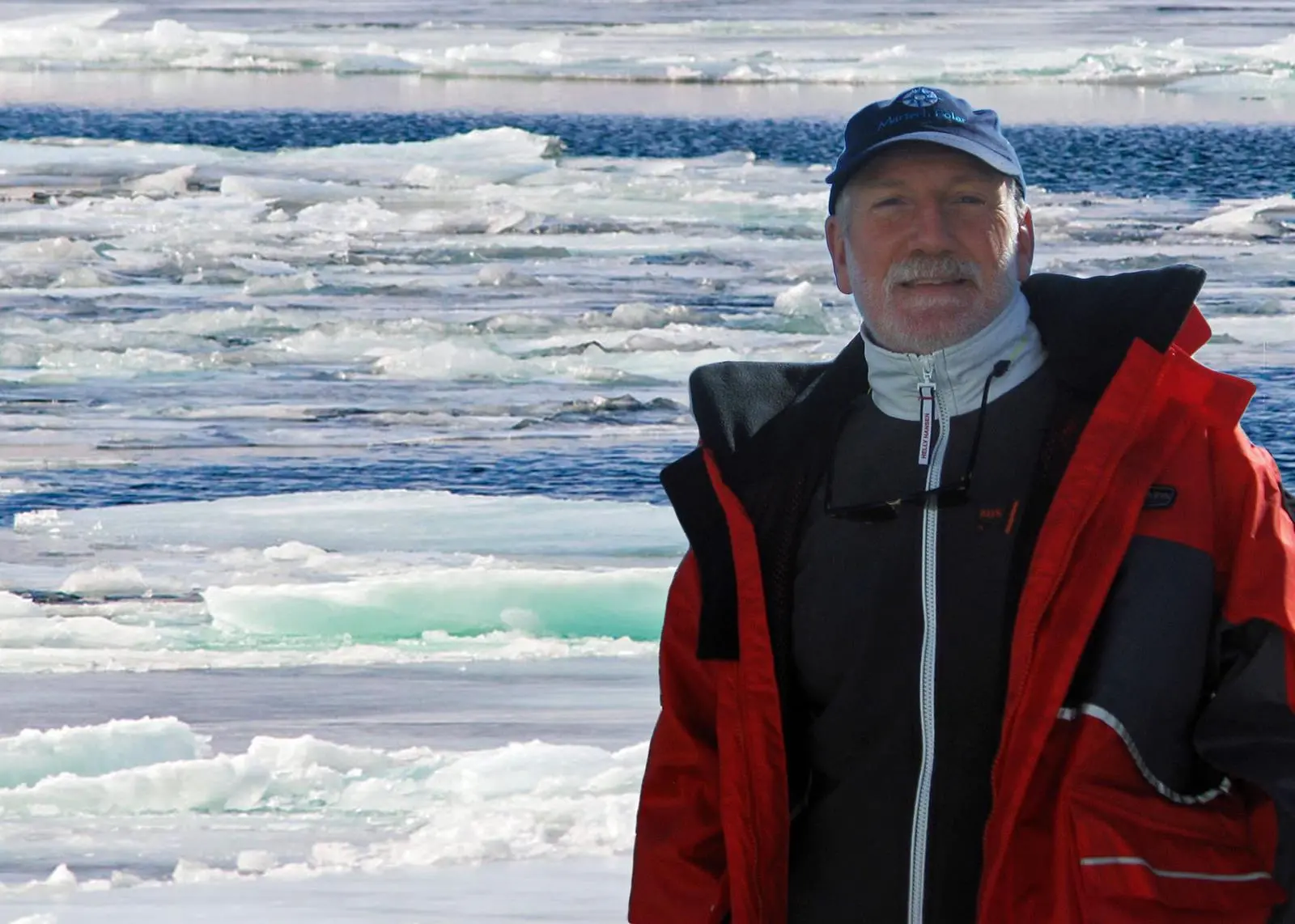
“For example while a strengthened ship may be able to survive some first year sea ice, established multiyear ice can be a hazard even for purpose-built icebreakers,” he explains.
As a master mariner and ice navigator he has pulled naval, commercial and Coast Guard vessels through the Baltic, Great Lakes and Eastern North American waters as well as polar regions, experiencing what ice can do first hand – he’s been recognised for his part in Arctic rescue missions as well as spending many years in command in ‘hazardous duty’, only retiring from the Coast Guard in 2012 to grow his consultancy business, Martech Polar.
Despite this he’s adamant he has had ‘interesting’ moments rather than scary ones, something he puts down to preparation and not pushing a vessel past its limits, but he says he’s “still seen just how quickly a ship can find itself trapped”.
For example, as ice navigator onboard the research ship RV Mirai he was particularly watchful when the chief scientist tried for a last deep water sample at northerly point in the Chukchi Sea, being acutely aware that the ship was only lightly strengthened and also that the deep cast would hold the vessel in position for an hour or more.
“As the rosette descended, winds began to pick up and air temperature began dropping quickly, so quickly the digital thermometer ticked down more like a clock counting seconds,” he recounts. “Sea ice was about to form and I knew it was time to abort the cast,” despite the disappointment of the chief scientist. However, it was still close – by the time they hauled in the gear and turned south grease ice was already forming around the ship. “As it turned out we had to steam almost 50 miles to get to warmer, ice-free water,” he says, even though it had been clear on the journey northward just hours before.
However evocative, it is more than an anecdote – it’s a warning: he is, he admits, very wary of letting the idea take root that climate change will “simply deliver an arctic that’s open for business”. While it’s true that the gap between the old hard and fast ‘first in — last out’ dates is indeed widening, he is clear this doesn’t actually denote ice free conditions.
Further, he says the ‘standard’ risk assessment approach has limitations in extraordinary conditions such as those found at the poles. “While risk assessments are useful tools, they can only be as effective as the information put into them. People have to know the values they are ascribing to those risks, and it’s easy to make assumptions if you don’t know the issues. For example you can’t say that global warming means less ice: actually a melt can mean multiyear ice starts coming down the Northwest Passage.” There is, he says, a further issue with shipping companies “who wave around a risk assessment, while the truth is they have just kept asking different people till they got the answer they wanted – even if it’s not safe”.
On land Capt Snider has been tireless in bringing home the realities of ice navigation, writing the book Polar Ship Operations as well as countless papers on ice navigation and shipping feasibility studies and getting involved with The Nautical Institute’s projects, one of which was a practical guide to act as a primer for both poles, the other major diversion from actually being at sea has been helping a global ‘Ice Navigator’ standard firmed up.
A proponent of the uptake of a robust polar code, he has also found himself involved in long discussions with the IMO and various flag states; and to be honest, he says he didn’t always get the outcomes he and other bodies like The Nautical Institute worked for “as few propositions remained as solid as we’d have liked”. Still, he is tenacious and is following up with more lobbying aimed at establishing a solid basis from which to tackle these dangerous yet vulnerable environments.
By way of contrast, actually being onboard a ship in the Arctic “provides an exhilaration that keeps me sane” says Capt Snider. So he tries to arrange things so he can get back to it at least once a year despite the endless rounds of business, papers and meetings.
But don’t get him wrong – it’s a passion that he’s keen to share. He adds: “When I am helping get a ship through these regions I am teaching people, not just driving. Really I am on a mission to teach – no matter what else I am doing.”
Related Articles
 ALTERNATIVE FUELS & LUBRICANTS
 ALTERNATIVE FUELS & LUBRICANTS
 OPINION