



Combining best features of diesel electric and mechanical propulsion
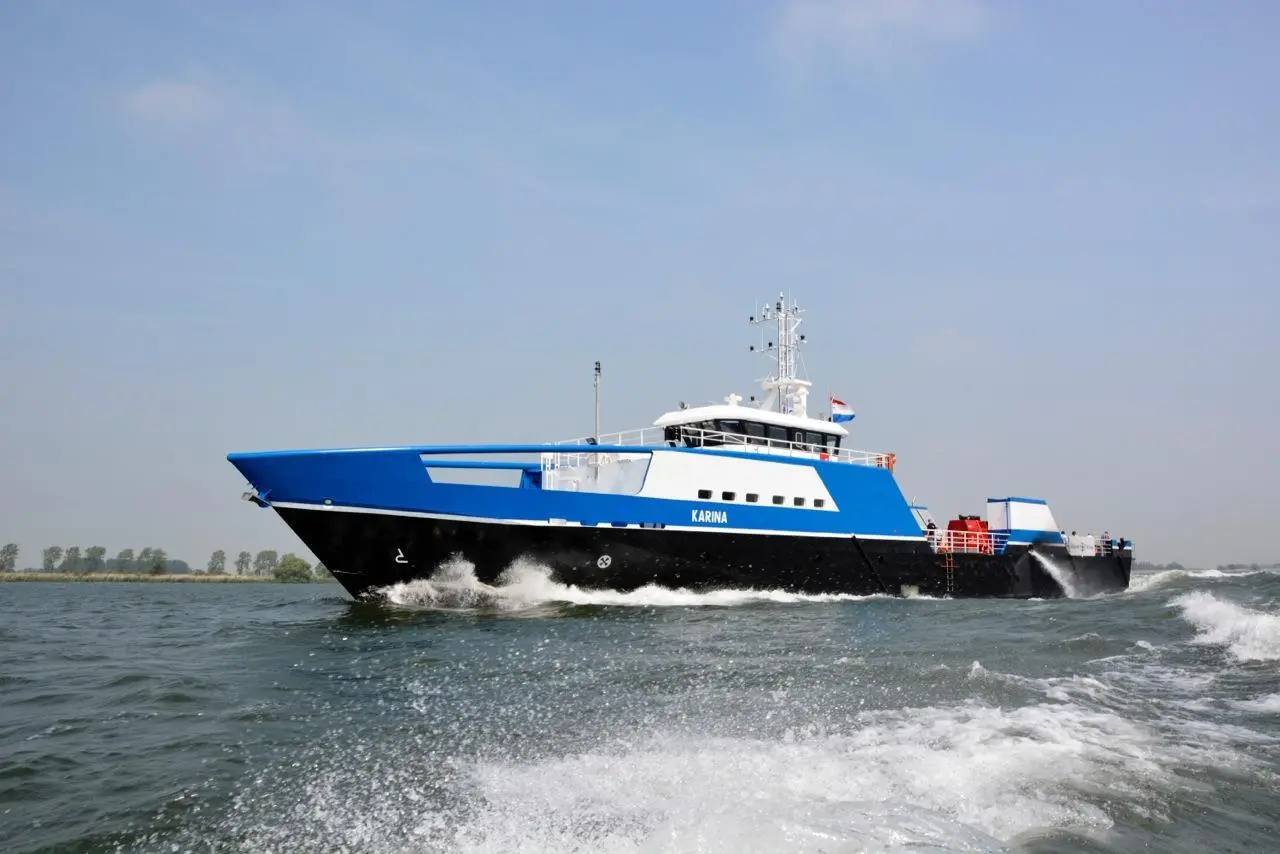
A new design of fast supply vessel delivered by Shipyard de Hoop is the first to be fitted with a novel propulsion system that is claimed to offer significant fuel savings. This vessel, which has been built to support offshore oil installations in the Gulf of Mexico, is the first of a series of seven similar vessels on order from De Hoop, the Dutch builder of specialised ships at two yards, in Lobith and Foxhol.
The diesel electric propulsion system comprises two Caterpillar 3516 high speed diesels, each rated at 2,350kW. These can provide mechanical drive direct to the propellers, via reduction gearboxes, when full speed is required. When the vessel has to operate at lower speeds, such as when in dynamic positioning (DP) mode or for manoeuvring at slower speeds in harbour waters or beside an offshore rig or platform, then just one diesel engine is used, and this is clutched in to drive a generator. This generator supplies the power for two electric motors that are connected to the propeller shafts via the main gearboxes, while the same generator supplies power for bow thruster.
In direct diesel mode the vessel’s operating speed is 20 knots. The diesel electric mode is used for speeds up to 12 knots or when DP is engaged. With the single-engine diesel electric system in operation the fuel savings are claimed to be significant, and with the electric drive there is the added bonus of being able to operate right down to zero speed which can make for much more subtle manoeuvring.
The supply vessels are constructed in high tensile steel with a hull form developed to offer a comfortable ride in waves. With a length of 55m and a beam of 9m the hulls are relatively narrow and have a fine entrance at the bow to help reduce pitching. The hull shape has been developed using multi-chines, with a semi-rounded transverse hull shape. It is claimed that this hull design minimises speed losses when the vessel is operating in challenging sea conditions.
High tensile steel helps reduce weight, and the design meets the requirements of Lloyd’s High Speed Craft rules. Provision has been made for the carriage of up to 100 passengers who are provided with comfortable seating, catering and audio-visual entertainment systems.
The eight-man crew is accommodated in four double-berth cabins, while the 190m² aft cargo deck has been designed to carry 150t loads. Particular attention has been paid to the reduction of noise and vibration and the shipyard’s long experience with the construction of river passenger vessels has enabled to accommodation to be developed to a high standard.
The first two vessels in the series have been delivered, with the remainder scheduled for delivery later this year. The contract is unusual in being placed with a European builder, in contrast to the normal shallow draught fast support vessel or crew boat designs developed by US Gulf of Mexico shipyards.
Related Articles
 PROPULSION
 GENERAL NEWS
 HYDROGEN