



Geoff Dean: A life in design
A true veteran, Mr Dean has been involved with this somewhat relentless ‘drive’ for nearly five decades with a career that’s covered everything from dredgers to superyachts, a fact which is surprising in itself. But more than that, he’s kept responding to often difficult, if not conflicting, design requirements.
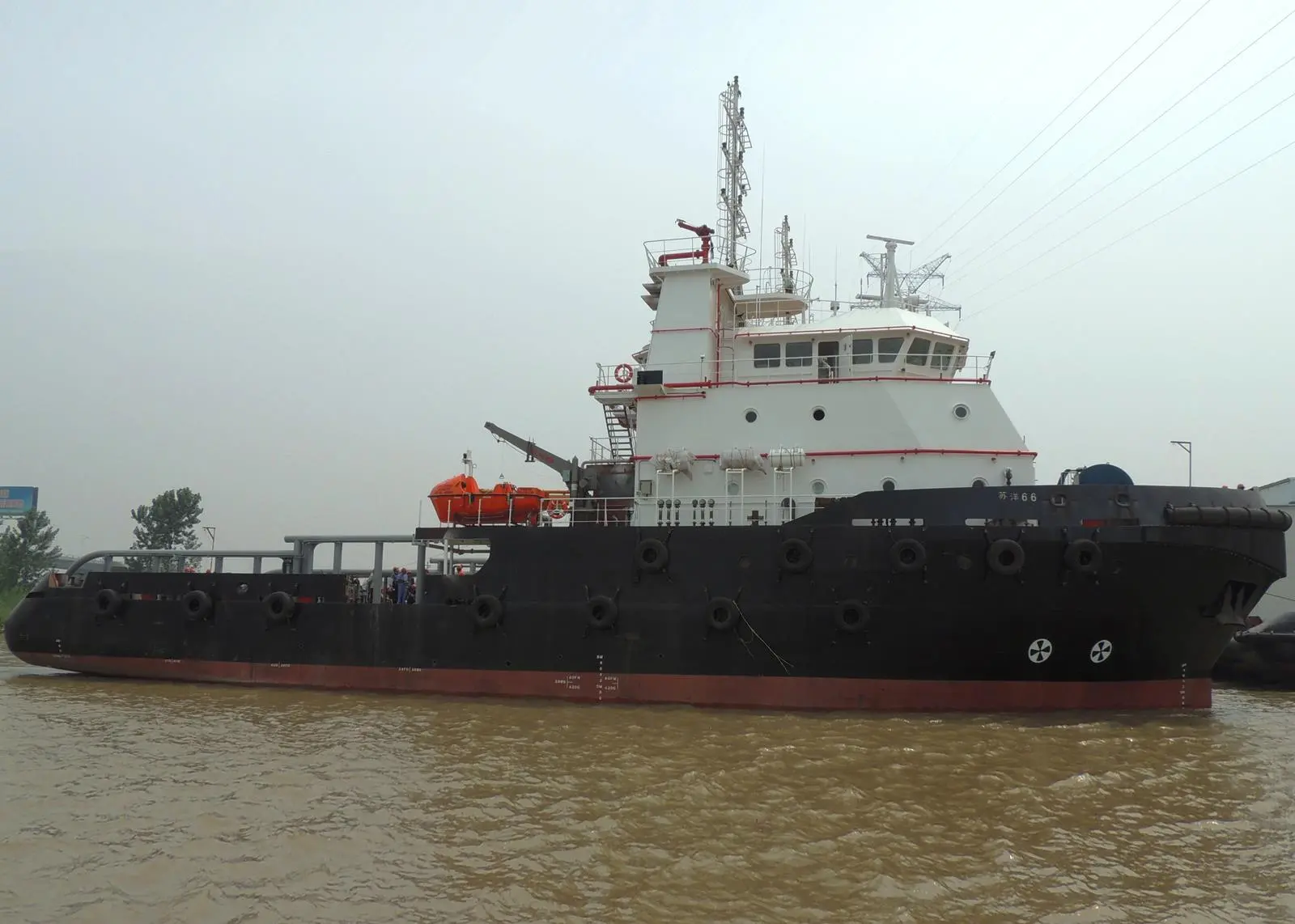
For example take his recent involvement with the successful IMT 949 Anchor Handling Tug Supply vessel. The specification from POET Shipbuilding & Engineering was for a 105 tonne bollard-pull AHTS holding accommodation for 40 people within SPS Code requirements, “but all on a ship that still measured under 50m in length ” he explains. Not easy. At the other end of the scale he had a hand in getting the ocean survey ship HMS Scott into the water, which although huge “needed millimetre accuracy on a dead flat bottom to allow the survey equipment to be aligned”.
While Mr Dean is careful to point out that “experience isn’t infallible” it certainly helps in understanding the dynamics of design – and industry. Just after serving his apprenticeship at Vickers Armstrong in the 1960s he began to see the decline of British ship building: “Even then people said ‘don’t worry, the Japanese yards are good for big and simple ships but they won’t get the more sophisticated ones’. Of course slowly and surely shipbuilding started to move across to the Far East.”
Mr Dean then found himself a niche in the smaller – and still lively – tug and trawler field with Hull-based CD Holmes before moving onto a long and very busy stint at Appledore Shipbuilders. “From 1970 to 2008 we were involved in building no fewer than 120 ships. It gave all of us involved a wealth of experience because if you keep repeating the design process you get good at solving problems. When you are faced with a challenge you can look back and see if there’s something similar you have done in the past and if there is any way you can improve on that solution.”
During this time Mr Dean saw that successful innovation is often a double-edged sword. He explains that in the early 70s Appledore was involved in building a state-of-the-art covered ship factory. “It was such a new idea we enlisted support from a higher education establishment… This particular organisation saw a future in selling the same covered ship hall design to yards in the Far East – in effect helping our competitors – but that’s business.”
Then in the 80s came the surge of computer technology and another salutary lesson. “Ship design used to be relatively simple and we thought, quite naïvely, that with the introduction of computer technology it would all get easier. But the introduction of increased computing power enabled the regulatory authorities to demand more detail and information, with the result that the rules are now far more complicated than they were in the past. So in fact it all needs much more work than it did 20 years ago.”
He goes on to say: “Ship design is being driven by regulation, everything from emissions to ballast water, from antifouling to exhaust scrubbers.” Although challenging, it keeps the company on its toes as everything has to be checked to make sure that a repeat order doesn’t in fact fall foul of new rules: “A 2010 ship had a sister build following not far behind, but a change in regulations still meant a redesign.”
“You need the right mix of people to cope with all this change: you need the younger, highly educated people with necessary aptitude and computer skills, but it’s also very useful that OSD-IMT has a number of experienced designers with practical experience in the shipyards,” he says, and points out that a number, like him, have come from the Appledore facility.
Despite his attachment to the Appledore yard, he admits that joining OSD-IMT in 2009 brought him “a new lease of life”. He explains: “We have greater reign over creative design, and since it’s still a small organisation there’s really no bureaucracy to get in the way.” This still doesn’t mean it’s exactly easy: “There is a constant learning curve on all the vessels… and market conditions do affect our workload; if there is a need for different types of vessel then we just have to push on and produce new designs that meet the requirements.”
What of the future? Price remains a driver, and can complicate matters: “Owners still want a European designed vessel, but one that’s built in Asia to keep the costs down. Having said that it can be challenging to carry out a project at such a distance from the yard: there’s no strolling across to the building berth to sort out snags.” So he thinks the OSD-IMT strategy may well catch on; the company’s Chinese office will often do the production drawings and then liaise with the Chinese shipyards themselves “which eases communication”.
Further changes lie on the horizon: even though there’s increasing pressure on available space, “designers are having to consider ever-increasing future legislation more carefully and allow space for future fit equipment.”
Related Articles
 ALTERNATIVE FUELS & LUBRICANTS
 ALTERNATIVE FUELS & LUBRICANTS
 OPINION