



Cheap oil offsets sulphur regulation costs
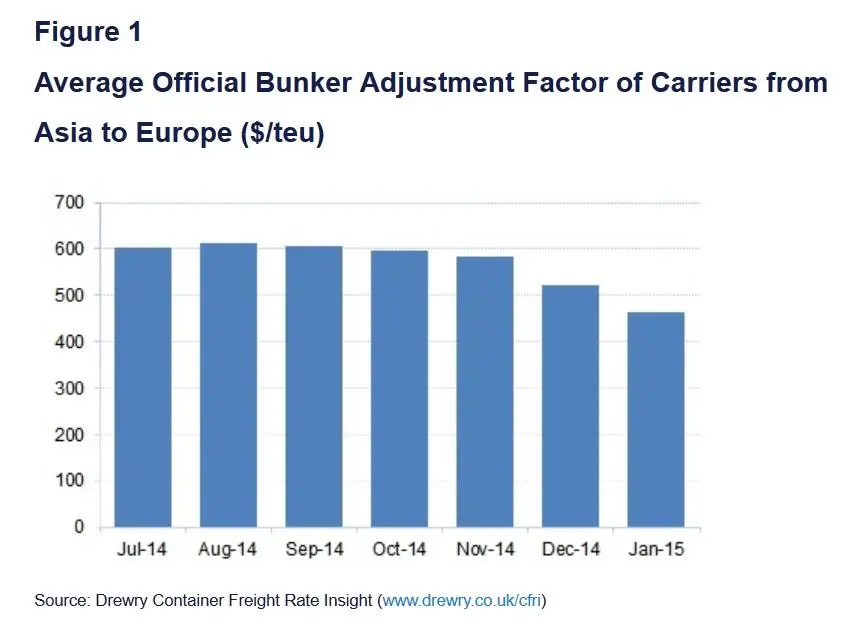
Before the 0.1% cap was introduced on 1 January, shipping companies had warned that they would have to raise bunker surcharges and freight rates, or introduce a low-sulphur fuel surcharge, to accommodate the higher cost of cleaner fuel.
But while around half of all shipping companies have adopted a surcharge – an average of US$55/teu on North Europe-US routes and US$20/teu on North Europe-Asia routes – decreasing oil prices, and their impact on bunker adjustment factors, have negated the additional charge.
The research also noted resistance from shippers to pay the extra charges in light of lower oil prices.
The bunker price for ships running engines outside ECAs fell by 44% between July and December last year, according to Drewry. A customary lag between falling fuel prices and changes to bunker adjustment factors makes further short-term decreases in charges likely, the company added.
“For now, the net cost [of low-sulphur regulations] has been virtually zero,” Drewry reported. “Resistance from shippers and the opportune collapse of oil prices have neutralised the cost impact of the low-sulphur fuel surcharge in the container shipping sector, at least for now. But the real cost will be seen once fuel prices start rising again.”
For more information, subscribe to Drewry’s free publication Container Insight Weekly.
Related Articles
 ALTERNATIVE FUELS & LUBRICANTS
 FUELS & LUBRICANTS