



Better for the challenges
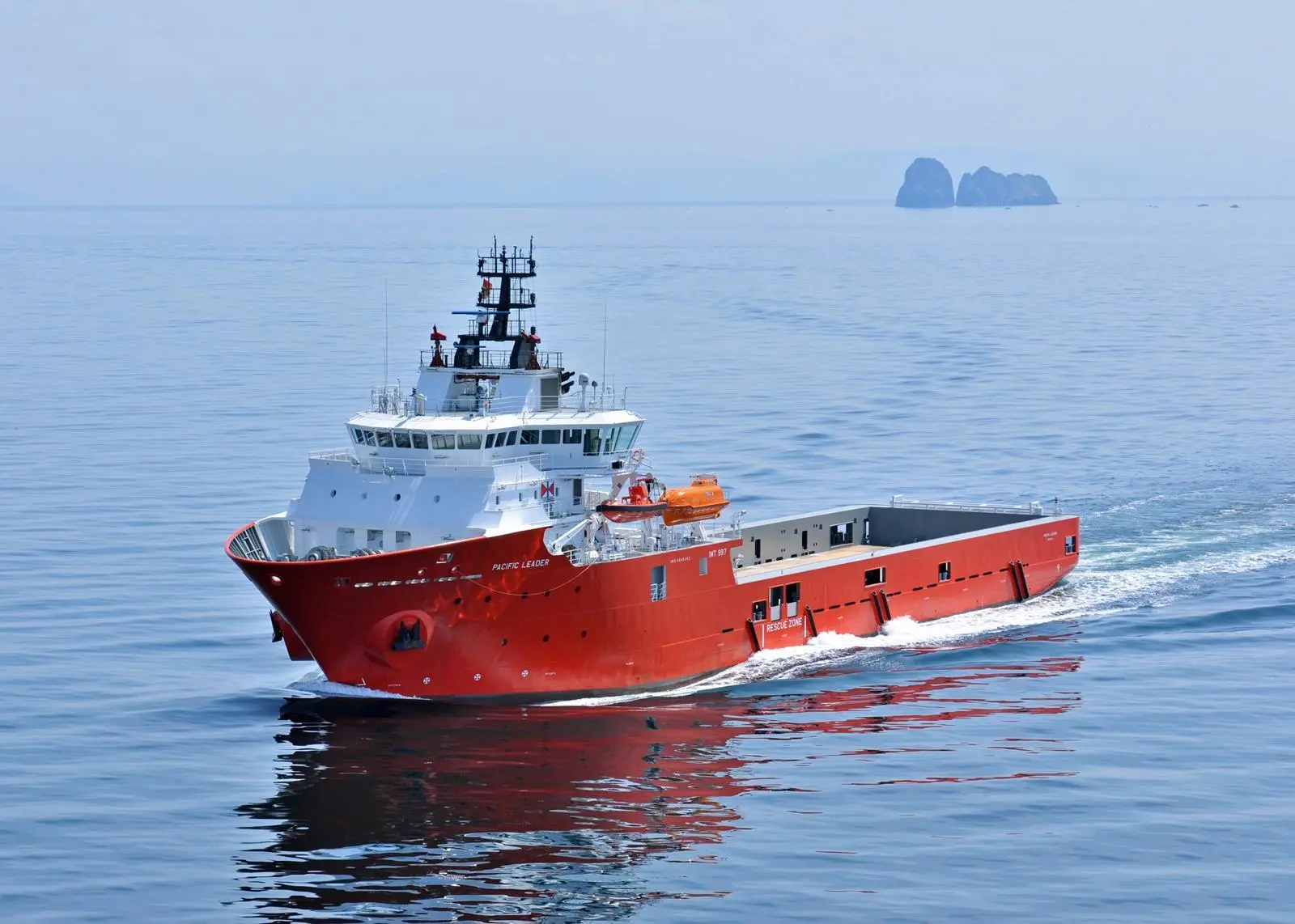
He explains that the 5,258dwt vessels were originally designed to meet Petrobas PSV 4500 tendering round. Firstly, the design needed to be on the larger side to meet deeper water requirements (big enough to fall under SOLAS’ lifeboats regulations) with a clear deck area of 912 m2: this being pragmatically sized to allow four lengths of drill pipe to be worked on in safety. Further, OSD-IMT knew from the start it also had to meet the SPS code requirements for carriage of 38 personnel.
What wasn’t so obvious were the code requirements around the Noxious Liquid Substances (NLS). “We had something of a rude awakening: while we knew this vessel would be carrying over the 800m3 NLS OSV code limit, we initially believed it would get an exemption from the Brazilian authorities. It was only later on, when we got right into the design stage, that it became apparent no exemption was going to be forthcoming.”
It gave rise to a very different ball game to the one they’d planned for: the assumed OSV damage penetration usually results in setting the wing tanks back 760mm from the sides, “but for IBC compliance the assumed damage penetration is one fifth of the breadth – or B/5”, he says. “On a 20m beam vessel that’s a huge 4m to consider. We had to reduce the floodable volume by subdividing the engine room and making an auxiliary machinery compartment and the mission and control room watertight.”
“Despite the fact we had not just one, but two fairly onerous criteria to take care of I’d say the vessel has gained from it; in fact it’s IBC compliance – which allows the vessel to carry up to 1,800m3 of NLS in 10 dedicated tanks – has become a central element of its marketability.”
On the deck equipment side, rather than having to rely on the rig’s cranes or tugger winches to pull the heavy cables or piping around, the vessel is designed to take individual, rail-travelling cranes on both the port and starboard side later on if desired. These cranes can carry up to 15 tonnes, covering the full cargo deck area, he explains.
The vessel has some other, fairly unusual elements: a full Cargomaxx installation gives the vessel very flexible cargo carrying capabilities; the ship can lift dry bulk to a platform then, with a quick clean up, use the same tanks to carry liquid cargoes. Usefully, the pressurised vacuum system means it will still work even if there’s only three cubic metres left in the bottom, plus it weighs the delivery to keep a check on how much is being passed across in individual parcels and as an aggregate. Lastly, the cargo discharge manifold has been designed for both ease and safety during connection operations and the tank layout is also ready to be upgraded to carry 180m3 of low flashpoint liquids to DNV LFL* class notation.
Driving everything are four MAN 6L27/38 generators, but what’s of interest here is the power management; this has been set up with programmable operating modes tailored around load-dependant start/stop points. “It all helps to load-share effectively,” says Gray, “especially as these vessels all spend a lot of time in DP using the bow and stern thrusters for station keeping.”
However, behind these are the new Inovelis propulsion pods, explains Gray. These pods gain open water efficiency due to the effect of the stator vanes which direct the flow of water into the propeller . Further, they present a very compact profile: it helps that they have swapped electrical drives for mechanical steering, not just to answer internal space concerns but because this cuts out potential vulnerability in the design. Another layer of reliability has been added through using a high torque induction rather than synchronous motors.
The even blade loading and reduced pressure points result in reduced tip clearance requirements, so these units can hang a whole metre closer to the hull than a traditional pod. These are, says Gray “some of the most efficient units on the market”.
Gray has also had a hand in the lines of the vessel: “The bulbous bow, sitting on a fairly straight stem, gives an extended waterline which lends itself to varying operating speeds and draughts,” rather than being tuned to one design point. “And generally the longer the vessel, the better it is when dealing with a seaway,” he concludes.
Despite the initial design problems posed by the project, Gray concludes the IMT997 has met the challenges head on, turning them into a very successful design with Pacific Leader, Legend, Legacy and finally, Liberty all entering Swire Pacific’s stables.
Related Articles
 PROPULSION
 GENERAL NEWS
 HYDROGEN