



LNG carrier order for Mitsubishi
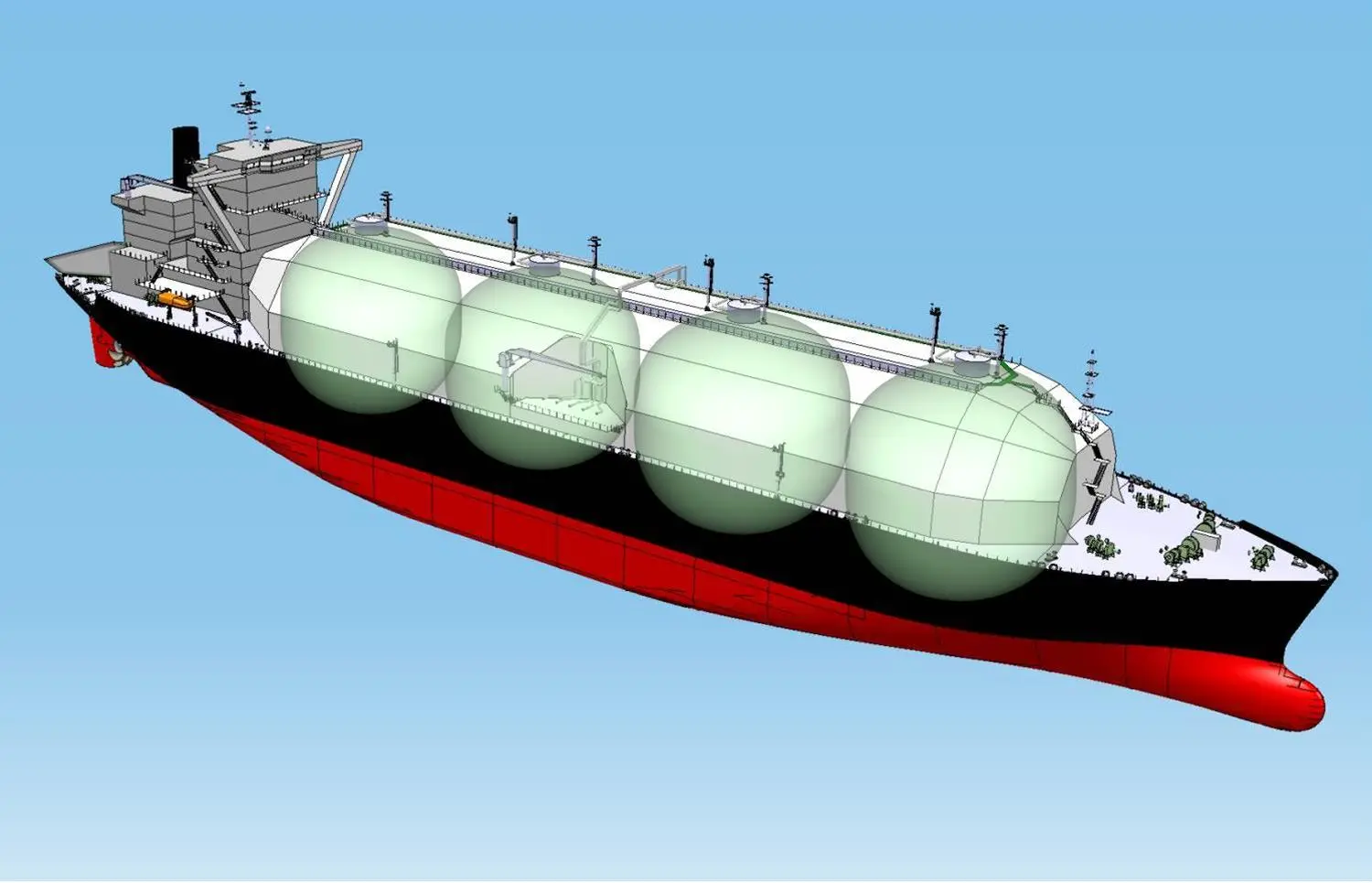
The Sayaringo STaGE carrier design is said to feature a more efficient hull structure and innovative hybrid propulsion system that combines a steam turbine with gas-fuelled engines. Components include the ultra-steam turbine (UST) plant, a highly efficient reheating steam type marine turbine developed by MHI; a dual-fuel diesel engine capable of operating on both gas and oil; and an electric propulsion motor.
MHI said that plant efficiency has been substantially improved through the UST’s effective use of engine waste heat, resulting in a propulsion system enabling high-efficiency navigation throughout a full range of speeds.
The carriers will have four apple-shaped tanks, an updated version of Moss-type tanks (independent spherical tanks fixed to the hull by a cylindrical skirt) with a bulging upper half. Total holding capacity of the tanks will be 165,000m3. The adoption of a tank cover integrated with the hull structure reduces weight while retaining structural strength, MHI said. The new design also reduces wind resistance.
The vessels will be constructed at MHI’s Nagasaki Shipyard & Machinery Works. Specifications will be LOA (length overall) of 293.5m, width of 48.94m, depth of 27.0m and draft of 11.05m.
They will be put into service transporting shale gas produced in North America, carrying the gas from Cameron LNG Project, an initiative in which Mitsubishi Corporation is participating through its joint venture NYK Line.
As reported yesterday, Kawasaki Kisen Kaisha (K Line), Mitsui & Co and Imabari Shipbuilding have concluded a long-term time charter agreement for an eighth carrier to serve the Cameron LNG Project,
Related Articles
 PROPULSION
 GENERAL NEWS
 HYDROGEN