



Scandlines hybrids head into service
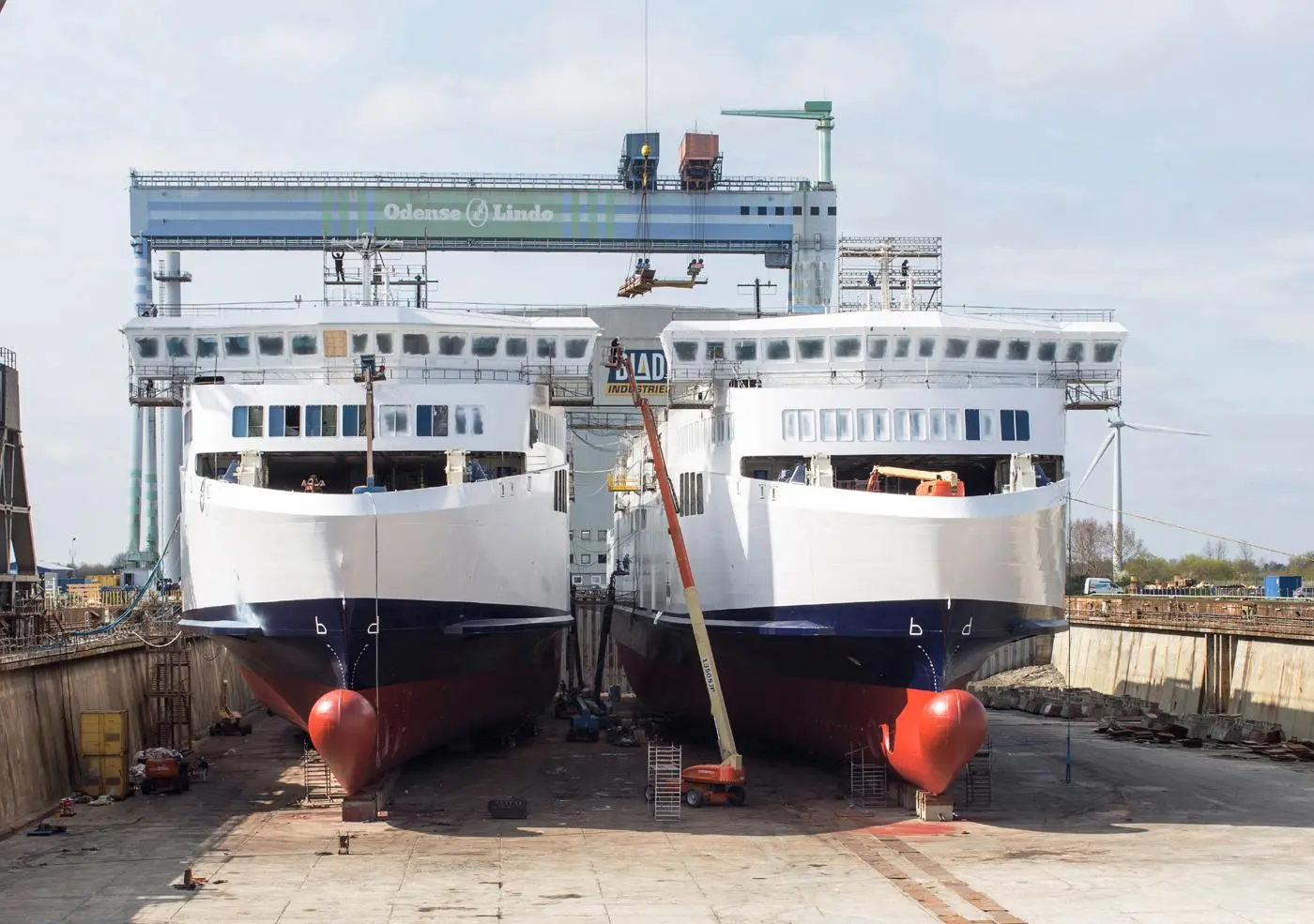
The 14,822gt Prinsesse Benedikte has been at Poland’s Remontowa yard since March for repairs after a floating dock keeled over during the ship’s docking-out. The accident followed three weeks of work that included installation of a new diesel, radar and ventilation systems and scrubber plant plus coating.
Built with Mak 8M32 and MAN 6L32 diesel-electric propulsion, the 143m Prinsesse Benedikte was retrofitted in 2013 with a diesel and electric hybrid propulsion system using Corvus AT6500 lithium polymer battery packs.
Scandlines’ 169 m ferry newbuilds Berlin and Copenhagen will also boast hybrid propulsion systems when they go into service this year after extensive conversion at Fayard in Denmark. Their Scandlines/Siemens Drive Technologies systems feature ESS energy optimisation, Corvus battery packs of total 2.7Mw capacity and AEC Marine closed-loop scrubbers.
The ships’ existing but hardly used CAT/MaK 9M32CCR diesels have been removed and were being installed on other Scandlines ships, The Motorship was told. They were installed at German yard P+S Werften after the ships were ordered there in 2010. They were later rejected as overweight, overdue and not to specification. After P+S went bankrupt in 2012, Scandlines bought them back.
The Motorship
was told that
Berlin
will leave Fayard end September for trials and enters service a month later.
Copenhagen
will “probably be delivered several months later” said Scandlines spokeswoman Anette Ustrup Svendsen. She reported each ship will be of 22,500gt compared to their original 24,000gt. During months of dock work at Fayard nearly 2000 tons per ship have been removed and 1,300 tons of lighter material installed for a weight saving per vessel of 700 tons. That has improved stability and reduced draught.
Related Articles
 PROPULSION
 GENERAL NEWS
 HYDROGEN