



Magnus Erikssen: From subs to supercharged ferries
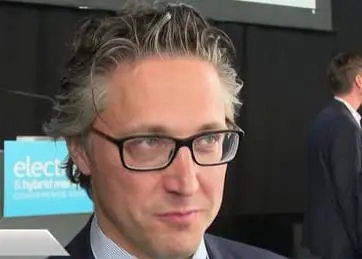
Originally a naval architect working for the Swedish Navy on compact submarine systems, by the 90s he had started to live a kind of double life: on one side there was the day job and on the other, “a dream of constructing these sleek, energy-efficient boats”, he explains.
He quickly found out there was a dearth of companies who could actually provide an electrical drive: “Scanning the suppliers, I soon realised they came from the landside electrical industry and actually had no idea about hydrodynamics or the specific requirements of marine builds – especially elements that were going to be submerged in water.” He got busy with the design and slowly, the idea for a related line of marine products swam into focus.
However, he needed the solid basis gained from being involved in the navy’s technically advanced and demanding electrical systems; submarines in particular need to keep in mind the tricky balance between power, capacity and footprint: “In fact I gained a lot of insight, simply because of the rigorous in-depth testing procedures that are carried out on absolutely everything before it is approved.”
Erikssen admits that his navy experience also finally lent him the impetus to go it alone: he came up hard against the fact that as an employee, any good ideas he had belonged to the state even if they were developed in his own time “and when I realised that I wasn’t allowed any of the rights to my own patents, I just said okay, and resigned on the spot”. That was back in 2003, the design in question – a podded, high-speed propeller – became the initial offering of his new company, Echandia Marine.
Still, despite a certain amount of interest and the realisation that these designs could save money as well as the environment, it’s not been easy going. “A particular challenge for us is educating our customers because this is really a completely new way of thinking. In the past you just needed to concern yourself about the power output, but now you have to think about energy, and energy capacity as a whole.” And, he says, “progress is slow”.
“To start with, though some countries such as Norway are ahead of the field, in other places the existing regimes are actively holding things back. In Sweden – which you’d think was relatively advanced – you are not taxed on diesel when it’s used as propulsion fuel but you have to pay taxes on any that has an electrical output. So conventional, dirtier diesel systems actually have a tax advantage over the environmentally-friendly hybrid solution.”
Still, last year saw the company installing the drives and acting as systems integrator on the world’s first supercharged electric passenger ferry: Stockholm’s ‘Movitz’ commuter hopper.
This had Erikssen working pretty much round the clock against a deadline of just a few months, getting everything installed bang on time.
More recently his time’s been taken up by the BB Green vessel. This is an EU funded demonstration project to show the viability of commuters skipping off the road and instead doing a fast commute into the centre of a city from the outer suburbs via the waterways.
“The boat is unique, capable of doing 30 knots on battery power with a supercharger” he explains, and as it’s gained a lot of attention both in and outside the EU, the next step is to take it on a ‘travelling show’ around Europe.
As some people have noticed already, despite being a pretty small company, Echandia has been offering systems rivaling those of ABB and Siemens at a price that’s affordable to smaller city boat operators. This has obviously taken a lot of work, and in 2015 Erikssen gained an ‘Engineer of the Year’ award. But while he knows the danger of slipping a deadline, he’s aware of how important his personal life is and this isn’t an easy balance to achieve and he admits: “I’ve needed a really, really understanding wife and family”.
While a small company can be nimble, Erikssen says he is still primarily an engineer not a businessman: “The entrepreneurial life is a challenge. I always believe the technical issues can be solved but it’s the commercial side that takes most of the work; it’s hard to gain enough financial resources to attract the right kind of people to the company when we need to expand. We are still developing alongside the market – frankly the bigger companies have deeper pockets.”
However, he’s avoided the pitfalls of the wrong investors, and says he’s stayed out of the “financial Valley of Death” only because he’s been lucky with “extremely patient backers”. In fact, he says he’s seen a lot of companies with great ideas fall foul of financial strategists who want to see a quick return and don’t want to wait for the technology to develop before getting out again. “Venture capitalists are really unadventurous” he says , and in his experience, “don’t want an adventure at all”.
However, he still continues a connection with the Navy as a consultant, and this gives him a contrasting experience to mull over: “I have had to learn it’s two completely different ways of doing business: it’s technically advanced but by necessity the navy is more bureaucratic and by comparison very stiff, it takes years to get anything done. I have had to learn to sit back – whereas with my own company I can respond to an idea or market demand inside a couple of months.”
By Stevie Knight
Related Articles
 ALTERNATIVE FUELS & LUBRICANTS
 ALTERNATIVE FUELS & LUBRICANTS
 OPINION