



Focused solution for Bibby
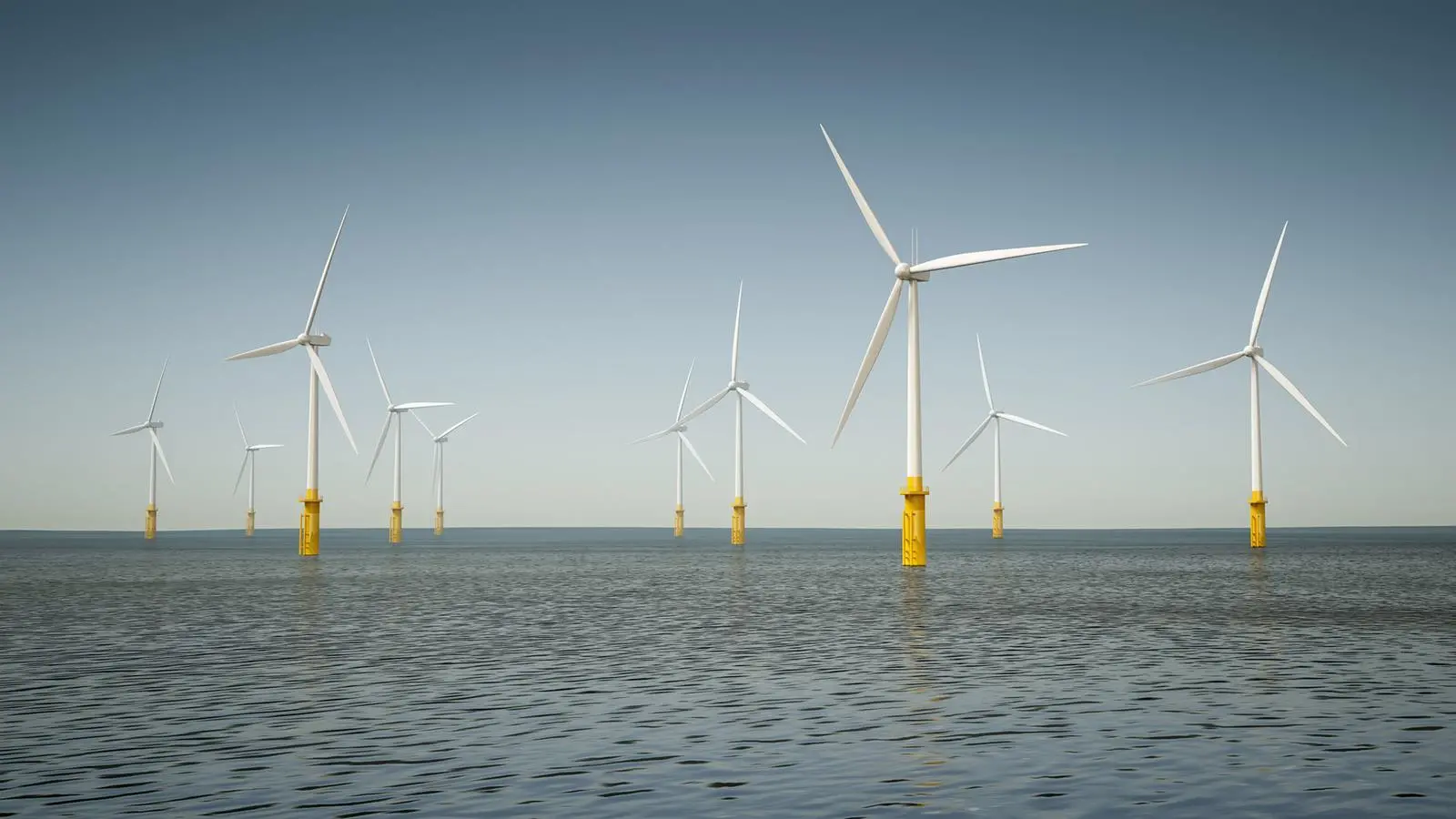
“Offshore wind requires marine assets and skills similar to those we’ve developed in the offshore oil and gas sector,” says Stephen Blaikie of Bibby Marine Services, but the word is ‘similar’ – not ‘identical’.
Mr Blaikie points out although some multipurpose vessels out of luck in the petrocarbon industry might try their hand in the offshore wind sector, “they are not designed for operation on the Round III windfarms… and as specifically developed vessels come to the fore they should be the preferred option”. So no, Bibby isn’t simply using its wind support arm to redeploy other tonnage.
And this vessel isn’t an iteration of earlier solutions either: it really is a new design that aims to push open the weather window as wide as possible – the vessel should be able to keep working in up to 3.1m significant wave heights according to tank testing data.
These more distant windfarms also present a very different picture to the earlier Round I and II projects “as they will be 30km, 40km or more offshore, putting them too far out to be maintained by a day’s sailing from harbour”, says Mr Blaikie. Therefore Bibby Marine Services and build partner Damen are putting a lot of energy into carving out a place in this still growing market: “Instead of 20m to 25m crew transfer boats, we are looking at something much bigger, a 90m long, 20m beam Service Operation Vessel (SOV) that will be capable of a 30 day endurance – although in reality the crew might change every 14 or 15 days.”
Interestingly, the Bibby WaveMaster 1 also requires less power than a similarly sized PSV. Casper Vermeulen of Damen explains as the design doesn’t require that big rear working deck it’s allowed for a similar outline fore and aft, so that the effect of the wind coming from the side is more or less symmetrical. “Normally you have to put bigger gensets in to compensate for windage, but installing the superstructure in the middle means you can keep the boat in the right orientation with less power,” he says.
Further, since there is still a need to consider fast lifts of personnel or goods on and off the SOV, this outline allows for the helideck to be carved out from a level continuation of the working deck instead of being placed up in the air where it can impact both stability and wind profile adds Mr Blaikie.
Having the 60 berth, single cabin accommodation on three levels more-or-less amidships also helps keep the maintenance team comfortable. “This is going to be a key issue,” says Mr Blaikie, as these people will be drawn from the pool of land-based technicians: “Vessel motion characteristics are very important in order to reduce the risk of seasickness,” he adds.
This concern also impacts hydrodynamics: Mr Vermuelen explains that unlike many hull forms which have more volume at the bow “so they accelerate, launch out of the water and slam back hard” the SOV benefits from a narrow, almost vertical entry before widening further back to a 20m beam. Further, the front of the keel line drops 1.5m further down than the rest of the hull, “making it the deepest part of the vessel” he explains: “The shape means it takes longer to come out of the water, resulting in an easier motion for those onboard.”
The shape confers other benefits: the deep-V hull also means more efficiency for the Schottel, fully azimuthing thrusters which, because they are positioned low on the hull, have enough water over them to stop them trying to churn air.
Behind this is a diesel electric system run by a pair of 3516 Caterpillar gensets that yield 2275 ekW each plus two C32s, which add another 951 ekW each – 6,452 ekW in total. This gives the vessel the flexibility to slice and dice its response to changing loads.
The vessel also has a four-way AC switchboard to handle the 660V distribution, a neat feature explains Mr Vermuelen, as in the event of a failure only one of four switchboards would be out of action, as opposed to one of two: “While two switchboards means you need to double up the power, four – although costing a bit more as far as the switchboards are concerned – means you only have to increase the installed power by 25% to keep the necessary redundancy.”
Of course opening the ‘operational window’ also means getting the technicians on and off the turbines both quickly and safely. An active heave compensated crane and motion-compensated gangway are located on the port side: this uses an MRU to detect and absorb the roll, pitch and heave, allowing the far end to maintain a fixed point against the turbine transition piece. This gangway will also ensure minimal manual handling plus level and step free working for technicians.
As the majority of the vessel’s duties will be moving from turbine to turbine, dropping off a few technicians at each tower and picking them back up on a later cycle, an innovation by dynamic positioning specialist Kongsberg is particularly interesting: “The vessel can stay on DP during these shorter, under-1km transits,” says Mr Blaikie, removing the 20 minutes or so it takes to fire up the DP and allow it to rebuild its internal model saves considerable time, especially when multiplied across dozens of turbines.
The amount of confidence the pair have in the development of the segment – and their answer to it – is notable, but they have put time and money into to tuning the offering. “While Round III support is a sustainable market from the company’s point of view” says Mr Blaikie, he points out its still early days for “this relatively young industry”. Therefore both owner and designer have taken the unusual step of putting in a large chunk of time at Marin’s facility in Holland even before a contract was signed.
Tests on the 20:1 model were thorough, taking time at one of Marin’s more specialised 35m by 35m tanks which can raise or lower its bottom to simulate different depths of water. “We looked at numbers of different wave, current and wind combinations,” says Mr Vermuelen, pushing the tests to extremes: “In fact it was really windy in there at times…” Even the novel DP got put through its paces, he adds: “We had all the cables from a live, full scale Kongsberg system hanging from the moving gantry, keeping the model free sailing so we could see exactly how it was reacting.”
Of course neither of these very established companies would have risked hundreds of thousands euros on a whim: “We looked into the market carefully, taking best, medium and worst case scenarios in terms of the number of vessels required, the planning permissions being granted, plus things like the timescales and delays et cetera,” says Mr Blaikie, “We concluded the sector was sufficiently developed not just to have one single vessel but to support a series of them.”
Of course the ‘1’ after the Bibby WaveMaster name alone should alert the industry that more are expected to hit the water.
There is another element of course: the design will be ready and waiting for any interest from the oil and gas market. There’s room for tanks suited to glycols, low flashpoint liquids with separate delivery intakes and facilities for dive support and ROV operations, as well as an additional deck crane with up to 24 tonnes capability.
Even if the oil price does recover somewhat, Mr Blaikie believes that there’s a good chance this sector will be permanently changed from the helicopter-toting industry of the past: the pressure is on and specialised crossover designs may be the way to cut costs.
Related Articles
 PROPULSION
 GENERAL NEWS
 HYDROGEN