



Robots pave way for complex work at Kleven
The first of the 95m long, 500-tonne bollard pull Maersk vessels was launched on Friday 19 June, with delivery due in October. Kleven will then have to deliver one vessel every two months for Maersk for the following year.
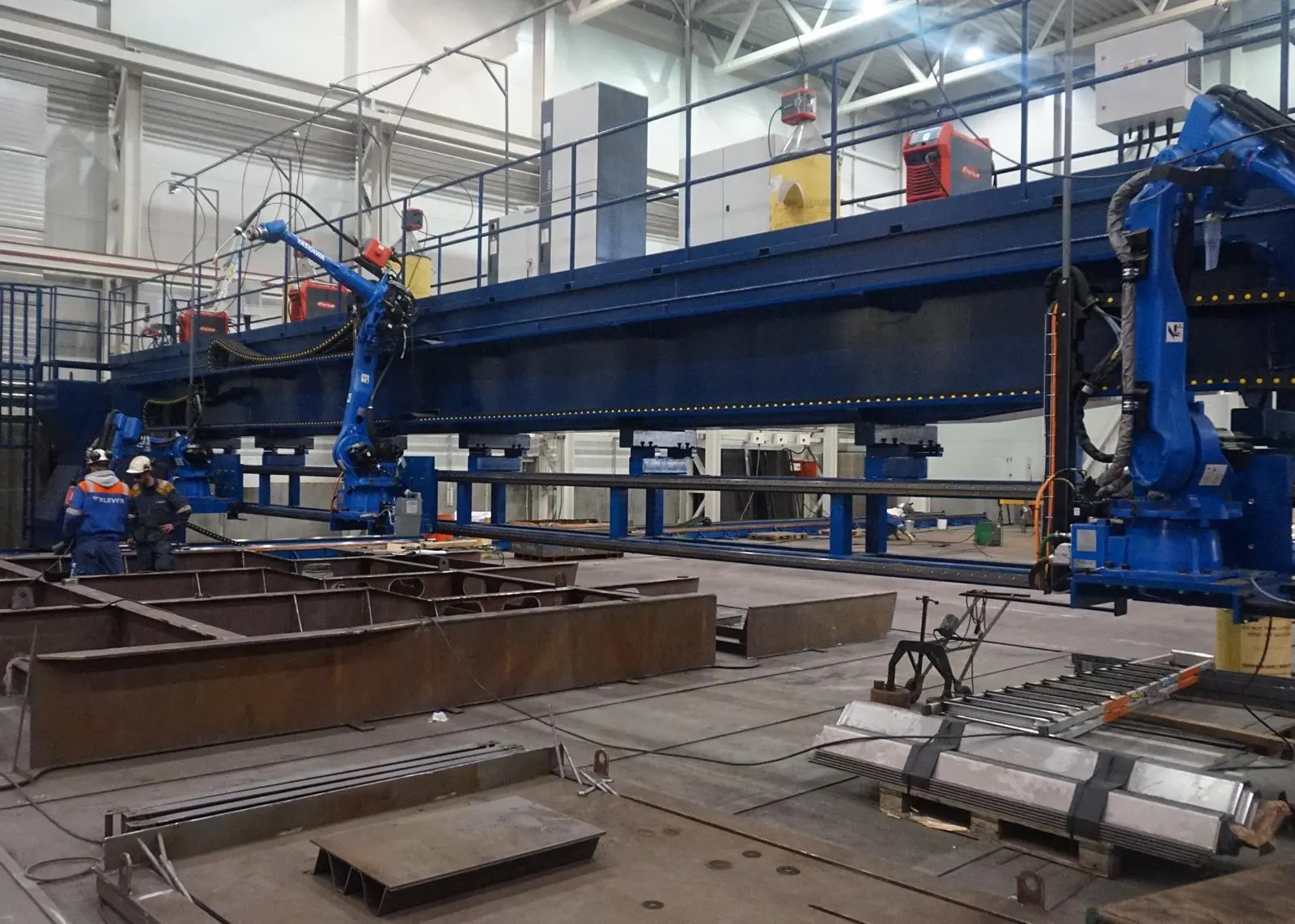
The major contract was only possible thanks to faster welding times provided by the Yaskawa Motoman robots, using a programme developed in collaboration with the Norwegian University of Technology and Science (NTNU). Ellen Kvalsund, communications manager at Kleven, noted that the machines can weld 5mm steel at a speed of 80 metres an hour, compared to around two metres an hour.
The robots can weld conventionally or using lasers. As the hybrid torches pierce the entire depth of the weld, there is no need for a seam to be welded on the reverse side. Overhead cameras and specially annotated drawings enable the robots to identify parts and weld locations. The machines can also retrieve plates, sheets and components from an automated storage area.
Kvalund added that the yard’s ability to bid for increasingly complex work – including two Hurtigruten newbuilds for which a letter of intent has been signed between the owner, Kleven and Rolls-Royce – was a direct result of the investment.
If the letter of intent (which includes options for a further two vessels) comes to fruition, the yard will have the bow sections of the hulls built in Poland while the sections housing the engine room and supporting the superstructure will be built at Kleven, with robotic welding of the 5mm-thick steel. The vessels will each be 140m long with capacity for 530 passengers, and will be destined for regular commuter service in Norway, but with added capability for Arctic cruising.
Future improvements in the robot technology could enable the machines to operate from the same 3D ship plans as those created between the owners and designers, Kvalsund said, noting the rapid pace of development in this field. “The first generation of robots [bought five years ago] are already in our company museum,” she said.
The company has also added 200m of new quay space over the past five years, enabling it to take on more vessel builds simultaneously – or bigger, multi-vessel projects such as the Maersk Supply work.
As The Motorship toured the site with other shipping media this week, the launched lead ship and the bow section of the second Maersk vessel were both at the yard, along with a second 116m yacht being built for a private owner from New Zealand. The world’s first diamond sampling and exploration vessel, built for Debmarine Namibia, is currently on sea trials in Ulsteinvik ahead of delivery to South Africa, where deck machinery will be installed.
Meanwhile the company reported successful diversification beyond the ailing offshore vessel market, with work coming from a wider pool of international owners. Of the 16 vessels currently on order from Kleven, 14 are owned by companies outside Norway. Orders beyond the offshore market include several fishing vessels and live fish carriers (many to Rolls-Royce design) as well as the yacht and, potentially, the new ships for Hurtigruten.
Related Articles
 PROPULSION
 GENERAL NEWS
 HYDROGEN