



1MW Scale SWRI Tests Reveal Positive H2 Results
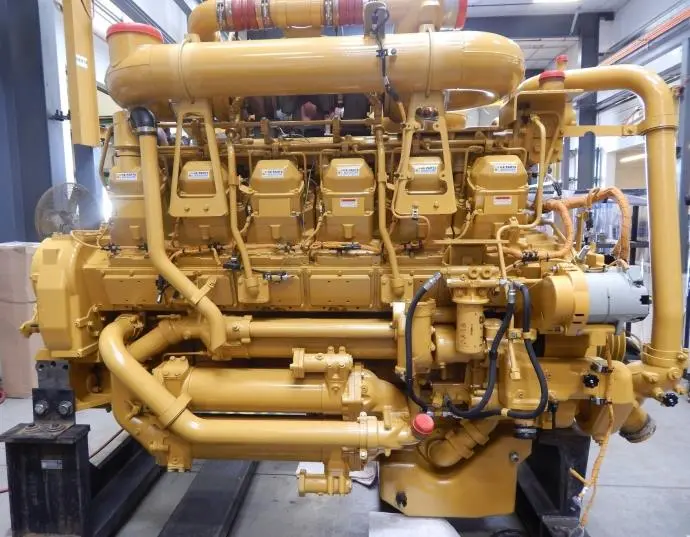
Christopher Stoos, Lead Engineer at the Locomotive Technology Center, Southwest Research Institute, presented the results of the testing of hydrogen fuel on a US EPA Tier 2 Caterpillar 3512 mine haul engine at CIMAC 2023. His research team found that, without optimising the control system or adjusting the diesel injection timing, the engine was able to use hydrogen as a supplemental fuel without noticeable change to engine operation.
Most hydrogen studies to date have been done on small engines or single cylinder test engines. This study differed as it was done at a 1MW scale. The particular CAT 3512 engine tested was not a marine engine, but the 3500 series engine is in service as a marine propulsion engine and a power generation engine in marine applications globally.
Fuel substitution ratios were made at 5%, 10%, 15%, 20%, 25% and 30% hydrogen, and all testing was done at steady state. The results showed that using supplemental hydrogen is possible on a heavy-duty offroad scale with very limited modifications to the existing engine. The work also gave insight into the changes of criteria pollutants and the greenhouse gas emissions reduction potential that hydrogen holds.
As hydrogen concentration increased, hydrocarbons, CO, CO2, NO, and particulate matter levels in the exhaust gas decreased. For hydrocarbons and CO, an initial increase in emissions was evident when the hydrogen was first introduced but this gradually decreased as the substitution ratio was increased. At 20% hydrogen, hydrocarbon emissions dropped below the diesel baseline.
NOx emissions overall remained relatively stable. NOx is formed at high temperatures during combustion from the nitrogen and oxygen in the air, so while supplemental hydrogen will reduce a lot of the criteria emissions that come from Diesel combustion, it doesn’t necessarily work with NOx.
The engine tested did not have Exhaust Gas Recirculation (EGR) or Selective Catalytic Reduction (SCR) to control NOx emissions, but the researchers believe this equipment could potentially benefit from the shift in NOx composition (a much higher engine out NO2 was demonstrated) and the unburned hydrogen in the exhaust.
The engine ran and responded as it would have on 100% diesel fuel, and no knocking was detected. The researchers conclude that short term use of the percentages of hydrogen tested presents few issues. For longer-term use, losses in engine energy efficiency could be overcome with intake and exhaust valve timing adjustments or timed port injection of the hydrogen, but engine optimisation would require significant effort, even at low hydrogen levels.
Southwest Research Institute, headquartered in San Antonio, Texas, is one of the oldest and largest independent, nonprofit, applied research and development organizations in the United States.
Related Articles
 2-STROKE & 4-STROKE
 2-STROKE & 4-STROKE
 2-STROKE & 4-STROKE