



2012 looks bleak for insurance industry
At the time of writing the Baltic Dry Index, recognised as a key barometer of global freight activity, is down 60% in a month and still falling. Covering 26 major shipping routes, the BDI measures the cost of transport space (freight rates) on dry bulk carriers. The collapse in the BDI suggests that worldwide demand for shipping space – and therefore for raw materials – is falling, with negative implications for the global economy.
However, the BDI can be very volatile, and the dramatic plunge in the index is seen by some as a result of the core problem of too many ships chasing too few cargoes. One crumb of comfort can perhaps be found in the fact that scrapping of all types of vessels reached 41million dwt in 2011, making it the third biggest year for demolition ever, according to Braemar Seascope, and it’s possible that 2012 could easily surpass the peak year (44million dwt) of 1985.
Even so, says Credit Suisse, there will be no respite from the oversupply of dry bulkers until 2013 at the very earliest. The existing fleet will still grow 9% as newbuilds are delivered.
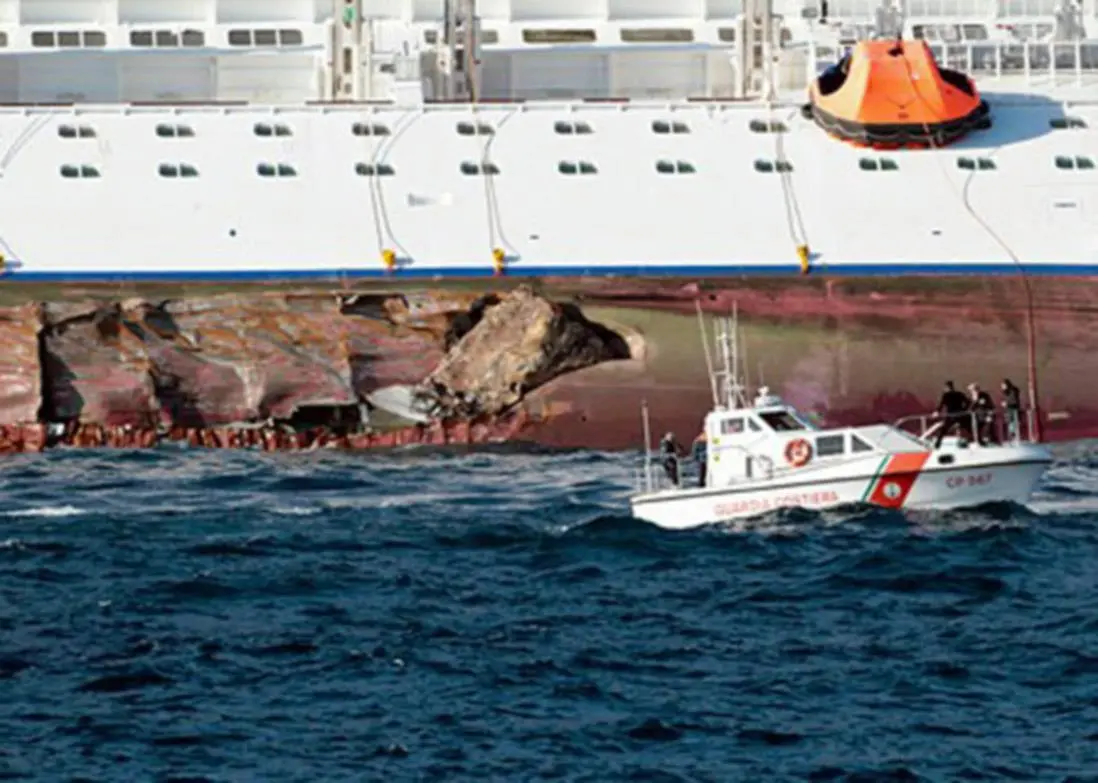
Meanwhile, marine underwriters suffered a series of hammer blows as the new year took hold. The Costa Concordia cruiseship disaster has opened a huge can of worms in technical, regulatory and legal terms which will rumble on for years.
If Concordia is eventually declared a total loss (either actual or constructive), it has the potential to be the biggest marine loss ever. Various values have been mooted for the hull and machinery, from approximately US$500million for the combined hull and increased value cover, to other market talk of around $700million, which could shove global hull underwriting into the red this year.
In addition, there is the possibility of P&I claims breaking records should there be oil pollution from the bunker fuel on board Concordia, a long drawn-out salvage operation, or class litigation cases in the US courts. Some early estimates in London suggest a cost to the P&I clubs of around $350million, with the clubs facing a further $185million for the laden boxship Rena that grounded off the New Zealand coast and has since broken in two, involving a long and complex salvage operation.
The Concordia was part entered in the P&I club Steamship Mutual, on a 50/50 quota share with the Standard Club, and with Carnival (which owns Costa) having a $10m deductible. It is interesting that Steamship Mutual defended Carnival in a letter sent to its members. This stated that over many years the company had more than paid its way in premium to cover the Concordia loss. Carnival had paid and continued to pay significant contributions toward the club’s retained claims costs, which in this instance would be $4million – that is, one-half of the $8million retained layer borne by the clubs before pooling through the International Group and reinsurance.
Soon after the Concordia came to grief, offshore energy insurers had a loss off Nigeria. Whereas the physical loss will be in the energy market, the liabilities, including removal of wreck, will fall in the marine liability market. Thus, over about seven days, the marine direct market in terms of physical damage and liability incurred a loss of well over $1billion.
When the executive committee of the International Union of Marine Insurance met in London late January, Dieter Berg, the German member of the committee, mentioned that last year saw the loss of a FPSO, the Gryphon Alpha, producing a $1billion loss for the energy market. He said: “The exposures we are faced with have changed dramatically, and now we have energy exploration in deeper and more hazardous environments. We also now have containerships of 18,000TEU, and underwriters need to price the exposures they are taking on accordingly.”
IUMI called on passenger/cruise ship operators to tighten up safety procedures and crew training standards to prevent a repeat of the Concordia disaster, with IUMI president Ole Wikborg referring particularly to evacuation procedures, crew competence, stability issues, and safe navigation rules.
Although the Concordia loss and others puts pressure on underwriters to raise premium levels, prices in the marine market, especially the hull sector, remain stubbornly flat as shipowners fight to survive and resist any move to raise operating expenses. One problem is that many hull insurers do not get involved in cruiseship business, so there is no incentive for the whole market to act cohesively. But the bigger problem is the abundant capacity in the market. The more seasoned and responsible elements in the market must hope that with claims rising and no sign of an upward surge in rates, a lot of the naive or green new capacity will disappear.
Related Articles
 ALTERNATIVE FUELS & LUBRICANTS
 ALTERNATIVE FUELS & LUBRICANTS
 OPINION