



50 years of LNG transport
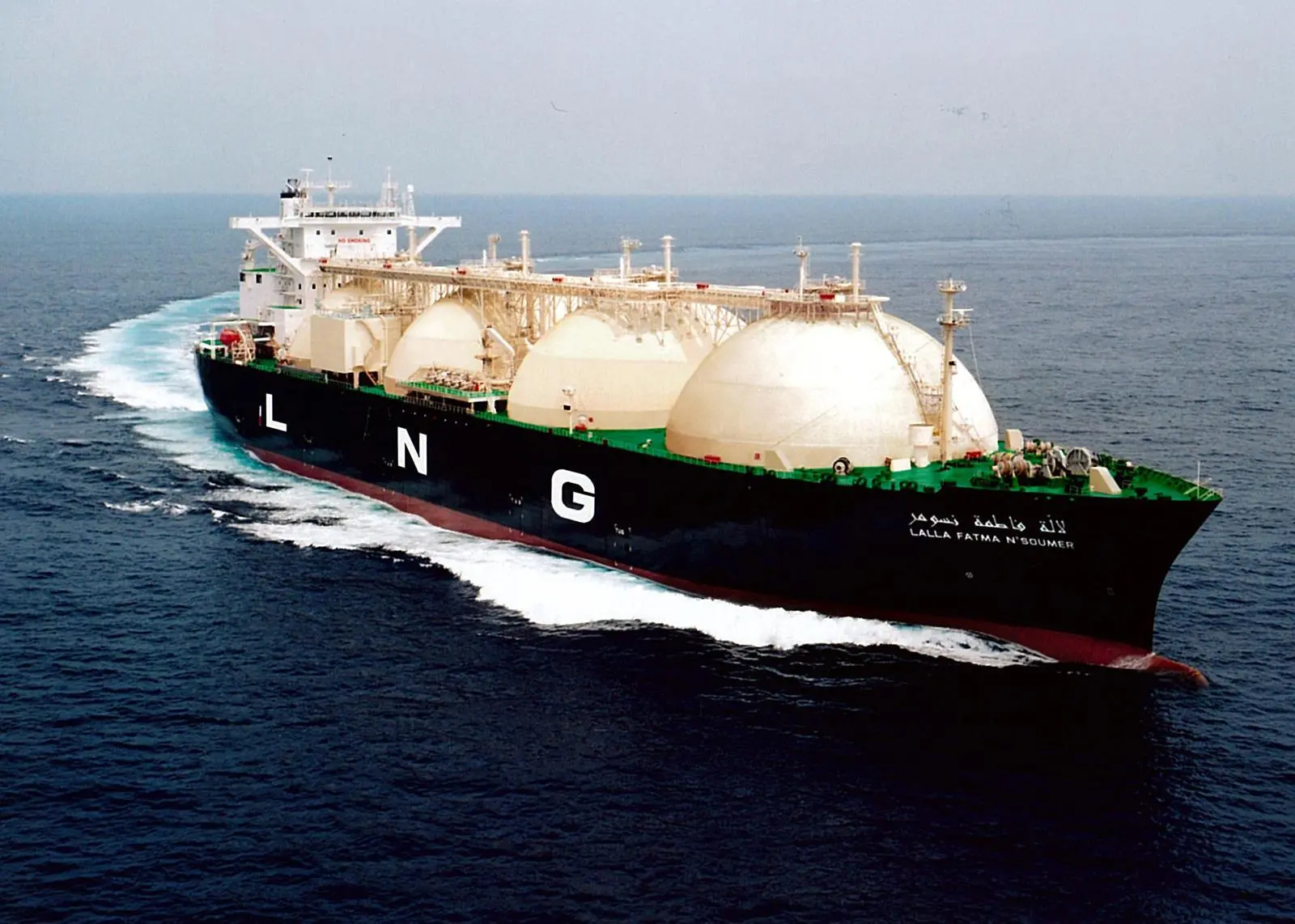
50 years ago an unusual looking ship eased into a berth in the Thames Estuary to start a transport revolution that has changed the face of the world energy market. That ship was the
Methane Princess
, one of two ships built to transport LNG from a terminal in Algeria to a new terminal on Canvey Island designed to bring liquid gas to consumers in Britain.
The arrival of that ship marked the culmination of years of research and development into the feasibility of transporting liquid gas by ship. Previously it was thought that gas could only be transported by pipeline. This would seriously limit the available markets, with many of the gas fields being considerable distances from the gas consumers. Experiments had demonstrated the technical feasibility of compressing and cooling the natural gas to reduce its volume by about 600 times the volume and make it feasible for transport. The challenges were considerable because converting the gas to a liquid meant having to transport it at a temperature of -160°C
The technical challenges were overcome but the economic viability was still questioned. Dedicated terminals were required at each end of the transport link, one to convert the gas to a liquid and the other to bring it back to a gaseous form. The specialised ships required to transport the liquid gas were very expensive. The Methane Princess and the Methane Progress transported close to three quarters of a million tonnes of gas a year and the concept of shipping liquid gas was established. From that pioneering investment more ships and more terminals were built and over the past 50 years the concept of transporting liquid gas has developed into a significant sector of the shipping market.
Today there are LNG terminals in many parts of the world, those used to export the gas, and import terminals to receive it. The fleet of ships has grown dramatically in recent years with more to come. The current fleet extends to over 400 ships with most of them less than 15 years old, so that there is only a limited amount of scrapping of old tonnage going on. The fleet is expanding at the rate of between 5% and 10% each year, but the more significant expansion is not in the number of ships, but their size.
Those Methane ships carried just 27,500m³ of liquid gas while current ships may carry around 160,000m³. This means that the volume of gas that can be transported by ship has shown a dramatic increase. There were 16 of these new generation LNG ships added to the fleet last year and over 30 scheduled for this year.
This rise in the world fleet has been partly fuelled by new sources of gas coming on stream, such as those in Indonesia and Australia, and also by the rush of developed countries to switch from oil to the much cleaner gas in order to meet emission targets. Most of this increased demand has been fuelled by the switch from oil or coal to gas for power generation but a secondary market is developing in the use of LNG as fuel for ships.
The first tranche of gas fuelled ships were gas carriers, where the boil off gas from the cargo tanks was fed to boilers supplying steam to power the ship’s turbines. The advent of duel fuel diesel engines has changed all that, so the modern generation of LNG tankers are powered by diesel engines. From this development has started a new generation of cargo and passenger ship that use LNG as their primary fuel to reduce emissions. Most of these ships run on short dedicated routes such as ferries, offshore support vessels and short sea shipping where refuelling stations can be established to meet the demand.
Originally the LNG market was designed to operate on dedicated routes with ships operating on long term contracts. This was the only way that the huge investment could be justified. This is still the basis of the industry but a spot market is also developing that may bring significant changes. A significant development has been the introduction of large floating plants to serve as terminals for handling the gas at both ends of the transport route. This can bring some flexibility to the market as it allows these terminal vessels to be moved from site to site as demand changes.
The US has become a significant player in the LNG market. Terminals that were originally built to handle imports of LNG are now being switched to handle exports as the shale gas revolution takes hold and the US has become self-sufficient in gas over just a few years. This is an example of the need for a degree of flexibility in the LNG transport systems. Many other countries are now looking at shale gas extraction which could significantly change the pattern of demand. New pipelines,, such as the proposed link between Russia and China could change the pattern of demand for ship transport.
LNG ships are an expensive investment, costing around double the price of an equivalent VLCC, and today most of these ships are still being built to meet dedicated long term contracts. With the rapid growth in the fleet and the change towards the use of gas as a replacement for oil in many sectors of the energy industry the safety concerns of transporting huge quantities of liquid gas have taken something of a back seat.
In the early days of the development of the industry there were huge concerns about safety both at the terminals and on the high seas. Terminals tended to be located in remote areas and dedicated powerful escort tugs were a feature of these terminal operations in case of a propulsion or steering failure as the ships were berthing. The ships themselves were among the first to be built with double hulls to reduce the impact of grounding or collision on the integrity of the cargo tanks. Even if the double hull was penetrated it was thought that there was still protection from a cargo spill by the thick insulation around the cargo tanks with the tanks themselves as the final barrier.
There have been no reported major incidents involving LNG ships apart from one grounding that ripped the bottom out of the ship involved. Even then the cargo tanks remained intact. There are many scenarios that have been explored that could involve an LNG ship, with perhaps fire being the major hazard, but in its liquid form LNG is not flammable. Obviously when it vaporises it forms an inflammable gas but because it is lighter than air the chances are that it will disperse without being ignited. Perhaps the biggest risk with a leak of the LNG comes from the potentially rapid expansion as the liquid re-gasifies from contact with water which would mean that it expands 600 fold, which would cause a form of explosion. However, tests have shown this is a minimal risk: but there is no real-life experience to back this up. Another potential hazard comes from the exposure of the ship’s structure to the intense cold which could lead to fracturing and weakness in the event of a leak.
The envious safety record on the LNG transport industry has come about largely because of safety concerns, which in turn have led to strict safety routines, advanced technical solutions and good training. The safety record of the LNG sector is a lesson to the rest of the shipping industry and it demonstrates what can be achieved with advanced procedures. However, history suggests that in any industry there will be the freak set of circumstances that could lead to an accident. A catalyst here could be a shortage of trained personnel to man LNG ships caused by the rapid expansion of the fleet.
There is a reported shortage of experienced crews and this could be a worry. While the large LNG tankers follow strict safety regimes and have highly trained crews, the expanding use of LNG as a fuel for general purpose ships could be where the main risks lie. These ships may not have the same double hull protection for their fuel tanks and the risk of fuel leakages in confined spaces is always present. They may not necessarily be manned by experienced personnel with a high level of training in handling LNG.
The classification societies are taking a close interest in developments. At present it seems that everybody is being over-cautious, but as the transport of LNG moves on from the large dedicated ships to short sea shipping and inland waterway routes the risks of an accident will surely increase. Perhaps the main risk area is when these ships are loading and discharging or when LNG bunkering becomes commonplace. Truck to ship bunkering with LNG is now operational in some ports, which has to be an area of concern.
Of all the cargoes carried at sea LNG has to be one of the most unlikely and the most demanding. The ships carrying these cargoes are a marvel of technology in that they are handling a volatile cargo at extremely low temperatures. The trade now has a long history of success but could it be that the current rapid expansion of the trade leads to significant changes.
A pointer to the future is that we are now seeing LNG ships being built without a definite long term contract. Long term contracts enable the strict safety regimes to be put in place, but in a competitive spot market there may be an incentive to cut corners. Shale gas developments pose a challenge for the established transport sectors and the developing situation in the US gas market is a good example of this.
Related Articles
 ALTERNATIVE FUELS & LUBRICANTS
 ALTERNATIVE FUELS & LUBRICANTS
 OPINION